Micron Technology CEO Sanjay Mehrotra dropped a bombshell Thursday, declaring that artificial intelligence has fundamentally transformed the notoriously cyclical memory chip business. Speaking about the industry's historic pattern of dramatic boom-and-bust cycles, Mehrotra said AI demand has 'totally changed the equation' for memory manufacturers. The statement signals a potential inflection point for an industry that's spent decades riding brutal waves of oversupply and shortage.
Micron Technology just declared the memory industry's boom-bust era dead. CEO Sanjay Mehrotra told reporters Thursday that artificial intelligence has 'totally changed the equation' for memory chip manufacturers, a bold claim about an industry that's built its entire business model around surviving brutal cycles.
For decades, memory chipmakers have ridden a rollercoaster that would make most CFOs nauseous. When demand surges, prices skyrocket and manufacturers build new fabs. Then oversupply crashes the market, forcing layoffs and shuttered production lines. Rinse and repeat every few years. Samsung, SK Hynix, and Micron have all bled billions during down cycles, only to print money when the pendulum swings back.
But Mehrotra's comments suggest AI workloads are rewriting those rules entirely. The explosive growth of large language models and AI training infrastructure is creating sustained, predictable demand for high-bandwidth memory - specifically HBM (high-bandwidth memory) and advanced DRAM that AI accelerators desperately need. Unlike consumer PCs or smartphones, which drive cyclical replacement patterns, AI data centers are expanding continuously as companies race to deploy more compute power.
The numbers back up Mehrotra's optimism. AI servers require up to eight times more DRAM than traditional servers, and the transition to HBM3 and HBM3E memory has created supply constraints that memory makers haven't seen in years. Where the industry once worried about smartphone demand dropping 10%, they're now looking at hyperscalers like Microsoft, Google, and Amazon placing multi-billion dollar orders that stretch years into the future.
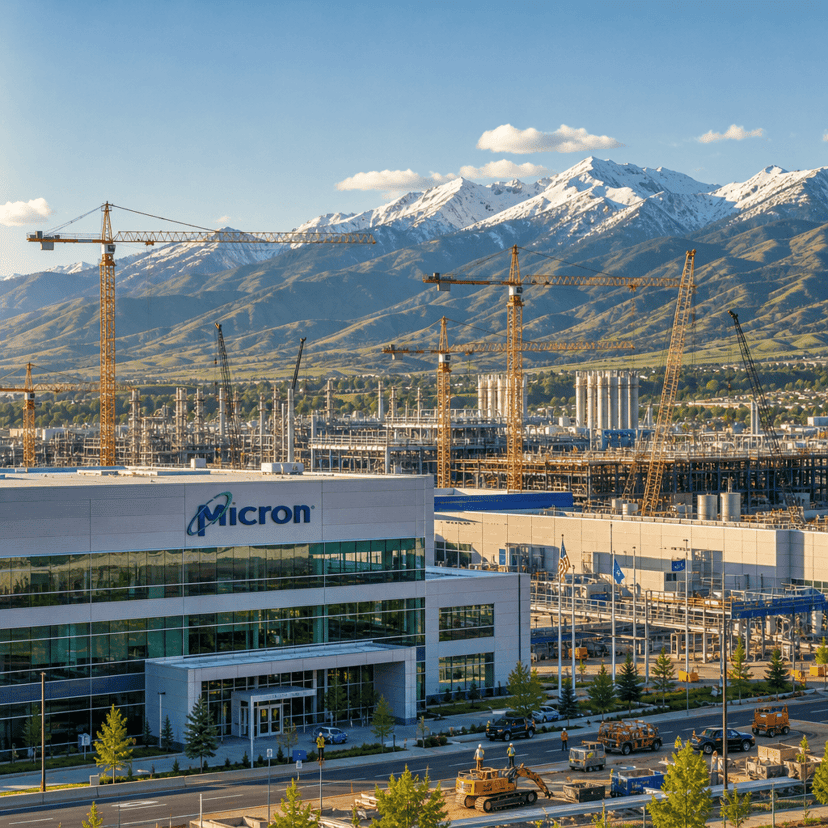
Micron itself has been positioning aggressively for this shift. The company's investing heavily in HBM production and next-generation GDDR7 memory for AI accelerators, betting that data center demand will dwarf traditional consumer markets. If Mehrotra's right about AI fundamentally changing the industry dynamics, Micron stands to benefit enormously from its early positioning.
But there's reason for caution too. The memory industry has declared victory over boom-bust cycles before - usually right before the next crash. Mobile computing was supposed to stabilize demand in 2010. Cloud computing got similar billing in 2015. Both times, the market eventually overcorrected and prices collapsed. Wall Street analysts remain divided on whether AI represents a genuinely different demand pattern or just another peak that'll inevitably correct.
What's different this time might be the capital intensity and technical barriers. HBM production requires cutting-edge packaging technology that only a few manufacturers can deliver at scale. The barriers to entry are higher, supply additions are slower, and customers are willing to pay premium prices for guaranteed allocation. That's a fundamentally different market structure than commodity DRAM, where any manufacturer with a fab could flood the market.
The broader semiconductor industry is watching closely. If AI really has stabilized memory demand, it validates years of heavy R&D investment and could trigger a wave of capacity expansion. If Mehrotra's wrong and oversupply eventually materializes, the industry could face one of its most painful corrections yet - precisely because everyone believed this time was different.
For now, memory prices remain elevated and supply remains tight. Nvidia's latest AI accelerators are shipping with allocation constraints partly due to HBM availability. Hyperscalers are signing long-term supply agreements at prices that would've been unthinkable three years ago. And executives like Mehrotra are making bold declarations about transformation.
Whether AI has truly killed the boom-bust cycle or just delayed the next bust remains to be seen. But one thing's certain - the memory industry is betting billions that Mehrotra's right. The next 18 months will reveal whether that confidence is justified or just another peak before the fall.
Mehrotra's declaration that AI has fundamentally transformed the memory business represents either visionary foresight or dangerous overconfidence. The industry's history is littered with similar pronouncements made at market peaks, yet the technical and structural changes driving current demand do appear different. What's undeniable is that AI workloads are consuming memory at unprecedented rates, and manufacturers who positioned early for HBM and advanced DRAM are reaping the rewards. Whether this marks the end of boom-bust cycles or just an extended boom remains the multi-billion dollar question. For investors, customers, and the broader semiconductor ecosystem, the answer will reshape strategies for years to come.