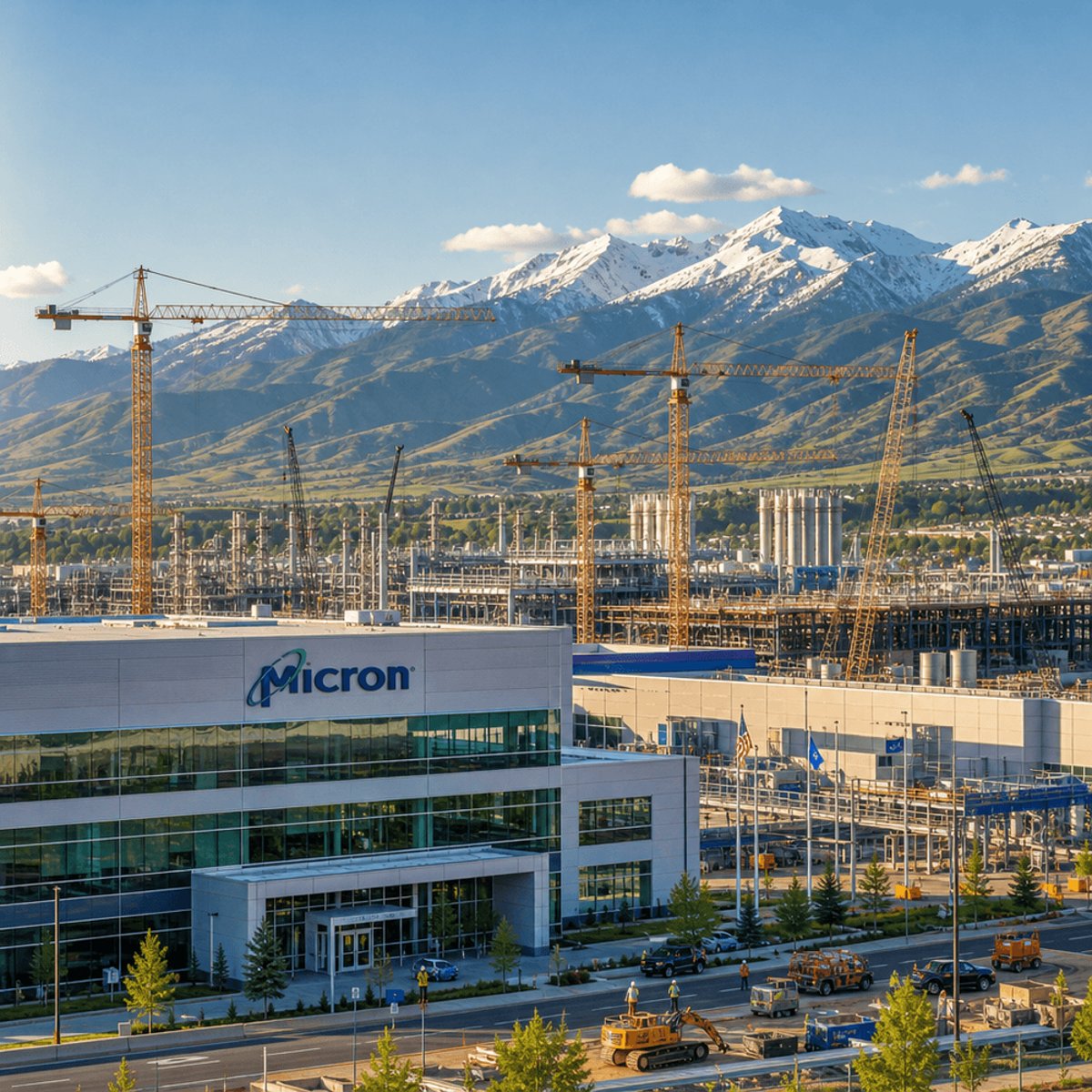
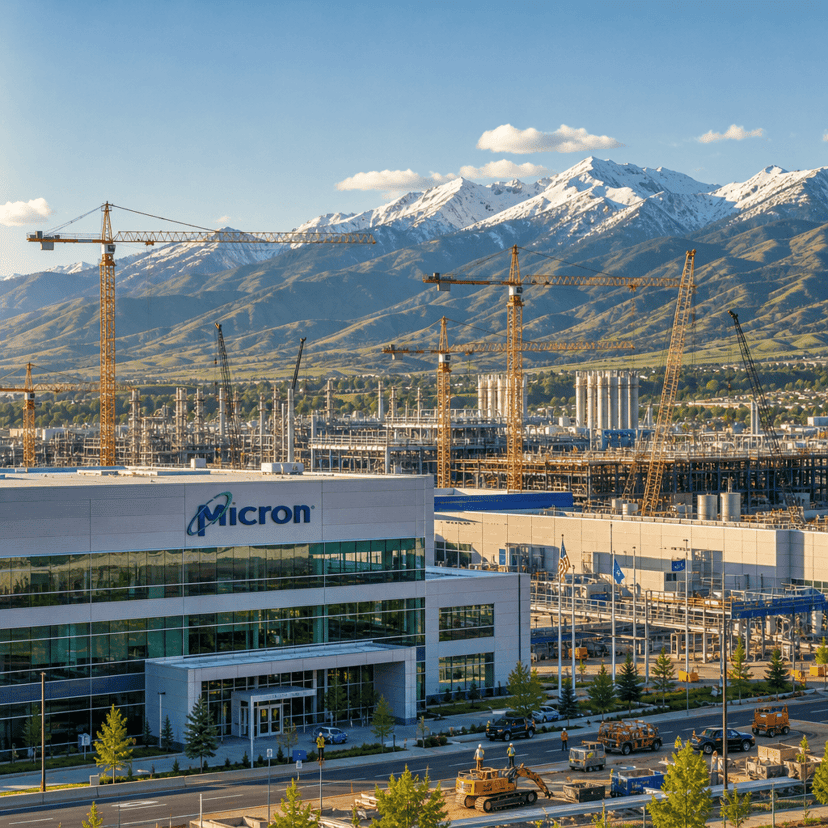
Micron Technology is turning Boise, Idaho into an unlikely epicenter of America's AI chip manufacturing boom. The company's $50 billion fab expansion - one of the largest semiconductor investments in U.S. history - is flooding the mountain city with high-paying jobs and venture capital, while simultaneously straining its housing market, overwhelming its infrastructure, and forcing residents to reckon with what their hometown is becoming. It's a preview of what happens when the AI gold rush collides with small-city America.
Micron Technology just dropped a $50 billion bet on Boise - and the city's trying to figure out if it won the lottery or opened Pandora's box.
The memory chip giant, riding a wave of AI-driven demand for high-bandwidth memory, is massively expanding its Idaho manufacturing presence with new fabrication plants that will produce the cutting-edge chips powering everything from Nvidia's AI accelerators to next-generation data centers. According to CNBC's reporting, the investment represents one of the largest private capital commitments to U.S. semiconductor manufacturing in history.
But Boise wasn't built for this. The city of 240,000 that once pitched itself as a laid-back alternative to coastal tech hubs now faces the kind of growing pains that turned Austin and Seattle into cautionary tales. Housing prices have jumped 23% in the past year as semiconductor engineers flood in from California and Taiwan. Traffic on Interstate 84 - the main artery to Micron's sprawling campus - has become a daily snarl. Local officials are scrambling to approve apartment complexes fast enough to house incoming workers.
"We're seeing wealth creation happen in real-time," one Boise real estate developer told local media, "but we're also watching people who've lived here for generations get priced out of their own neighborhoods."
The timing of Micron's expansion couldn't be more strategic. The AI boom has created insatiable appetite for high-bandwidth memory (HBM) - the specialized chips that sit next to AI processors and feed them data at lightning speed. Micron competes head-to-head with Samsung and SK Hynix in this critical market, and domestic manufacturing capacity has become a national security priority after supply chain chaos exposed America's dependence on Asian chip production.
The CHIPS Act sweetened the deal considerably. While specific subsidy amounts haven't been disclosed, Micron likely secured billions in federal grants and tax credits that made the Boise expansion financially irresistible compared to building overseas. The company's been in Idaho since 1978, but this buildout represents a complete transformation of scale - from regional manufacturing presence to global AI supply chain anchor.
What makes Boise's situation unique is velocity. Unlike Phoenix or Columbus, which have absorbed chip fabs gradually over decades, Boise is getting slammed with growth compressed into just a few years. The city's infrastructure - roads, schools, water systems - was designed for steady, manageable expansion, not the equivalent of dropping a small city's worth of semiconductor workers into the valley overnight.
Local officials are trying to turn crisis into opportunity. Boise State University is launching new semiconductor engineering programs. The city's courting suppliers and equipment manufacturers to build a complete chip ecosystem. There's talk of Boise becoming the "Silicon Hills" - a Rocky Mountain answer to Silicon Valley that keeps Idaho's outdoor lifestyle while adding six-figure salaries.
But there's tension beneath the boosterism. Long-time Boiseans worry about losing the qualities that made the city attractive in the first place - affordability, small-town feel, easy access to wilderness. Newcomers complain the city lacks the restaurants, culture, and amenities they left behind in San Jose or Portland. It's a collision of cultures playing out in city council meetings and neighborhood Facebook groups.
The economic multiplier effect is undeniable. Every fab job creates roughly five additional positions in construction, services, and support industries. Equipment suppliers are opening regional offices. Venture capital is flowing into Boise startups for the first time. The tax base is exploding, giving the city resources to address infrastructure gaps - if they can move fast enough.
Micron itself has tried to be a good neighbor, funding affordable housing initiatives and traffic studies. But no amount of corporate citizenship changes the fundamental equation: you can't add tens of thousands of high-paid workers to a mid-sized city without fundamentally altering what that city is.
The expansion also represents a massive bet on AI's staying power. Semiconductor fabs take years to build and decades to pay off. Micron is gambling that AI workloads will keep demanding more memory capacity, that domestic manufacturing will remain strategically important, and that Boise can scale up to support world-class chip production. If any of those assumptions prove wrong, Idaho could be left with billions in infrastructure built for a boom that fizzled.
For now, though, the cranes keep rising over the Treasure Valley. Construction crews work in shifts around the clock. Real estate agents can't list houses fast enough. And Boise finds itself at the center of a national conversation about what it means to reshore critical technology manufacturing - whether America's non-coastal cities can become advanced manufacturing hubs without losing their souls in the process.
Boise's transformation from mountain town to AI chip manufacturing powerhouse is happening whether residents are ready or not. Micron's $50 billion investment will reshape Idaho's economy for generations, creating wealth and opportunity on a scale the state's never seen. But it's also a test case for whether American cities can absorb the kind of rapid industrial growth that typically happens in Asia - and whether the benefits of reshored manufacturing outweigh the costs of disrupted communities. Watch Boise closely: it's either a blueprint for revitalizing American manufacturing or a cautionary tale about growth that happens too fast to manage. Probably both.