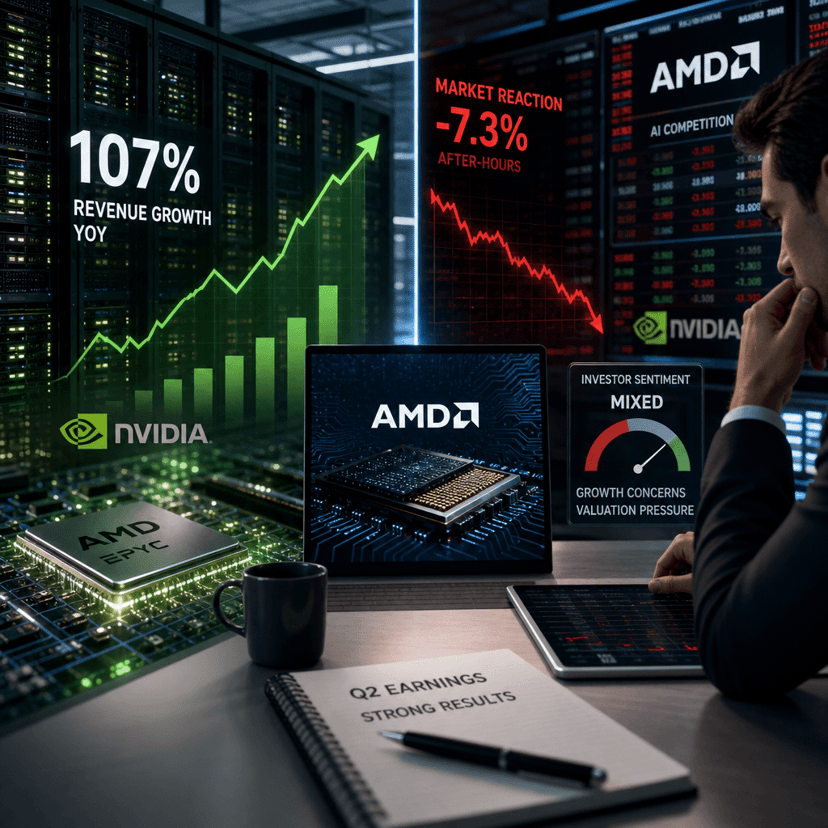
Micron Technology just posted one of the most paradoxical earnings reports of the year. The memory chip giant's revenue almost tripled last quarter, driven by insatiable demand for AI infrastructure. Yet investors dumped the stock anyway, sending shares down 15% over four consecutive sessions since Wednesday's earnings call. The disconnect reveals growing anxiety about whether the AI memory boom can sustain its blistering pace - or if competition and supply concerns are about to catch up with the industry's hottest play.
Micron Technology delivered a quarter that would make most CEOs pop champagne, but Wall Street responded with a collective shrug and a sell button. The Boise-based memory chip manufacturer reported revenue growth that nearly tripled year-over-year, powered by an AI infrastructure buildout that's consuming memory chips faster than factories can produce them. Then the stock promptly entered freefall, dropping 15% across four straight trading sessions since Wednesday's earnings announcement.
The disconnect isn't just puzzling - it's revealing deeper anxieties rippling through the semiconductor sector. According to market data via CNBC, investors are now questioning whether the AI memory goldrush can sustain its momentum or if the industry's racing toward an inevitable supply glut. The timing couldn't be more critical, as Nvidia, AMD, and other AI hardware players watch nervously to see if Micron's post-earnings tumble foreshadows their own fate.
Micron's Q2 performance looked stellar on paper. Revenue growth approaching 200% doesn't happen by accident - it's the direct result of hyperscalers like Microsoft, Google, and Amazon racing to secure high-bandwidth memory (HBM) chips for their next-generation AI clusters. Data center operators can't build AI infrastructure fast enough, and HBM has become the bottleneck constraining the entire ecosystem. Micron's positioned itself as one of the few suppliers capable of delivering HBM3E at scale, the latest memory standard that Nvidia's H200 and upcoming B-series GPUs desperately need.
But here's where the narrative gets complicated. Despite the blockbuster revenue numbers, investors started asking uncomfortable questions during the earnings call. Supply constraints that once seemed like a positive indicator of unstoppable demand now look like potential vulnerabilities. If Micron can't ramp production fast enough, customers might diversify to competitors like SK Hynix or Samsung, both of which are aggressively expanding their own HBM capacity. The memory market has a brutal history of boom-bust cycles, and even a whisper of oversupply can trigger panic selling.
The technical details matter here. HBM isn't commodity DRAM - it's an entirely different beast requiring advanced packaging techniques that stack memory dies vertically next to GPU chips. Micron's been investing billions into these capabilities, but the payoff timeline remains uncertain. Manufacturing yields for HBM3E still hover below optimal levels across the industry, and any hint that Micron's struggling with production quality could explain why investors are bailing despite the revenue surge. The company hasn't disclosed specific yield numbers, which only amplifies speculation.
Then there's the competitive pressure intensifying from unexpected angles. Samsung's recent announcement that it's prioritizing HBM production over traditional DRAM sent shockwaves through the supply chain. If Samsung floods the market with HBM capacity by late 2026, Micron's pricing power evaporates overnight. SK Hynix, which currently leads in HBM market share, isn't standing still either. The Korean giant's already shipping HBM3E to multiple customers and working on HBM4 prototypes. Micron's playing catch-up in a market where being second or third means watching margins compress.
The broader semiconductor landscape adds another layer of complexity. Intel's recent stumbles in manufacturing have made investors hypersensitive to any sign of execution risk among chip makers. Micron's capital expenditure guidance for the next fiscal year reportedly came in higher than analysts expected, suggesting the company needs to spend more than anticipated to maintain its competitive position. Higher capex means lower free cash flow, which Wall Street hates - especially when there's uncertainty about whether those investments will generate returns before the market shifts.
Market sentiment around AI infrastructure spending is also shifting. After two years of explosive growth, some analysts are questioning whether hyperscalers will maintain their current spending pace or take a breather to digest existing capacity. Microsoft's recent comments about optimizing AI infrastructure costs spooked investors across the semiconductor sector. If data center spending slows even modestly, memory demand could crater faster than Micron can adjust production, leaving the company with excess inventory and pricing pressure.
The four-day selloff reflects more than just Micron's specific challenges - it's a referendum on the entire AI hardware thesis. Investors piled into semiconductor stocks over the past year betting that AI would create insatiable demand for chips. Now reality's setting in. Yes, demand is strong, but so is competition, capital intensity, and execution risk. The easy money's been made, and what remains is the hard work of actually delivering consistent returns in a notoriously cyclical industry.
Micron's paradoxical earnings report captures the semiconductor industry's identity crisis perfectly. Explosive growth isn't enough anymore - investors want certainty about sustainable competitive advantages, manageable capital requirements, and protection against the next downturn. The 15% post-earnings decline isn't just about Micron. It's Wall Street recalibrating expectations across the entire AI hardware ecosystem, recognizing that tripling revenue means nothing if margins compress, competition intensifies, and customer spending patterns shift. For Nvidia, AMD, and other chip makers reporting soon, Micron's experience serves as a warning: even blowout quarters won't satisfy investors looking for proof this boom is different from all the others that came before.