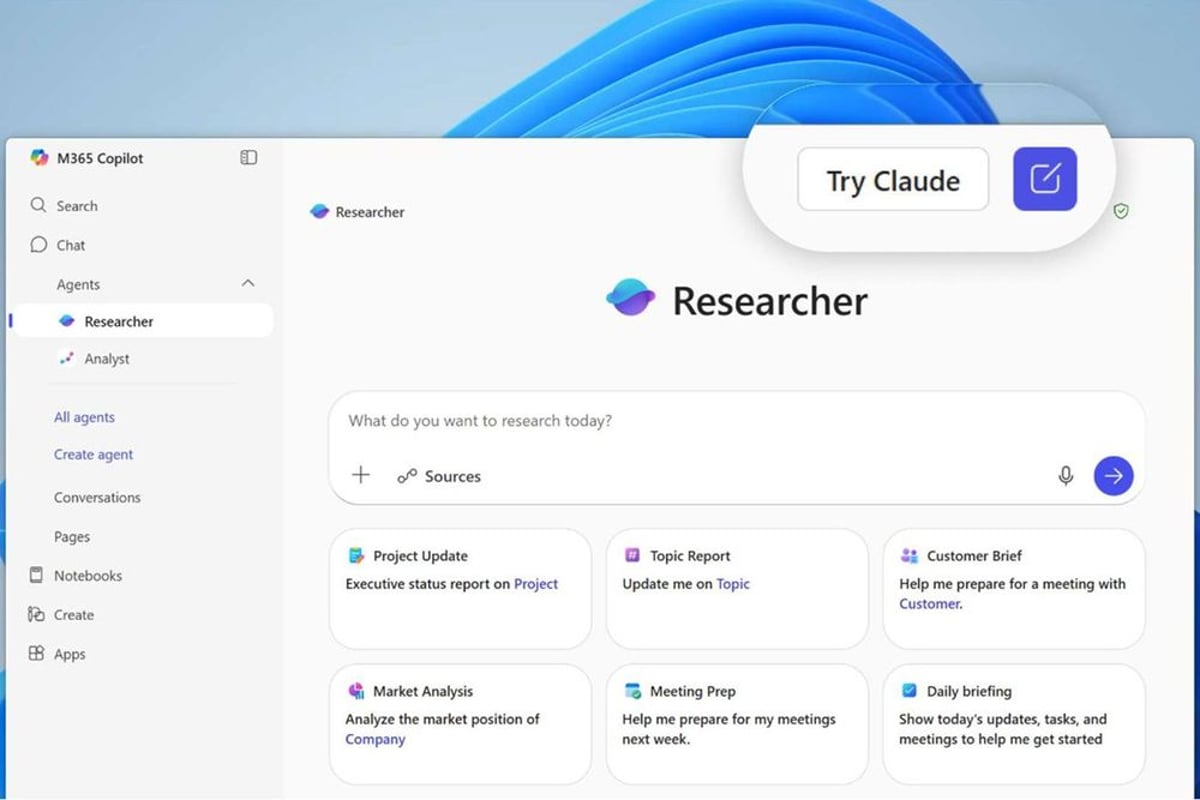
Microsoft just made a bold move that could reshape enterprise AI. The tech giant is integrating Anthropic's Claude Sonnet 4 and Claude Opus 4.1 models directly into Microsoft 365 Copilot, giving millions of business users their first real alternative to OpenAI's dominance. This isn't just about choice - it signals Microsoft's growing confidence that Claude might actually outperform GPT models for workplace tasks.
Microsoft just dropped a bombshell that's sending ripples through the enterprise AI landscape. Starting today, Microsoft 365 Copilot users can access Anthropic's Claude Sonnet 4 and Claude Opus 4.1 models directly within their familiar Office environment. It's the first major crack in OpenAI's stranglehold on Microsoft's productivity suite.
The integration isn't subtle either. Users of Microsoft's Researcher agent now see a prominent "Try Claude" button sitting right at the top of their Copilot interface. Click it, and you're instantly switched from OpenAI's reasoning models to Claude Opus 4.1. "Once you opt-in, you'll be able to switch between OpenAI and Anthropic models in Researcher with ease," Charles Lamanna, president of Microsoft's business and industry Copilot team, told The Verge.
But here's where it gets interesting - and slightly awkward. These Claude models are still running on Amazon Web Services, Microsoft's biggest cloud competitor. Microsoft is essentially paying its rival to access Anthropic's technology through the standard Anthropic API, just like any other developer would. It's a pragmatic move that puts performance over pride.
This timing isn't coincidental. Just last week, Microsoft quietly started favoring Anthropic over OpenAI in Visual Studio Code. GitHub Copilot paid users now "primarily rely on Claude Sonnet 4" when using the editor's automatic model selection feature, according to internal reports. The message is clear: Microsoft thinks Claude is better at certain tasks.
The enterprise implications are massive. Microsoft 365 Copilot serves millions of business users who've been locked into OpenAI's ecosystem since the partnership began. Now they can experiment with Claude's renowned reasoning capabilities for research tasks, document analysis, and workflow automation. Copilot Studio users get even more flexibility, with the ability to mix and match models from Anthropic, OpenAI, and other providers in Azure's catalog depending on the task.
"Copilot will continue to be powered by OpenAI's latest models, and now our customers will have the flexibility to use Anthropic models too," Lamanna explained. But reading between the lines, this sounds like Microsoft hedging its bets. The company has reportedly found that Claude models outperform GPT in Excel and PowerPoint testing, with broader integration coming soon.
The rollout is happening through Microsoft's Frontier program, which gives early access to cutting-edge features for Microsoft 365 Copilot licensed customers. Both Researcher and Copilot Studio users need to actively opt-in - Microsoft isn't forcing the switch, but they're making it incredibly easy to try.
What's particularly telling is Microsoft's acceleration here. The company previously struck a deal to host xAI's Grok 3 models on Azure, showing they're serious about model diversity. But accessing Claude through Amazon's infrastructure suggests Microsoft values performance over platform loyalty when it comes to AI capabilities.
Industry watchers see this as Microsoft's insurance policy against OpenAI dependency. While Sam Altman's company remains Microsoft's primary AI partner, having Claude as a backup option gives Microsoft leverage in future negotiations. It also addresses growing enterprise concerns about putting all their AI eggs in one basket.
"This is just the beginning - we're committed to delivering model innovation at speed," Lamanna teased, hinting at more announcements ahead. Translation: expect Claude integration across more Microsoft products soon, probably starting with Excel and PowerPoint where internal testing has shown superior performance.
Microsoft's integration of Claude models into its core productivity suite marks a pivotal shift in enterprise AI strategy. By giving millions of Office users direct access to OpenAI alternatives, Microsoft is both hedging against vendor lock-in and acknowledging that different AI models excel at different tasks. The real test will be user adoption - if enterprise customers start preferring Claude for research and analysis tasks, it could accelerate Microsoft's move away from OpenAI dependence and reshape the entire business AI landscape.