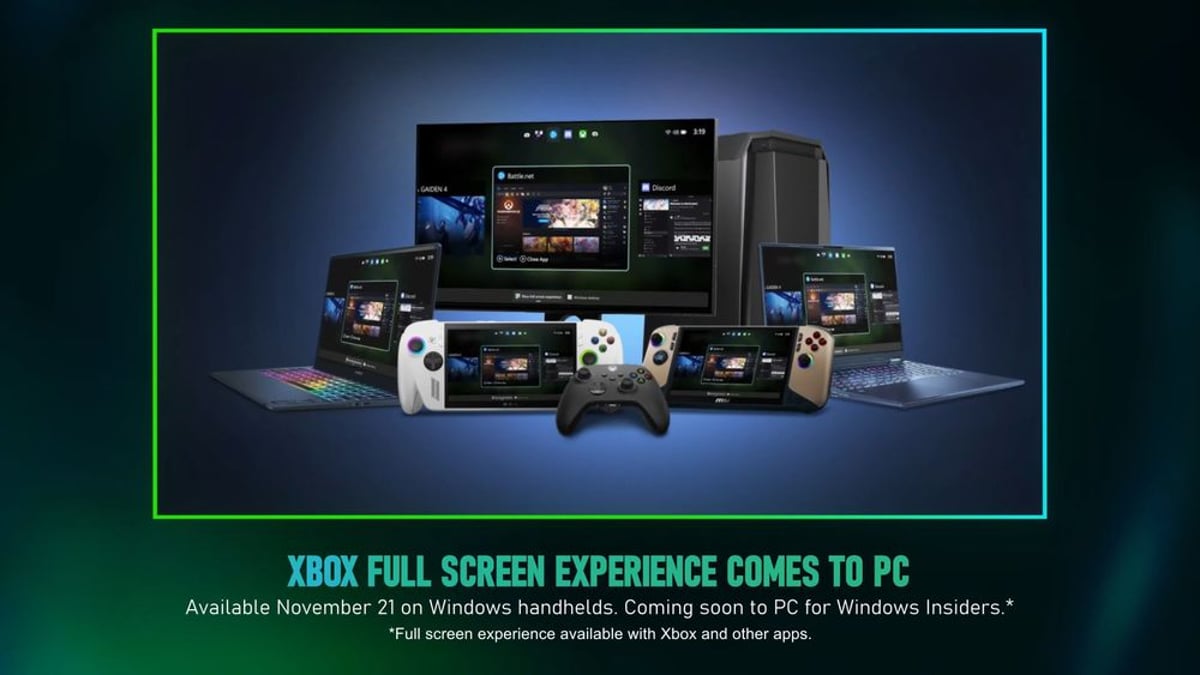
Microsoft is launching its Xbox Full Screen Experience across all Windows-based handhelds tomorrow, marking a significant push to transform portable PC gaming. The streamlined interface bypasses Windows desktop entirely, freeing up 2GB of memory while delivering a console-like experience that could reshape how we think about handheld gaming.
Microsoft just delivered what handheld gaming enthusiasts have been waiting for. Tomorrow, November 21st, the company's Xbox Full Screen Experience becomes available to all Windows-based handhelds, not just the Asus ROG Ally devices that got first access last month.
The timing couldn't be better. The handheld PC gaming market is exploding, with devices like the Steam Deck proving there's massive appetite for portable PC gaming. But Windows handhelds have always struggled with one fundamental problem - they're trying to cram a desktop operating system into a device meant for gaming on the go.
That's where Xbox FSE becomes a game-changer. According to Microsoft's official announcement, the interface completely bypasses the traditional Windows desktop experience. Instead of loading Explorer shell and countless background processes, it boots straight into a console-like gaming environment.
The memory savings are substantial - we're talking about 2GB of RAM that's suddenly available for games instead of being eaten up by Windows overhead. For handheld devices often working with 16GB or less of total memory, that's a meaningful boost that could translate into better frame rates and smoother gameplay.
"It's essentially not loading the Explorer shell and saving around 2GB of memory by suppressing all the unnecessary parts of a typical Windows 11 installation," Tom Warren reported for The Verge. The technical implementation shows Microsoft's understanding that handheld gaming needs a fundamentally different approach than traditional PC gaming.
What makes Xbox FSE particularly compelling is its universal game launcher approach. The interface doesn't just showcase Xbox Game Pass titles - it pulls in your entire gaming library from Steam, Battle.net, Epic Games Store, and other platforms. There's a dedicated Game Bar for switching between different launchers and a task view designed specifically for handheld navigation.
Microsoft already tested this concept with a preview release for MSI Claw devices last month, gathering feedback before the wider rollout. The company is also expanding Xbox FSE "to more Windows 11 PC form factors through the Xbox and Windows Insider programs," suggesting this could eventually become an option for desktop gaming PCs too.
The competitive implications are significant. While Valve's Steam Deck runs on Linux with its custom SteamOS interface, Windows handhelds have traditionally offered more game compatibility at the cost of a clunkier experience. Xbox FSE potentially gives Windows devices the best of both worlds - broad compatibility with a streamlined, purpose-built gaming interface.
For manufacturers like Asus, MSI, and others building Windows handhelds, this represents Microsoft doing the heavy lifting on software optimization. Instead of each company trying to build their own gaming overlay, they can rely on Microsoft's solution that's designed to work across the entire Windows handheld ecosystem.
Activating Xbox FSE is straightforward - users just need to navigate to Settings > Gaming > Full screen experience and select Xbox as their home app. The interface launches at boot, immediately dropping users into their gaming library without the typical Windows startup sequence.
Microsoft's Xbox Full Screen Experience represents a crucial evolution in handheld PC gaming, addressing the fundamental tension between Windows flexibility and console simplicity. By freeing up 2GB of memory and unifying game libraries across platforms, Microsoft isn't just improving the handheld experience - it's positioning Windows as a serious competitor to Steam Deck's Linux-based approach. The real test will be adoption rates among handheld manufacturers and whether this becomes the standard interface that finally makes Windows handhelds feel as polished as dedicated gaming devices.