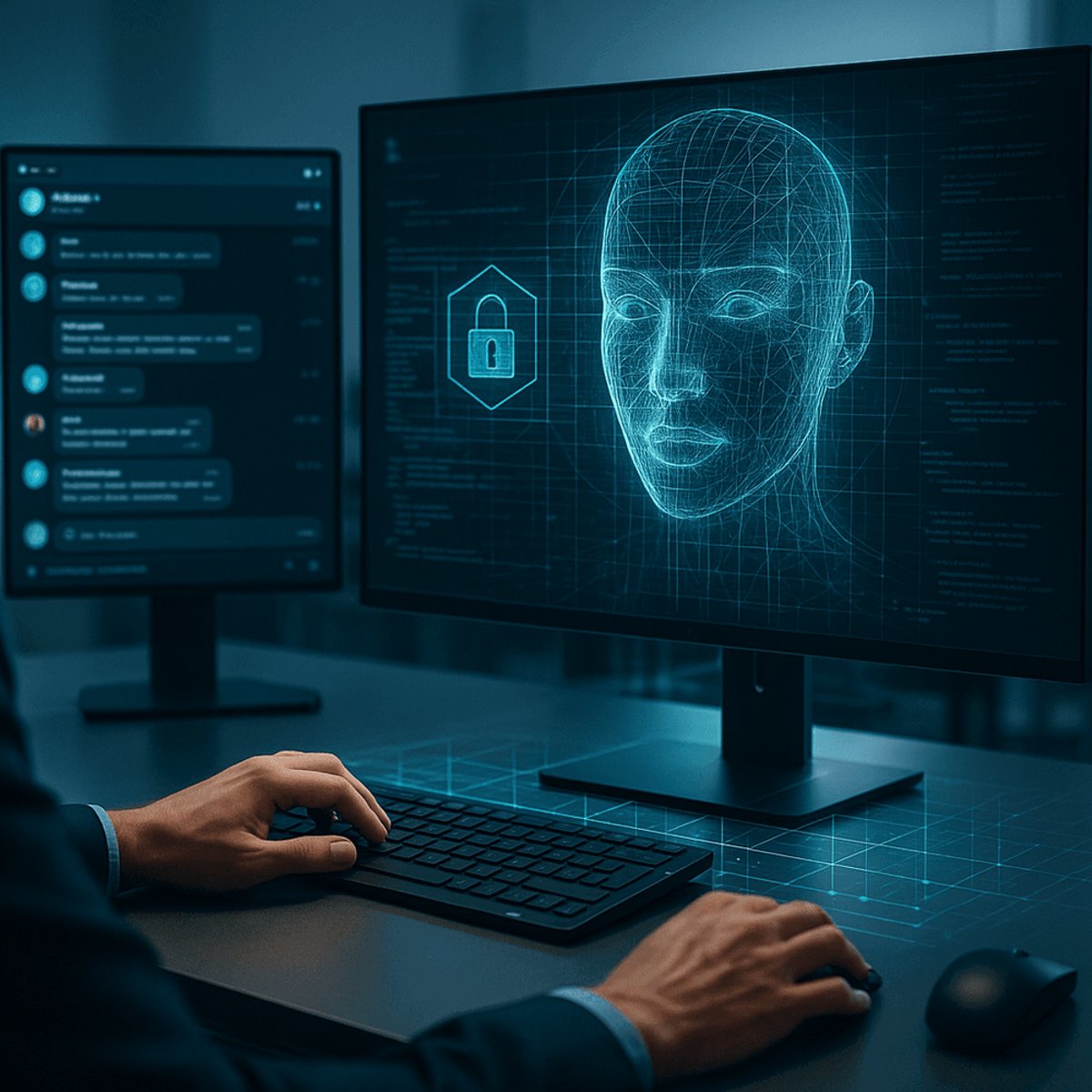
A disturbing gig economy is emerging in the shadows of Telegram. Dozens of channels are actively recruiting what they call 'AI face models' - mostly women who unknowingly (or willingly) lend their faces to sophisticated deepfake scam operations. According to a WIRED investigation, these models are being deployed to conduct up to 100 video calls per day, their likenesses weaponized through AI to dupe victims out of money in what represents a dark evolution of romance and investment fraud.
The job posting sounds almost legitimate at first glance. Work from home. Flexible hours. Good pay. But buried in the requirements is something far more sinister: applicants need to be comfortable having their face used for 'AI modeling' - a euphemism that barely conceals the criminal enterprise underneath.
WIRED's Matt Burgess spent weeks infiltrating dozens of Telegram channels where these recruitment operations run openly. What he found reveals how deepfake technology has spawned an entire underground labor market, complete with job listings, interview processes, and performance quotas. The models being hired aren't creating content for entertainment or marketing. They're becoming the faces of fraud.
The mechanics are chillingly efficient. Scammers capture video and images of recruited models, then feed that footage into AI systems that can generate realistic video calls in real-time. Some operations demand their 'employees' participate in up to 100 video calls per day - an industrial scale that would be impossible without synthetic media technology. Victims believe they're video chatting with a real person, developing trust and emotional connections that scammers exploit to extract money through romance scams, fake investment schemes, or cryptocurrency fraud.
What makes this particularly insidious is the blurred line of complicity. Some models may genuinely not understand how their likeness will be used, lured by promises of easy income. Others likely know exactly what they're signing up for. The Telegram channels reviewed by WIRED don't exactly hide their intent - the term 'AI face model' itself suggests something beyond traditional modeling work. But the channels operate in linguistic grey areas, using coded language that provides just enough plausible deniability.
The gender dynamics are impossible to ignore. These operations overwhelmingly target women as face models, exploiting societal biases about who victims are more likely to trust in romantic or financial contexts. It's a weaponization of both AI technology and gender stereotypes, creating synthetic women designed to manipulate and deceive. The women who participate become simultaneously victims and perpetrators in a system that commodifies their appearance for criminal purposes.
Cybersecurity researchers have been warning about the deepfake threat for years, but this represents an evolution they didn't fully anticipate. Earlier concerns focused on deepfakes of public figures or non-consensual pornography. This is different - it's the deliberate, systematic recruitment of ordinary people to create scalable fraud infrastructure. It's the gig-ification of identity theft.
The technical barriers that once limited deepfake creation have essentially collapsed. What required specialized equipment and expertise two years ago now runs on consumer hardware with openly available AI models. Real-time face-swapping technology has improved to the point where video calls can be convincingly faked with minimal latency. The technology isn't just accessible - it's commodified, packaged into turnkey solutions that fraud operations can deploy at scale.
Law enforcement faces a nightmarish challenge. These operations are decentralized, operating across borders through encrypted messaging apps. The models themselves may be in one country, the scam operators in another, and the victims scattered globally. Traditional fraud investigation techniques struggle when the person on a video call isn't actually the person on the video call. How do you prosecute someone whose face was used, but who may or may not have knowingly participated in the scam?
The investigation also exposes gaps in platform accountability. Telegram has long positioned itself as a privacy-focused alternative to mainstream social platforms, but that same commitment to minimal moderation creates spaces where criminal recruitment happens in plain sight. The channels WIRED reviewed weren't hidden in dark corners of the internet - they were searchable, joinable, and actively posting job listings.
For potential victims, the implications are sobering. The traditional advice to 'verify you're talking to a real person through video chat' no longer provides protection. The person on the call might look real, sound real, and respond in real-time - but still be a sophisticated AI construction. Trust signals that humans have relied on for millennia are being systematically undermined by synthetic media.
Some technology companies are developing detection tools, watermarking systems, and authentication protocols designed to verify human identity in video calls. But it's an arms race where the attackers currently have the advantage. Detection technology lags behind generation technology, and even when deepfakes are detected, the damage to victims may already be done.
The economic incentives driving this underground market show no signs of slowing. Romance scams and investment fraud already cost victims billions annually. Adding convincing video chat capabilities dramatically increases success rates. For scam operations, recruiting face models is a small upfront cost with enormous potential returns. For desperate job seekers, it might seem like easy money - until they understand the human cost of the fraud they're enabling.
This investigation reveals how AI hasn't just created new types of scams - it's created new labor markets around deception itself. The women recruited as 'AI face models' exist in a murky ethical space, their faces becoming products in an economy built on manipulation. For the rest of us, it's a wake-up call that video evidence of humanity can no longer be taken at face value. The deepfake threat isn't coming - it's here, industrialized, and hiring. What we do about platform accountability, AI regulation, and victim protection in the next year will determine whether this remains a fringe problem or becomes the new normal in digital fraud.