Tesla CEO Elon Musk and Nvidia CEO Jensen Huang are headlining a high-stakes AI discussion at the U.S.-Saudi Investment Forum today, just one day after Saudi Arabia pledged $1 trillion in U.S. investments during Crown Prince Mohammed bin Salman's White House visit. The timing signals how AI infrastructure has become central to the new Trump administration's economic diplomacy.
The tech industry's biggest names are converging on Washington's Kennedy Center today as Tesla CEO Elon Musk and Nvidia CEO Jensen Huang take center stage at the U.S.-Saudi Investment Forum. The discussion on artificial intelligence, advanced computing, and digital infrastructure comes at a pivotal moment for both American tech leadership and Middle Eastern investment flows.
The forum's timing isn't coincidental. Just 24 hours earlier, Saudi Crown Prince Mohammed bin Salman wrapped up his first White House meeting with President Trump since May, where the Kingdom dramatically expanded its U.S. investment commitment. According to White House statements, Saudi Arabia increased its pledge from an initial $600 billion to a staggering $1 trillion in trade and investment commitments.
Both Musk and Huang attended Trump's private dinner for the Crown Prince Tuesday night, marking a significant moment for the tech leaders. For Musk, it represents his first White House appearance since his public feud with Trump in June, when the two traded barbs on X after the Tesla CEO criticized the president's tax-and-spending-cut legislation.
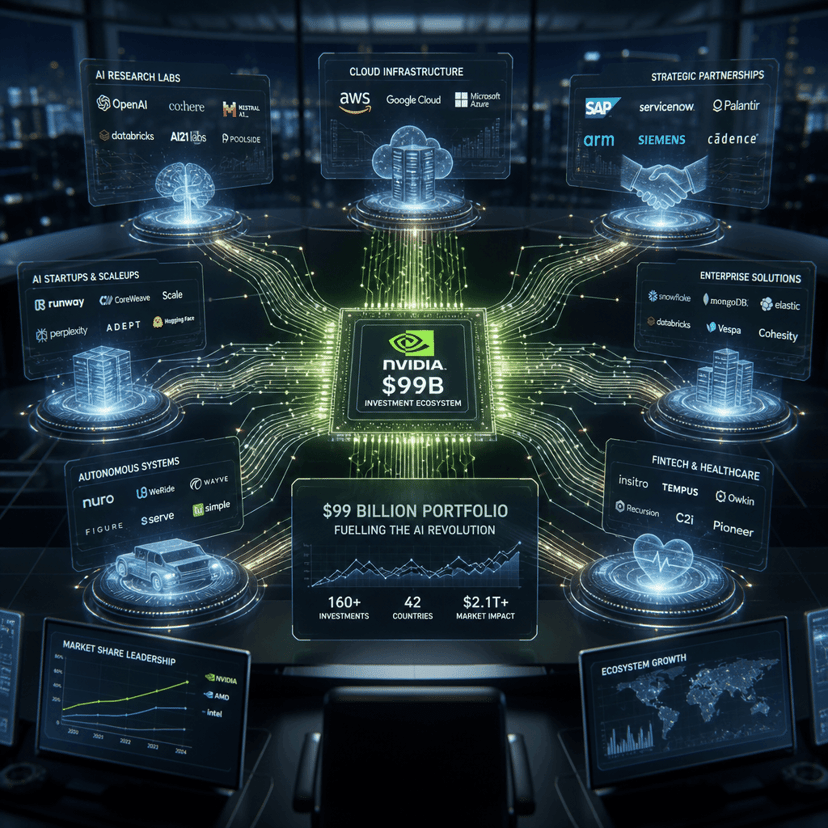
The Saudi forum puts AI at the heart of a broader geopolitical chess game. Nvidia's Jensen Huang has been positioning the company as the backbone of global AI infrastructure, with recent earnings hinting at what he calls a "half-trillion" dollar opportunity ahead. Meanwhile, Tesla's Musk continues pushing the boundaries of autonomous systems and neural networks through both Tesla's Full Self-Driving technology and his broader AI ventures.
Saudi Arabia's massive investment pledge aligns perfectly with the Kingdom's Vision 2030 diversification strategy, which heavily emphasizes technology and digital transformation. The country has been aggressively courting Silicon Valley, establishing funds like the $500 billion NEOM project that promises to create a futuristic smart city powered by renewable energy and advanced AI systems.
For the Trump administration, hosting this forum represents a clear signal about economic priorities. The president has consistently emphasized bringing manufacturing and high-tech investments back to American shores, and Saudi Arabia's trillion-dollar commitment provides substantial ammunition for that agenda.
The conversation between Musk, Huang, and Saudi Communications Minister Abdullah A. Alswaha will likely cover critical infrastructure questions that extend far beyond typical tech discussions. How will AI data centers be powered? Where will the massive computing clusters be built? And crucially, how will American AI leadership be maintained in an increasingly competitive global landscape?
Nvidia's recent partnerships, including its collaboration with Arm on custom chips, demonstrate how quickly the AI hardware ecosystem is evolving. Saudi investment could accelerate these developments, potentially funding new chip fabrication facilities or data center complexes on American soil.
The forum also highlights how AI discussions have moved from Silicon Valley boardrooms to the highest levels of international diplomacy. When tech CEOs sit alongside foreign ministers discussing digital infrastructure, it signals that AI has become as strategically important as energy or defense partnerships.
What emerges from today's Kennedy Center discussion could reshape both the AI industry's funding landscape and America's technological competitiveness. With Saudi Arabia's deep pockets and long-term vision meeting Silicon Valley's innovation engine, the conversation represents more than just another tech conference - it's a preview of how AI development will be financed and deployed in the coming decade.
Today's forum represents a watershed moment where AI leadership, international investment, and geopolitical strategy converge. As Musk and Huang outline the future of artificial intelligence to Saudi decision-makers, they're not just discussing technology - they're helping reshape how America funds and develops the tools that will define the next economic era. The trillion-dollar Saudi commitment provides the capital, while Silicon Valley provides the innovation. How these forces combine will determine whether the U.S. maintains its AI advantage or faces new competitive pressures from well-funded international rivals.