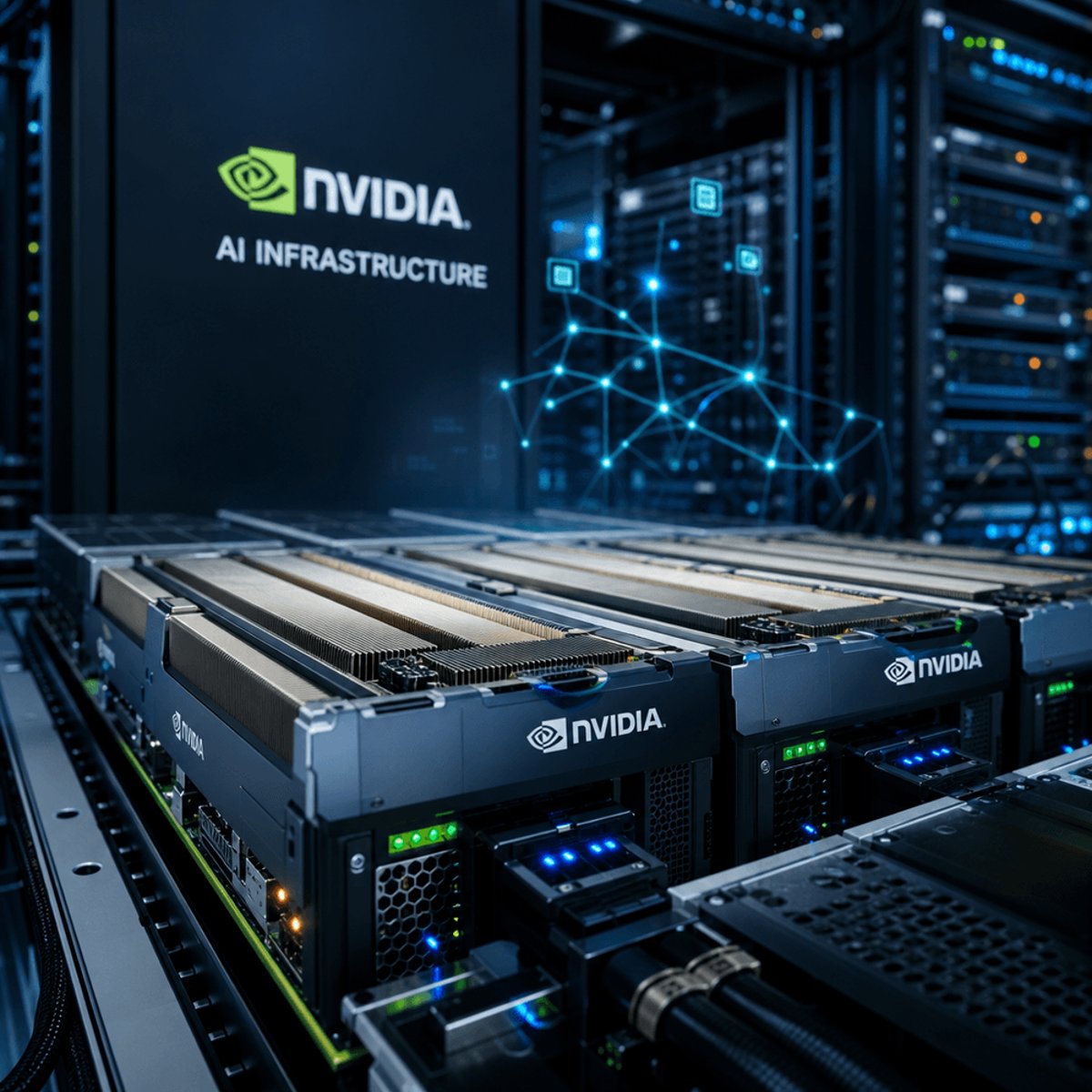
Nvidia just set the bar for agentic AI infrastructure. The company's Blackwell Ultra NVL72 platform crushed the first industry-standard benchmark for AI agents, delivering 20x more agents per megawatt than previous-generation systems. With enterprises racing to deploy autonomous AI systems that can plan, reason, and execute complex tasks, this benchmark from Artificial Analysis gives them their first apples-to-apples comparison for infrastructure decisions - and Nvidia's leaving rivals scrambling to catch up.
Nvidia just gave enterprises their first real yardstick for measuring agentic AI infrastructure - and promptly topped it. The chipmaker's Blackwell Ultra NVL72 platform leads AgentPerf, a new benchmark from Artificial Analysis that measures how well systems handle AI agents capable of autonomous multi-step reasoning.
The results couldn't come at a better time. While the AI hype cycle's been dominated by chatbots and image generators, enterprises are quietly shifting budgets toward agentic AI - systems that don't just respond to prompts but can plan strategies, use tools, and execute complex workflows without human hand-holding. Think AI that schedules your meetings after reading your email, negotiates with vendors, or debugs code by spinning up test environments and iterating through solutions.
According to Nvidia's blog post, the Blackwell Ultra NVL72 runs 20x more agents per megawatt compared to Nvidia's own previous-generation hardware. That efficiency leap matters because agentic AI is brutally compute-intensive. Unlike a chatbot that fires off a single response, agents make dozens or hundreds of inference calls as they reason through problems, query databases, and refine their approaches.
The benchmark tests real-world scenarios enterprises actually care about - customer service agents that handle returns and complaints across multiple systems, coding assistants that write and test software, and business process agents that coordinate between departments. Previous AI benchmarks measured raw speed or accuracy on narrow tasks, but AgentPerf evaluates end-to-end performance as agents juggle multiple tools and decision points.
Nvidia's dominance here isn't surprising given the company controls roughly 90% of the AI accelerator market, but the 20x efficiency gain over its own previous chips shows just how aggressively the company's pushing performance. The Blackwell architecture, which started shipping to select customers earlier this year, packs architectural improvements specifically designed for the kind of rapid-fire inference calls agentic workflows demand.
For cloud providers like Amazon Web Services, Microsoft Azure, and Google Cloud, these results will drive infrastructure planning for the next 18 months. All three have been stockpiling Blackwell chips, and this benchmark gives them ammunition to pitch agentic AI capabilities to enterprise customers who've been sitting on the sidelines waiting for proof that the technology scales.
The power efficiency angle is critical. Data centers are already struggling with AI's energy demands, and agents multiply that challenge because they run continuously rather than responding to occasional queries. Nvidia's ability to cram 20x more agents into the same power envelope means enterprises can deploy agent fleets without blowing up their electricity bills or carbon footprints.
Artificial Analysis, the firm behind AgentPerf, has been tracking AI model performance and pricing for developers since 2023. The new benchmark fills a gap as enterprises move beyond proof-of-concept chatbots to production agent deployments. Without standardized metrics, companies were flying blind when comparing infrastructure options - often discovering only after deployment that systems couldn't handle agent workloads efficiently.
The timing aligns with a broader industry shift. OpenAI has been pushing agent capabilities in its latest models, Anthropic released Claude with enhanced tool use, and Microsoft is embedding autonomous agents throughout its Copilot ecosystem. Enterprises need infrastructure that can keep pace, and this benchmark gives them a common language for evaluating options.
What the results don't show is pricing. Nvidia hasn't disclosed what the Blackwell Ultra NVL72 costs, though industry estimates peg full systems at $300,000 to $500,000. For hyperscalers buying at volume, the 20x efficiency gain likely justifies the premium. For smaller enterprises, the question becomes whether to build on-premise infrastructure or rent capacity from cloud providers who'll pass along efficiency savings - eventually.
Competitors aren't standing still. AMD is pushing its MI300 series for AI workloads, while startups like Cerebras and Groq are pitching alternative architectures optimized for inference. But Nvidia's software moat - the CUDA ecosystem and now agent-specific optimizations - makes it brutally hard for rivals to catch up even when they match raw hardware specs.
Nvidia's benchmark victory matters less than what it represents - the industry finally has standards for measuring infrastructure that powers AI's next evolution. As enterprises shift from experimental chatbots to production agent deployments handling customer service, coding, and business automation, they need data to justify infrastructure investments. AgentPerf gives them that foundation, while Nvidia's 20x efficiency leap sets the pace rivals will struggle to match. The real competition starts now, as AMD, startups, and cloud providers race to prove they can deliver comparable agent performance at competitive economics. For enterprises planning 2026 AI budgets, these benchmarks just became required reading.