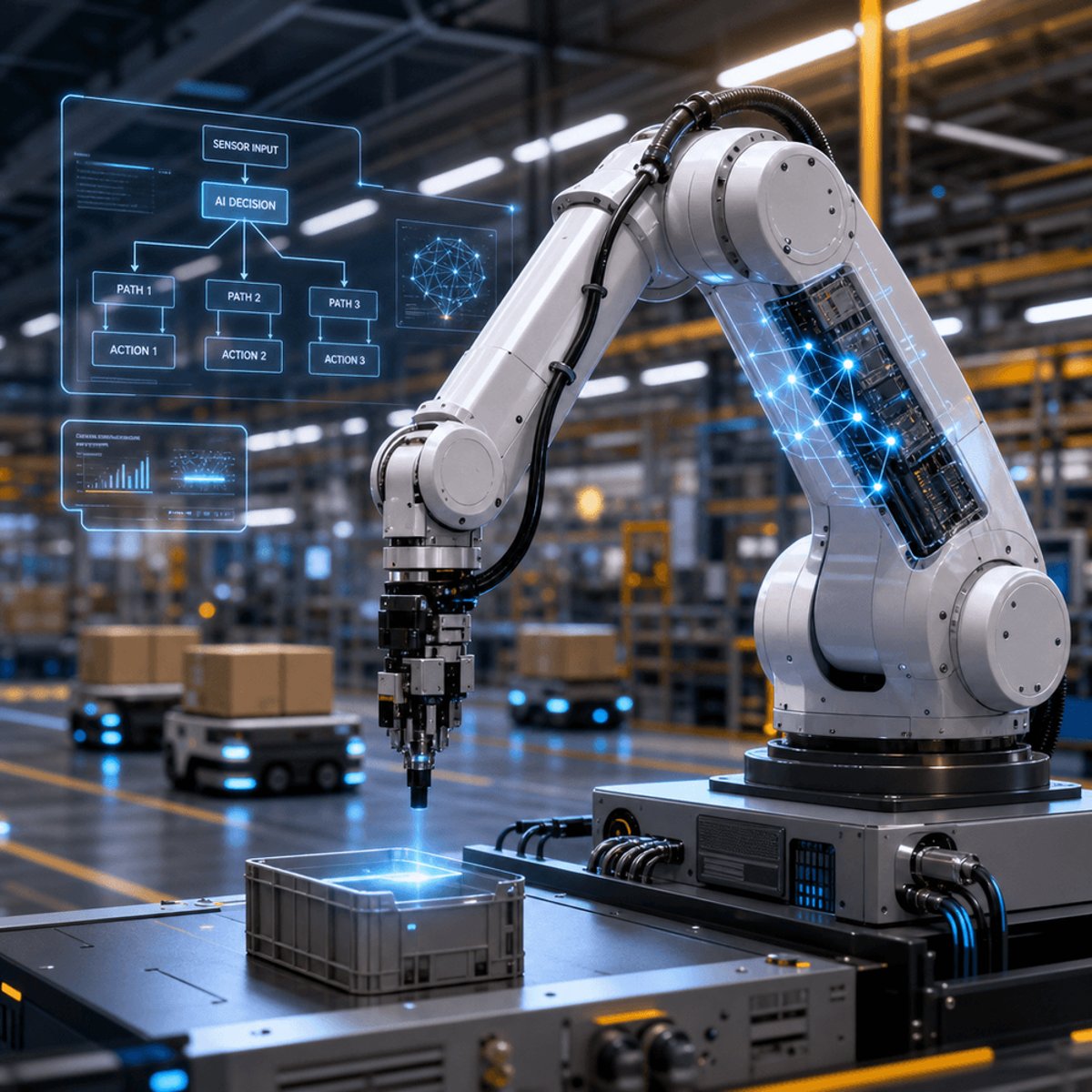
Nvidia just opened a new front in the AI wars - and this one's physical. At COMPUTEX on Tuesday, the chipmaker announced JetPack 7.2 and NemoClaw support for its Jetson platform, bringing agentic AI capabilities to robots, autonomous vehicles, and industrial edge devices. While competitors fight over cloud infrastructure and consumer PCs, Nvidia's quietly building the brains for machines that actually move and interact with the physical world.
Nvidia just made robots a lot smarter. The company's JetPack 7.2 release, unveiled at COMPUTEX in Taipei, brings agentic AI capabilities to its Jetson edge computing platform - a move that could reshape how autonomous systems operate in factories, warehouses, and on roads worldwide.
The timing couldn't be more strategic. While the tech industry obsesses over large language models running in data centers, Nvidia's betting that the real AI revolution happens at the edge, where milliseconds matter and internet connections can't always be trusted. JetPack 7.2 delivers exactly that capability, packing advanced reasoning and decision-making directly into compact modules that fit inside robots, drones, and industrial equipment.
At the heart of the update sits CUDA 13 support for Nvidia Jetson Orin, the company's workhorse edge AI chip. The announcement via Nvidia's blog reveals substantial performance improvements on the Jetson AGX Orin 32GB module, though the company hasn't disclosed specific benchmark numbers yet. Industry watchers expect the gains to be significant enough to enable real-time inference for models that previously required cloud offloading.
But the real game-changer is NemoClaw integration. Nvidia's agent framework, which has been powering enterprise AI applications in data centers, now runs locally on Jetson hardware. This means a warehouse robot can reason about its environment, plan multi-step tasks, and adapt to unexpected obstacles without ever pinging a server. For applications where latency kills - think autonomous forklifts navigating busy factory floors - that's transformative.
The addition of Yocto project support is a quieter but equally important move. Yocto is the Linux-based framework that powers embedded systems across industries, from medical devices to aerospace. By embracing it, Nvidia's opening Jetson to a massive ecosystem of industrial developers who've been locked into older, less capable platforms. It's a direct challenge to competitors like Qualcomm and Intel, whose edge AI offerings have struggled to gain traction in robotics.
Multi-Instance GPU support on Jetson Thor represents another strategic leap. MIG technology, which Nvidia's been refining in its data center GPUs, lets a single chip run multiple AI workloads simultaneously in isolated partitions. For autonomous vehicles, that could mean vision processing, path planning, and sensor fusion all running in parallel on one module - with guaranteed performance isolation for safety-critical tasks.
The physical AI market is heating up fast. Tesla builds its own chips for Optimus robots and vehicles. Amazon designs custom silicon for warehouse automation. But Nvidia's betting that most companies would rather buy proven platforms than invest billions in chip development. JetPack 7.2 makes that bet more compelling by delivering capabilities that were science fiction just months ago.
What's missing from Tuesday's announcement is pricing and availability details for the new capabilities. Nvidia's also been quiet about which specific agentic AI models will run efficiently on Jetson hardware - a crucial detail for developers planning deployments. The company typically reveals those specifics closer to general availability.
The broader context matters here. Nvidia's dominance in AI training chips is unchallenged, but the edge inference market remains fragmented and competitive. By bringing sophisticated agentic capabilities to Jetson, the company's trying to lock in the same kind of developer ecosystem advantage that made CUDA indispensable for data center AI. If it works, every startup building autonomous robots or smart IoT devices becomes a Nvidia customer by default.
Nvidia's JetPack 7.2 launch signals a fundamental shift in where AI intelligence lives. As agentic capabilities move from cloud servers to edge devices, the company's positioning Jetson as the default platform for physical AI - from factory floors to autonomous vehicles. The question isn't whether robots will get smarter, but whether Nvidia can lock in the same ecosystem dominance at the edge that it already enjoys in data centers. With Tesla building custom chips and startups exploring alternatives, the answer depends on how quickly developers can turn Tuesday's announcements into production deployments. For now, Nvidia's several steps ahead in a race that's just getting started.