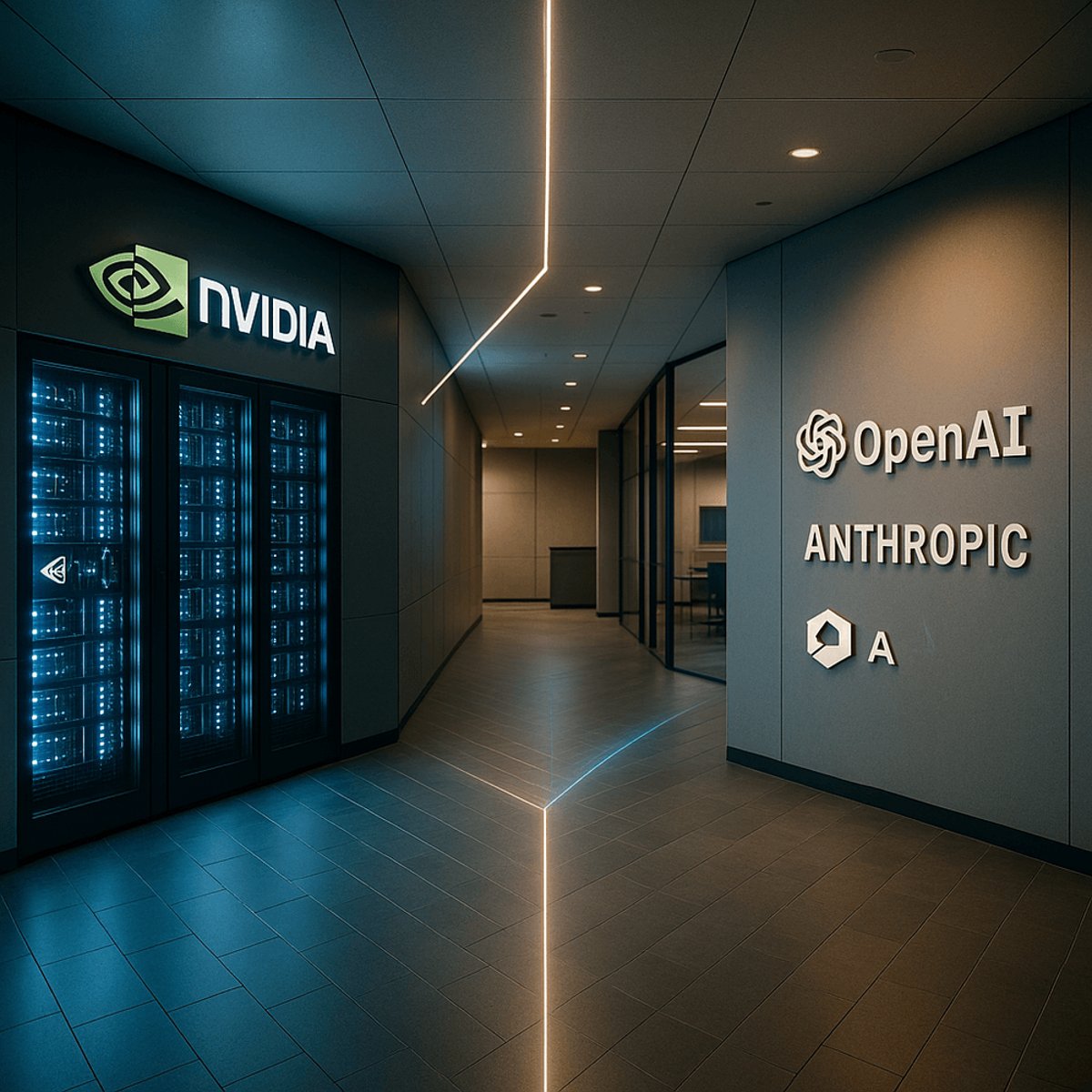
Nvidia CEO Jensen Huang just dropped a bombshell that's reshaping the AI investment landscape. Speaking Wednesday, Huang confirmed the chip giant is pulling back from direct investments in OpenAI and Anthropic, calling these bets likely its last in the AI lab space. The move marks a dramatic shift for the company that's powered the entire generative AI boom, and Huang's cryptic explanation is leaving industry insiders scrambling to decode what's really happening behind the scenes.
Nvidia has been the quiet kingmaker of the AI boom, supplying the H100 and A100 GPUs that power everything from ChatGPT to Claude. But now Jensen Huang is stepping back from the venture capital game, and his reasoning doesn't quite add up.
The leather-jacket-clad CEO made the announcement Wednesday, confirming that Nvidia's investments in the two leading AI labs would likely be its last. The timing is curious. Both OpenAI and Anthropic are Nvidia's biggest customers, burning through tens of thousands of GPUs to train their large language models. So why would Nvidia walk away from equity stakes in companies that are basically printing money for its hardware division?
Huang's explanation, as reported by TechCrunch, was notably thin on details. He didn't cite regulatory concerns, though those are mounting. He didn't mention returns, though OpenAI's recent valuation topped $150 billion and Anthropic has been climbing fast. The lack of clarity is fueling speculation that something bigger is at play.
One theory gaining traction: conflict of interest. Nvidia has been aggressively expanding beyond just selling chips. The company now offers cloud AI services, enterprise AI platforms, and consulting that puts it in increasingly direct competition with the very startups it once backed. Holding equity stakes in OpenAI and Anthropic while building rival offerings creates obvious tensions.
Nvidia's transformation from pure hardware play to full-stack AI provider has been swift. The company's AI Enterprise software suite directly competes with solutions from AI labs. Its DGX Cloud service offers ready-made AI infrastructure that could cannibalize demand for the custom setups that OpenAI and Anthropic have built. When you're both investor and competitor, things get messy fast.
There's also the regulatory angle that Huang conveniently didn't address. Antitrust scrutiny of Big Tech's AI investments has intensified globally. Microsoft's $13 billion stake in OpenAI is under investigation in multiple jurisdictions. Amazon's $4 billion bet on Anthropic has raised similar red flags. Nvidia may be getting ahead of regulatory blowback by voluntarily stepping back before regulators force its hand.
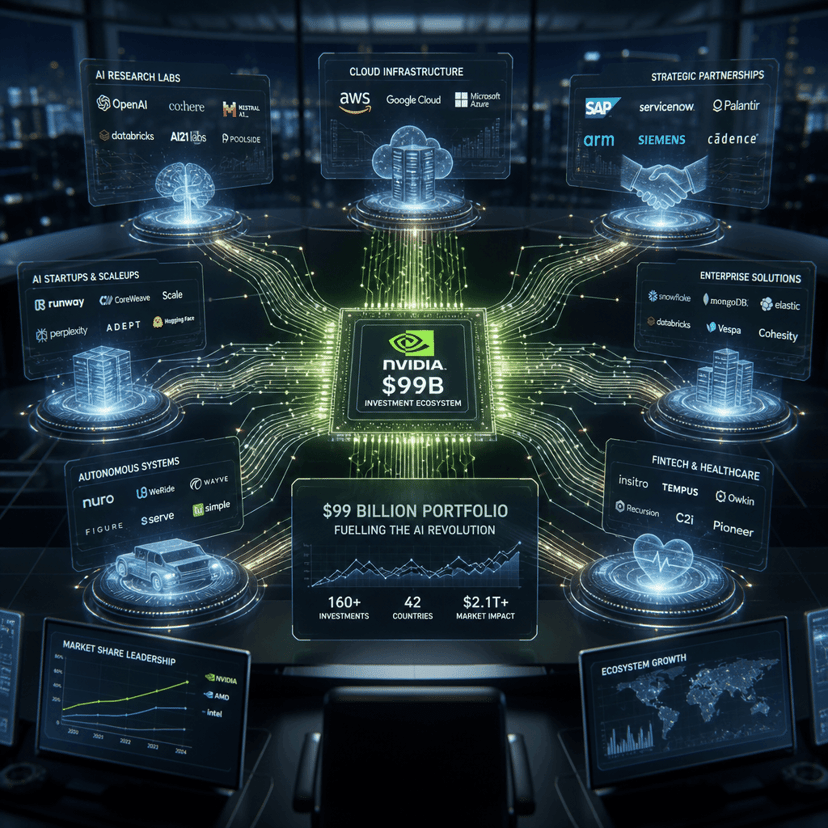
But here's what makes this really interesting: Nvidia isn't hurting for ways to deploy capital. The company is sitting on a war chest that could fund dozens of AI startups. Walking away from what should be highly strategic investments suggests either the returns weren't compelling, the conflicts became untenable, or Huang sees better opportunities elsewhere.
The pullback also changes the funding equation for AI labs. OpenAI and Anthropic have benefited enormously from having Nvidia as both supplier and investor. That relationship gave them preferential access to GPUs during shortage periods and strategic alignment with the company that controls the AI infrastructure stack. Losing that investor relationship, even while maintaining the customer relationship, shifts the power dynamic.
Industry insiders are already speculating about what comes next. Does Nvidia redirect that investment capital into vertical-specific AI companies that won't compete with its platform ambitions? Does it double down on its own AI services buildout? Or is this the start of a broader retreat from venture investing as the company focuses on its core chip business amid intensifying competition from AMD and custom silicon from Google and Amazon?
Huang's track record suggests there's a calculated strategy here, even if he's not revealing it yet. The Nvidia CEO has consistently stayed several moves ahead of the market, from betting on parallel computing decades ago to pivoting hard into AI before it became the hottest sector in tech. His decision to pull back from AI lab investments isn't random - it's intentional, and likely more revealing than his sparse explanation suggests.
What's clear is that the cozy relationship between chip makers and AI labs is evolving. As Nvidia builds out its own AI services and platforms, maintaining arms-length relationships with potential competitors makes strategic sense. But it also signals a maturation of the AI industry, where the lines between infrastructure providers, platform companies, and application builders are increasingly blurred.
Huang's announcement marks a pivotal moment in AI's funding evolution. As Nvidia transitions from enabler to competitor in the AI stack, its investment pullback likely signals broader industry realignment. For OpenAI and Anthropic, losing Nvidia as an investor won't stop their momentum, but it changes the strategic calculus around GPU access and partnership leverage. The real question isn't why Nvidia is stepping back - it's what the company is planning next that makes these investments unnecessary. Watch for Nvidia to announce new AI service offerings or strategic partnerships that reveal the method behind Huang's maddeningly vague explanation.