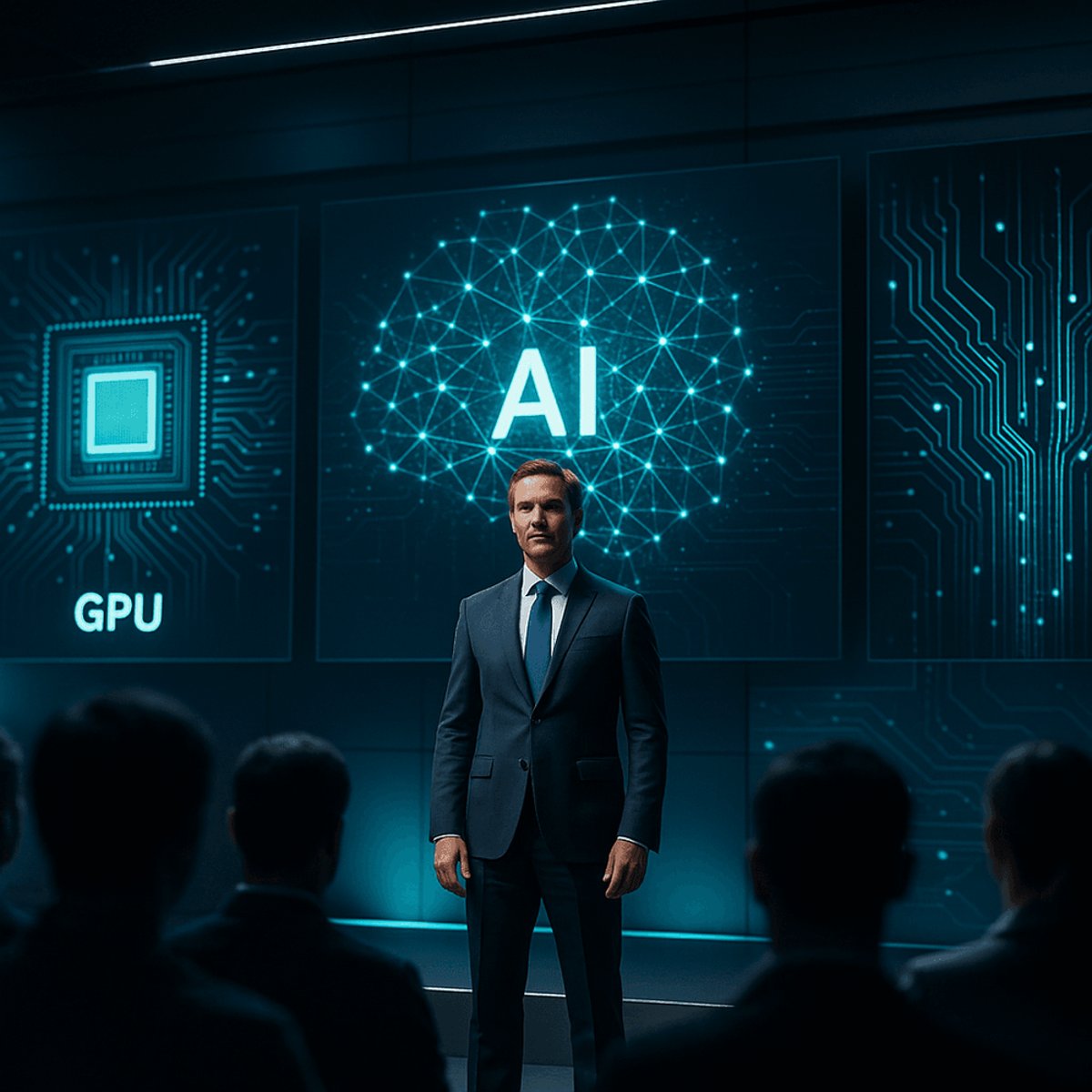
Jensen Huang takes the stage at Nvidia's flagship GTC 2026 conference today, with the chip industry watching for what could reshape the AI infrastructure landscape. The keynote comes as Nvidia defends its dominance in AI computing against mounting pressure from rivals and customers building their own silicon. With the company controlling over 80% of the AI accelerator market, any product announcement carries instant implications for everyone from startups to tech giants betting billions on AI.
Nvidia CEO Jensen Huang's GTC 2026 keynote isn't just another product reveal - it's a referendum on who controls the infrastructure powering the AI revolution. The chipmaker's annual developer conference kicks off today with all eyes on whether Huang can maintain Nvidia's iron grip on AI accelerators while competitors circle.
The stakes couldn't be higher. Nvidia currently commands more than 80% of the AI chip market, a position that's made it one of the world's most valuable companies. But that dominance is facing its toughest test yet. Google and Amazon have poured billions into custom AI chips, while AMD and Intel scramble to close the performance gap.
According to TechCrunch, Huang's keynote will focus on Nvidia's role in the future of computing and AI. That framing signals the company isn't content to just sell chips - it wants to define how AI infrastructure evolves. Industry insiders expect announcements spanning next-generation GPU architecture, software platforms, and potentially surprising partnerships.
GTC has become tech's most consequential hardware event, rivaling Apple's product launches for immediate market impact. Last year's conference saw Huang unveil the Blackwell architecture, sending Nvidia's stock soaring and triggering a scramble among cloud providers to secure supply. The ripple effects touched everything from data center construction to startup fundraising, as AI companies adjusted their technical roadmaps around Nvidia's timeline.
This year's context is different. The AI infrastructure landscape has matured rapidly, with enterprises demanding more than raw compute power. They want energy efficiency, cost optimization, and software ecosystems that simplify deployment. Microsoft and Meta have both hinted at developing custom silicon to reduce dependency on external suppliers, putting pressure on Nvidia to prove it can evolve beyond being a GPU vendor.
The competitive dynamics have shifted too. AMD recently claimed its MI300 series delivers competitive performance for large language model training at lower power consumption. Meanwhile, startups like Groq and Cerebras are carving out niches with specialized architectures. Even Apple, traditionally focused on consumer devices, has demonstrated that custom silicon can challenge Nvidia's performance benchmarks in specific workloads.
Analysts are watching for three key signals from today's keynote. First, how aggressively does Nvidia push into software and services versus pure hardware? The company's CUDA ecosystem remains its deepest moat, but competitors are building alternatives. Second, what's the roadmap for energy efficiency? AI training costs have become a boardroom issue, and whoever solves the power consumption problem wins enterprise budgets. Third, how does Nvidia address the custom chip threat from its biggest customers?
The financial stakes are staggering. Nvidia generated over $60 billion in data center revenue last year, driven almost entirely by AI demand. But that success has created expectations that are nearly impossible to sustain. Any hint of slowing momentum or market share erosion could trigger reassessments across the entire AI investment landscape. Conversely, breakthrough announcements could fuel another wave of infrastructure spending.
What makes this GTC particularly fascinating is the broader question it poses about platform control in the AI era. Unlike previous computing shifts where multiple vendors shared the market, AI infrastructure has concentrated around Nvidia's architecture. That concentration has accelerated innovation but also created vulnerabilities. A single supplier controlling critical infrastructure makes enterprises nervous, especially as AI becomes mission-critical.
Huang's challenge is threading an impossible needle - maintaining technological leadership while preventing customer defection, expanding software lock-in without appearing monopolistic, and pushing performance boundaries while addressing sustainability concerns. The keynote will reveal whether Nvidia can pull it off or if cracks are forming in the foundation of its AI empire.
Today's GTC keynote matters far beyond Nvidia's product roadmap. It's a stress test for the entire AI infrastructure thesis that's driven trillions in market value and reshaped enterprise technology strategy. Whether Huang announces evolutionary improvements or revolutionary architecture shifts, the decisions made in this keynote will ripple through every AI project, every cloud provider's roadmap, and every venture capital thesis for the next year. For anyone building on AI or betting on its future, this isn't optional viewing - it's required homework on where the industry goes next.