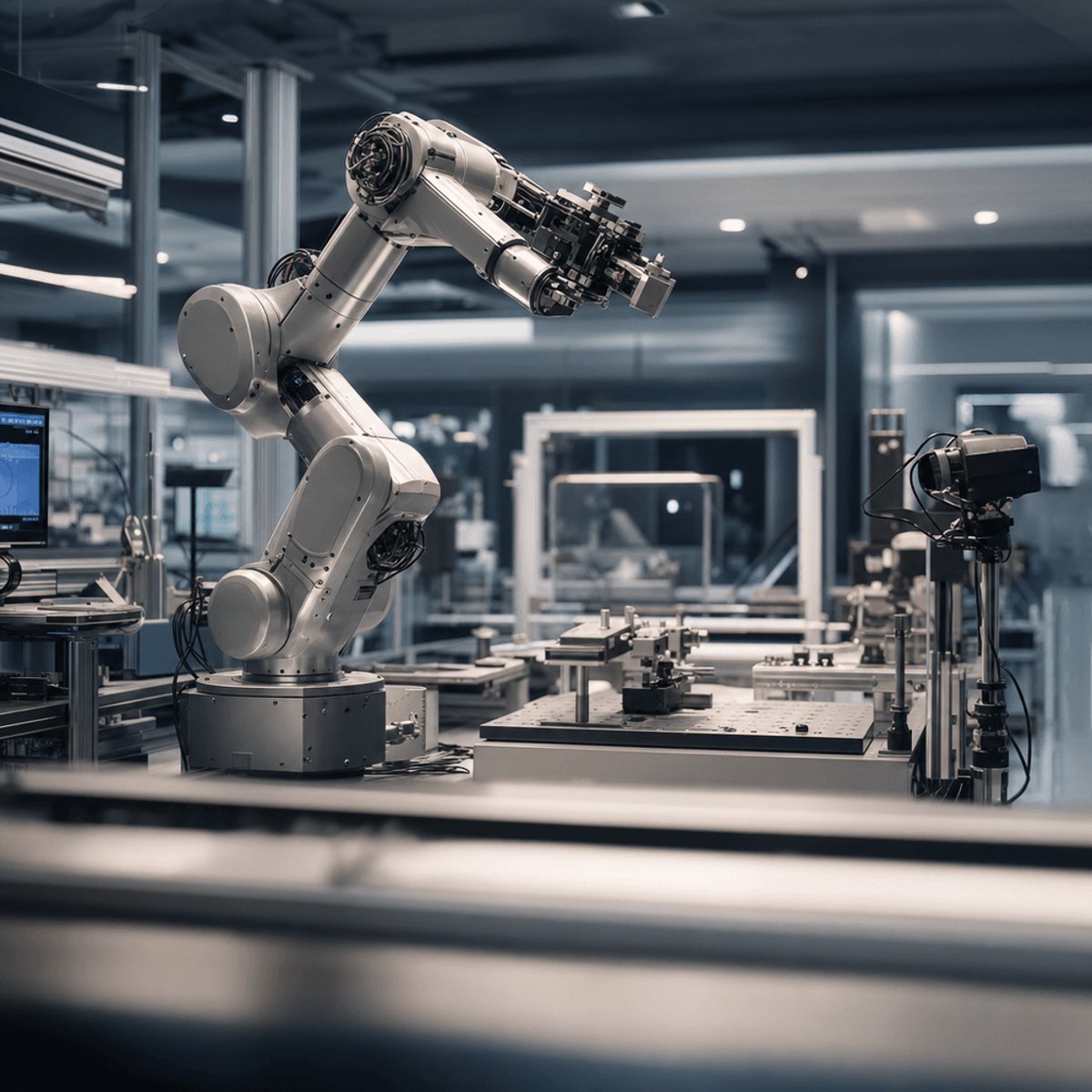
Nvidia is planting a flag in Southeast Asia's AI race. The chipmaker announced it's opening a research center in Singapore focused on physical AI - the technology that powers robots, autonomous systems, and smart infrastructure. The move comes as the city-state rolls out its first testbed for researching and deploying AI systems in real-world environments, positioning itself as a global hub for next-generation AI development alongside industry partners.
Nvidia is expanding its global footprint with a new research facility in Singapore, marking the chip giant's latest bet on physical AI - the branch of artificial intelligence that interacts with the real world through robots, autonomous vehicles, and smart infrastructure. The announcement positions Singapore as a critical testing ground for AI technologies that go beyond chatbots and data analysis.
The Singapore government revealed the partnership as part of a broader initiative to establish the city-state as a leader in AI research and deployment. The collaboration includes the launch of Singapore's first physical AI testbed, a dedicated environment where companies can research, test, and refine AI systems before rolling them out at scale. Unlike traditional AI labs focused on software and algorithms, physical AI testbeds require specialized infrastructure to simulate real-world conditions for robotics, sensor networks, and autonomous systems.
For Nvidia, the move represents a strategic pivot from its dominance in data center chips toward the emerging market for embodied AI. The company has been aggressively expanding its robotics and simulation platforms, including Isaac for autonomous machines and Omniverse for digital twins. Singapore's dense urban environment and tech-forward government make it an ideal laboratory for testing these technologies in scenarios ranging from warehouse automation to smart city management.
The timing couldn't be more calculated. Physical AI is emerging as the next frontier after generative AI, with major tech companies racing to build systems that can perceive and interact with their surroundings. Tesla has been developing humanoid robots, while startups like Figure AI have raised hundreds of millions to commercialize autonomous workers. Nvidia's chips already power many of these systems, but establishing dedicated research hubs gives the company direct insight into real-world deployment challenges.
Singapore has been methodically building its AI credentials through government investment and strategic partnerships. The country's small size and centralized planning allow for rapid testing of new technologies that might face regulatory hurdles elsewhere. From autonomous delivery robots to smart traffic management, the city-state has served as a living lab for innovations that later scale globally. The new Nvidia research center plugs into this existing ecosystem while bringing the chipmaker's substantial R&D resources to bear on local challenges.
The research hub will work alongside other industry leaders, though specific partners haven't been disclosed. These collaborations typically involve hardware manufacturers, robotics companies, and AI software developers who need access to cutting-edge compute infrastructure and simulation tools. The testbed model allows multiple companies to share resources while maintaining competitive separation on proprietary technologies.
Physical AI systems require fundamentally different approaches than their purely digital counterparts. They need to process sensor data in real-time, make split-second decisions about physical actions, and operate safely in unpredictable environments. This demands specialized chips optimized for edge computing - processing data locally rather than sending it to distant data centers. Nvidia has been developing exactly these kinds of processors, and Singapore provides a controlled environment to validate their performance in everything from manufacturing floors to public spaces.
The competitive landscape is heating up fast. Intel has been pushing its own edge AI chips, while startups like Graphcore and Cerebras target specific workloads that challenge Nvidia's dominance. By embedding itself in key markets through research centers, Nvidia maintains its first-mover advantage while gathering intelligence on emerging use cases. Singapore joins existing Nvidia AI research facilities in the U.S., Israel, and other tech hubs, creating a global network that spans time zones and regulatory environments.
What makes this partnership particularly significant is its focus on deployment, not just research. Many AI labs produce impressive demos that never leave controlled settings. Singapore's testbed approach aims to bridge that gap by creating pathways from prototype to production. Companies can validate their systems under real conditions, work through regulatory approvals, and refine their business models before expanding to larger markets across Asia and beyond.
The announcement also reflects broader geopolitical currents in AI development. As the U.S. and China compete for technological supremacy, countries like Singapore are positioning themselves as neutral ground where global companies can collaborate. For Nvidia - which has faced restrictions on selling its most advanced chips to China - having research presence in friendly jurisdictions becomes increasingly strategic.
Nvidia's Singapore research hub signals a fundamental shift in how AI companies approach innovation - moving from pure research toward integrated testing environments where algorithms meet physical reality. For Singapore, it's validation of years of strategic investment in positioning itself as Asia's AI laboratory. As physical AI moves from concept to commercial deployment in factories, hospitals, and city streets, the partnerships forged in facilities like this will determine which companies and countries lead the next wave of automation. Watch for announcements about specific robotics and autonomous system partners joining the testbed, and expect other chip makers to follow Nvidia's playbook of embedding themselves in strategically important markets.