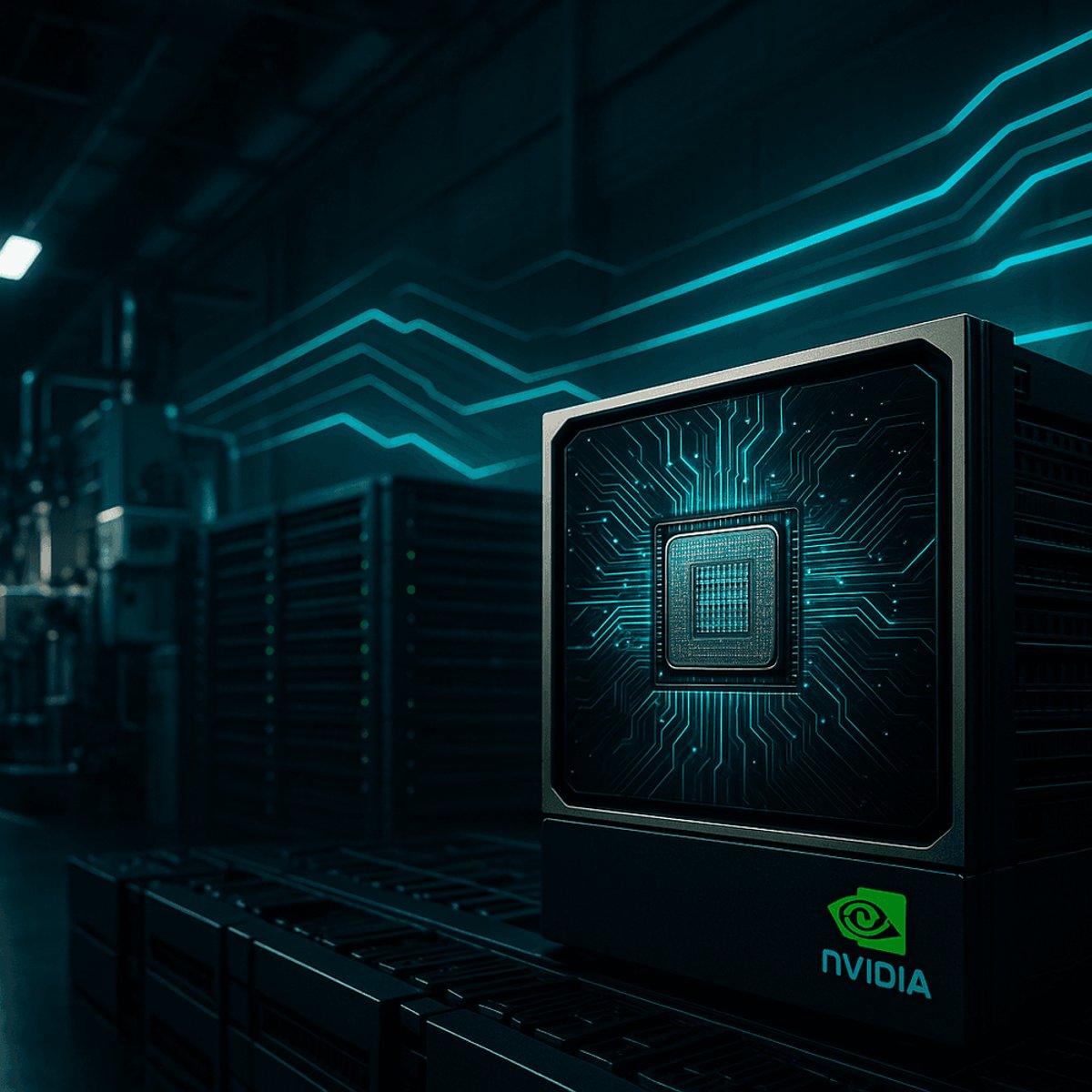
NVIDIA just made its boldest move beyond GPUs yet. The chipmaker unveiled the Vera CPU today, billing it as the world's first processor purpose-built for agentic AI and reinforcement learning. The specs are eye-catching: twice the efficiency and 50% faster performance than traditional rack-scale CPUs, according to NVIDIA's announcement. The launch signals NVIDIA's strategic push into specialized AI processors as autonomous agents become enterprise infrastructure.
NVIDIA isn't waiting for the agentic AI market to mature. The company dropped the Vera CPU today at GTC 2026, staking its claim in what could become the next battleground in AI infrastructure. While competitors like Intel and AMD continue refining general-purpose server chips, NVIDIA's betting that autonomous agents need fundamentally different silicon.
The performance claims are aggressive. Vera processes agentic AI workloads with twice the efficiency of traditional rack-scale CPUs, while delivering 50% faster results for reinforcement learning tasks. That's not just incremental improvement - it's the kind of leap that changes deployment economics. For enterprises running fleets of AI agents, those numbers translate directly to lower power bills and faster decision cycles.
What makes Vera different isn't just raw speed. Agentic AI systems spend most of their time making sequential decisions, planning multi-step actions, and learning from environmental feedback. Traditional CPUs, optimized for parallel throughput or single-threaded performance, weren't designed for this workload pattern. NVIDIA appears to have architected Vera around the specific compute rhythms of autonomous agents - though the company hasn't disclosed detailed technical specs yet.
The timing reveals NVIDIA's read on the market. While OpenAI, Anthropic, and Google have demonstrated increasingly capable AI agents in research settings, 2026 marks the year enterprises actually started deploying them at scale. Customer service bots that handle entire resolution workflows, coding assistants that debug and deploy autonomously, supply chain agents that renegotiate contracts - these aren't demos anymore.
NVIDIA built its GPU empire on being early to inflection points. The company dominated cryptocurrency mining by having the right chips ready when demand exploded. It captured the generative AI boom because its H100 and A100 GPUs were already shipping when ChatGPT went viral. Vera follows the same playbook: build specialized hardware before the market fully understands it needs specialized hardware.
The competitive implications ripple across the data center landscape. Intel has been pitching its Xeon processors as AI-capable for years, while AMD positions EPYC chips as cost-effective alternatives for AI inference. Both companies now face a new question: can general-purpose CPUs compete with purpose-built processors for the fastest-growing segment of AI compute?
NVIDIA hasn't disclosed pricing, availability, or whether Vera will be sold standalone or bundled with the company's GPU offerings. That silence matters. If Vera only ships as part of integrated systems, it becomes a strategic lock-in tool, binding customers deeper into NVIDIA's ecosystem. If it's available independently, NVIDIA's essentially declaring war on the traditional CPU market.
The bigger question is whether specialized processors for agentic AI represent genuine technical necessity or clever market segmentation. Skeptics might argue that well-optimized software could coax similar performance from existing hardware. But NVIDIA's track record suggests they've identified a real architectural mismatch between today's chips and tomorrow's workloads.
One thing's certain: every hyperscaler and enterprise AI team just added another variable to their infrastructure planning. Do they stick with general-purpose CPUs and optimize around them? Or do they embrace NVIDIA's vision of specialized silicon for specialized AI tasks? The answer will shape billions in procurement decisions over the next 24 months.
The Vera launch also positions NVIDIA for the next phase of AI development. As models grow larger and more capable, the bottleneck shifts from training to deployment. Agentic systems need to run continuously, making millions of small decisions rather than occasional large inferences. That's a fundamentally different scaling challenge than serving chatbot queries, and it demands different hardware trade-offs.
NVIDIA's Vera CPU launch isn't just a product release - it's a bet on how AI infrastructure evolves. By building chips specifically for agentic workloads before the market fully coalesces, NVIDIA's trying to repeat its GPU playbook in a new category. Whether enterprises buy the premise that autonomous agents need specialized silicon will determine if Vera becomes the next H100 or a niche product. Either way, the traditional CPU vendors just got a wake-up call that their general-purpose approach might not cut it in the age of AI agents.