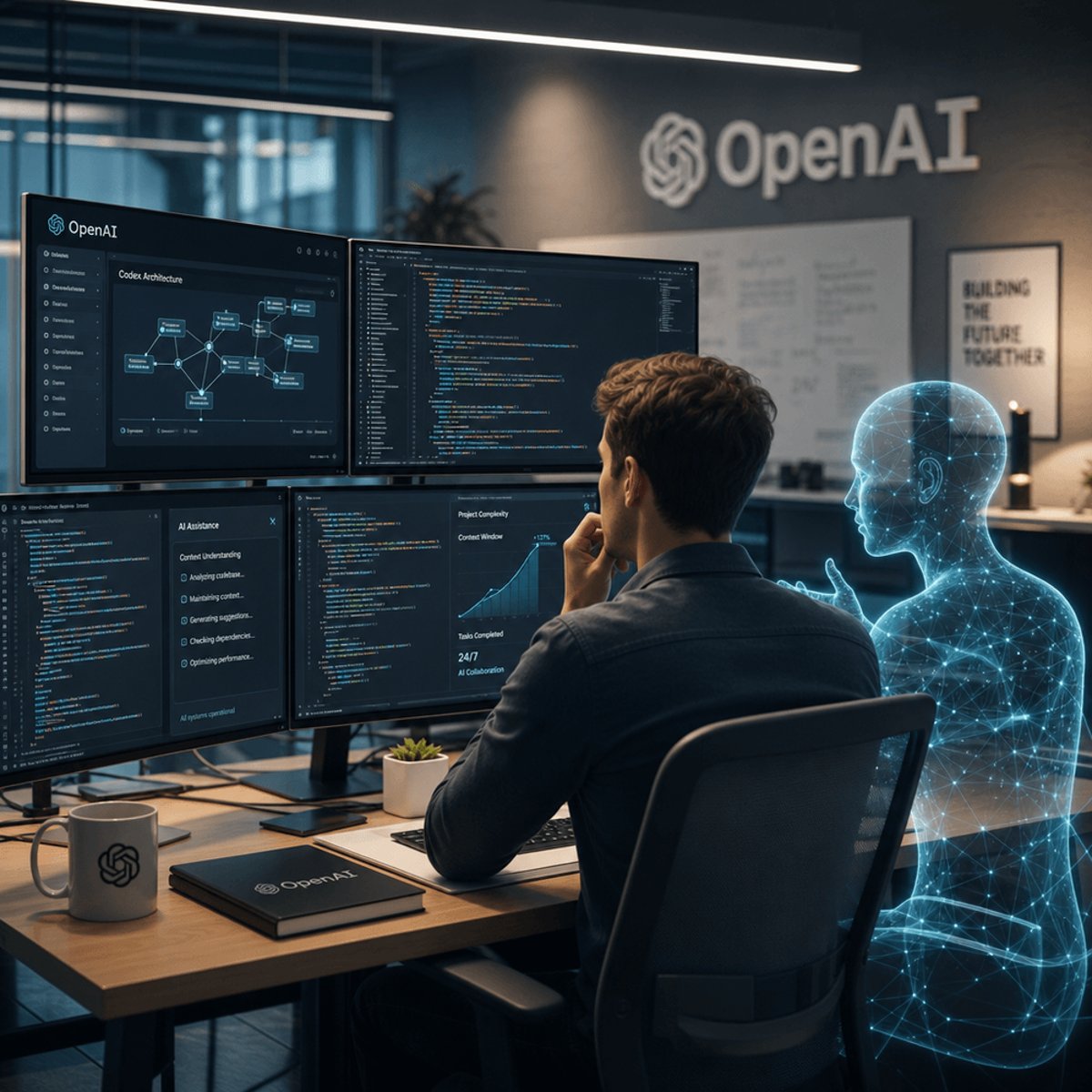
OpenAI is acquiring Ona, a move designed to supercharge its AI coding assistant Codex with capabilities for tackling longer-running development tasks. The acquisition signals OpenAI's push to compete more aggressively in the AI-powered developer tools market, where Microsoft's GitHub Copilot and Amazon's CodeWhisperer have been gaining traction. According to the announcement via CNBC, Ona's technology will specifically enable Codex to maintain context and execute more complex, time-intensive coding operations.
OpenAI just made a strategic play to level up its position in the AI coding wars. The company is acquiring Ona, a startup whose technology will enable Codex to handle the kind of lengthy, complex coding tasks that current AI assistants often fumble.
The timing couldn't be more critical. AI coding assistants have exploded from novelty to necessity over the past year, with GitHub Copilot reportedly crossing 1.8 million paid subscribers and Amazon's CodeWhisperer making aggressive inroads into enterprise development teams. But there's a persistent gap - most AI coding tools excel at autocomplete and short snippets but struggle with sustained, multi-step development workflows.
That's exactly where Ona comes in. While details remain sparse, the acquisition centers on Ona's ability to help Codex maintain context and execute over extended periods. Think refactoring entire codebases, debugging complex multi-file issues, or orchestrating deployment pipelines - tasks that require an AI to remember what it did five minutes ago and adjust accordingly.
OpenAI first introduced Codex back in 2021 as the engine powering GitHub Copilot through its partnership with Microsoft. But the landscape has shifted dramatically. Google has been integrating AI coding capabilities directly into its cloud platform, while startups like Replit and Cursor have built entire development environments around AI pair programming.
The developer tools market represents a massive opportunity - and existential battleground. Developers are among the highest-value enterprise users, and whoever controls their daily workflow commands serious pricing power. Microsoft charges $10-19 per user monthly for Copilot, and early data suggests these tools boost productivity by 25-40% for routine coding tasks.
But the real prize is moving upstream. Quick code completions are becoming commoditized - what developers actually need is an AI that can tackle the hard stuff. Planning architecture. Managing technical debt. Understanding business logic scattered across legacy systems. These longer-running, context-heavy tasks remain largely unsolved.
Ona's technology appears designed to bridge that gap. The ability to handle extended tasks without losing the thread or hallucinating incorrect solutions could differentiate Codex in an increasingly crowded market. It's the difference between an autocomplete tool and a genuine AI collaborator.
The acquisition also reflects broader industry trends. AI companies are realizing that raw model capabilities matter less than specialized tooling for specific workflows. Anthropic has been building coding-specific features into Claude, while Meta released Code Llama specifically optimized for programming tasks.
For OpenAI, this deal represents a defensive move as much as an offensive one. The company's early lead in generative AI has attracted fierce competition, and losing the developer tools market to Microsoft, Google, or Amazon would be a strategic blow. Developers are tastemakers and early adopters - if they standardize on a competitor's coding assistant, that preference tends to spread to other AI tools.
Financial terms weren't disclosed, but the deal likely values Ona in the tens of millions - small by Big Tech standards but meaningful for OpenAI as it navigates its complex relationship with Microsoft, which both partners with and competes against the AI startup. Microsoft has invested over $13 billion into OpenAI but also builds competing products.
The enterprise developer productivity market is expected to hit $65 billion by 2028, with AI-powered tools capturing an increasing share. Whoever cracks the code on long-running, contextually aware AI assistance won't just win developer mindshare - they'll reshape how software gets built.
OpenAI's Ona acquisition is about more than just making Codex better at long tasks - it's about survival in a market where AI coding assistants are rapidly becoming commoditized. As Microsoft, Google, and Amazon pour resources into developer tools, OpenAI needs differentiation beyond raw model performance. If Ona's technology delivers on its promise of sustained, context-aware coding assistance, Codex could leapfrog from autocomplete tool to genuine development partner. The bigger question is whether OpenAI can ship fast enough to matter in a market where developers are already forming habits around competing tools. In AI coding, second place might as well be last place.