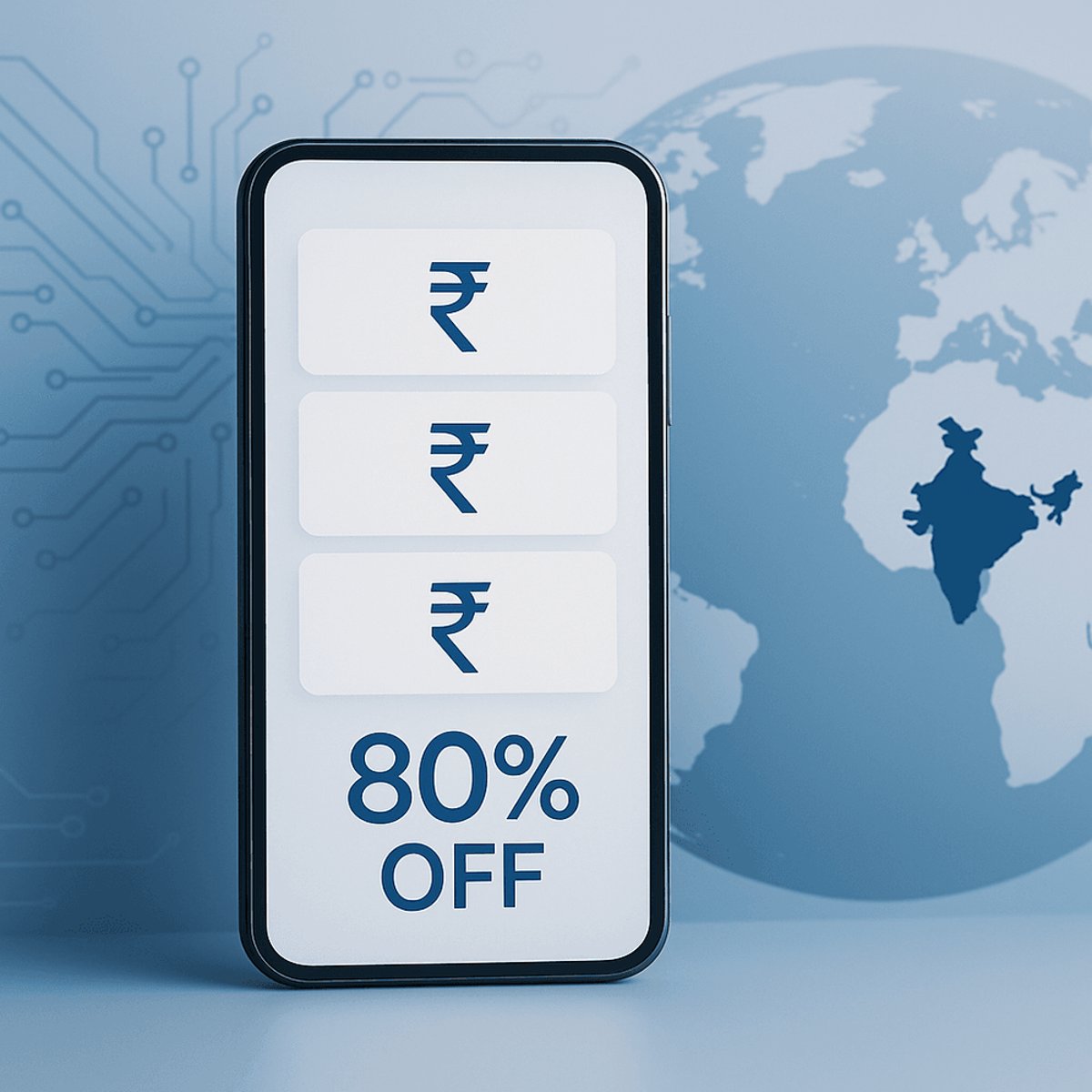
OpenAI just fired a shot across the global AI pricing landscape. The company launched ChatGPT Go in India at ₹399 ($4.60) monthly—an 80% discount from its standard Plus plan—potentially reshaping how AI companies approach emerging markets with over 850 million internet users.
OpenAI just rewrote the playbook for AI pricing in emerging markets. The company's surprise launch of ChatGPT Go in India at ₹399 ($4.60) monthly represents an 80% discount from its standard ₹1,999 Plus plan, signaling a dramatic shift toward market-specific pricing that could ripple across the global AI industry.
The timing couldn't be more strategic. According to app analytics firm AppFigures, India has dominated ChatGPT downloads globally with over 29 million installations in the last 90 days—yet generated only $3.6 million in revenue during that same period. The stark disconnect between usage and monetization finally pushed OpenAI to act.
"Making ChatGPT more affordable has been a key ask from users!" Nick Turley, VP at OpenAI and head of ChatGPT, announced on Twitter. "We're rolling out Go in India first and will learn from feedback before expanding to other countries." The plan delivers 10x higher message limits, 10x more image generations, 10x more file uploads, and 2x longer memory compared to the free tier—features that typically cost $23 monthly elsewhere.
[Embedded image: Screenshot of ChatGPT Go pricing page showing ₹399 Indian pricing]
The move arrives as AI companies scramble for market share in India's massive digital economy. Last month, Perplexity partnered with telecom giant Airtel to offer free Perplexity Pro subscriptions to customers. Google followed with free Gemini Pro access for Indian students for one year.
But OpenAI's approach differs fundamentally—it's not giving away freebies but creating sustainable, localized pricing. The company began testing waters by enabling local currency pricing and UPI (Unified Payment Interface) payments just days before the Go launch, according to TechCrunch reporting.
[Video iframe placeholder: Nick Turley explaining ChatGPT Go strategy at recent OpenAI event]
The broader implications extend far beyond India. OpenAI has been aggressively expanding its user base, with ChatGPT now serving over 700 million weekly users worldwide—up from 500 million in March. But converting free users to paid subscribers in price-sensitive markets has remained a persistent challenge across the AI industry.
Software engineer Tibor Blaho, known for accurately leaking upcoming AI products, had previously teased this plan's details, suggesting OpenAI has been quietly preparing this strategy for months. The leak accuracy indicates the company's serious commitment to market-specific approaches.
Industry observers are watching closely whether this pricing experiment succeeds in converting India's massive user base into paying customers. If successful, similar tiers could rapidly expand to other emerging markets across Southeast Asia, Latin America, and Africa—potentially forcing competitors like Anthropic, Microsoft, and Google to follow suit with their own localized pricing strategies.
OpenAI's India pricing gambit represents more than market expansion—it's a fundamental test of whether AI companies can crack the emerging market monetization puzzle through localized pricing rather than free offerings. With 850 million internet users and proven demand for AI tools, India serves as the perfect laboratory. If ChatGPT Go succeeds in converting downloads to subscribers, expect rapid global rollout and fierce competitive responses from rivals scrambling to avoid being priced out of the world's largest growth markets.