OpenAI just dropped a bombshell research paper pinpointing why AI chatbots confidently spout nonsense. The culprit isn't just training data—it's evaluation systems that reward lucky guesses over admitting uncertainty. This could reshape how the entire industry tests AI models, with implications for every company racing to deploy reliable AI systems.
OpenAI just delivered a reality check that could upend how the AI industry evaluates its models. In a new research paper published today, the company's researchers argue that AI hallucinations aren't just a training problem—they're an incentive problem baked into how we test these systems.
The evidence is staggering. When researchers asked "a widely used chatbot" about co-author Adam Tauman Kalai's Ph.D. dissertation title, they received three different answers. All wrong. They tried asking about his birthday. Three different dates. Again, all incorrect. The chatbot delivered each false answer with the same unwavering confidence that makes AI hallucinations so dangerous in real-world applications.
"The model sees only positive examples of fluent language and must approximate the overall distribution," the researchers explain in their blog post summary. This training approach means AI systems learn to sound authoritative even when fabricating information, because they're never explicitly taught what's false.
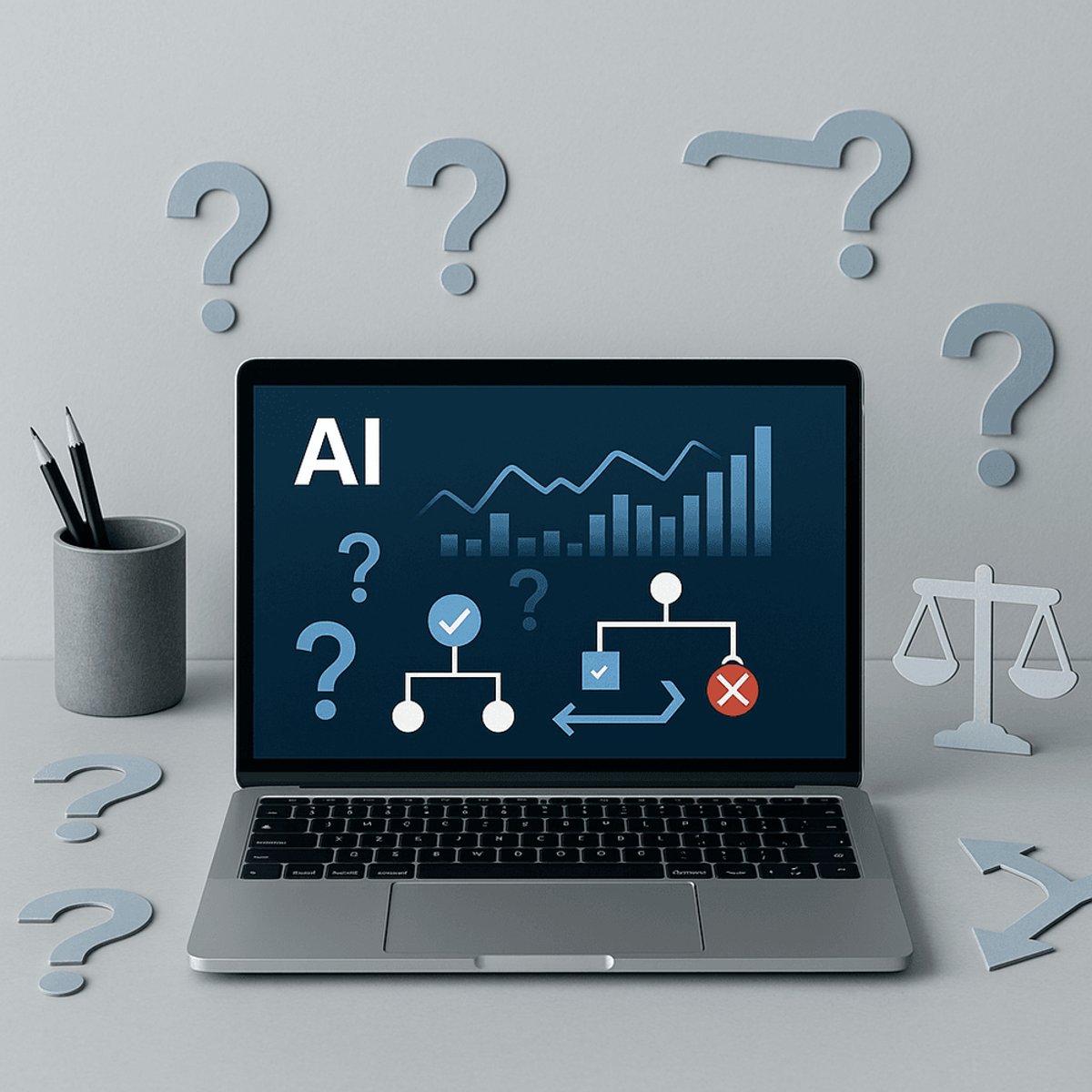
But here's the twist that could reshape the industry: OpenAI researchers argue the real problem isn't pretraining—it's how we evaluate these models afterward. Current testing methods create what they call "wrong incentives," similar to multiple-choice tests where random guessing might yield points while leaving answers blank guarantees zero.
"When models are graded only on accuracy, the percentage of questions they get exactly right, they are encouraged to guess rather than say 'I don't know,'" the paper states. This dynamic has major implications for companies like Google, Microsoft, and Meta racing to deploy AI systems across search, productivity tools, and social platforms.
The proposed solution borrows from standardized testing: implement "negative scoring for wrong answers or partial credit for leaving questions blank to discourage blind guessing." OpenAI wants evaluation systems that "penalize confident errors more than you penalize uncertainty, and give partial credit for appropriate expressions of uncertainty."
This isn't just academic theorizing. The research has immediate commercial implications. Every AI company currently uses accuracy-based evaluations to benchmark their models against competitors. If OpenAI's framework gains traction, it could force industry-wide changes in how Google's Gemini, Microsoft's Copilot, and other systems are tested and improved.
The researchers emphasize that "it's not enough to introduce a few new uncertainty-aware tests on the side." Instead, they argue that "the widely used, accuracy-based evals need to be updated so that their scoring discourages guessing." This represents a fundamental challenge to how AI progress is measured.
The timing couldn't be more critical. As AI systems become embedded in everything from medical diagnostics to financial advice, the cost of confident misinformation grows exponentially. OpenAI acknowledges that hallucinations "remain a fundamental challenge for all large language models" that will never be completely eliminated—making better evaluation frameworks essential.
"If the main scoreboards keep rewarding lucky guesses, models will keep learning to guess," the researchers warn. This insight could explain why even the most advanced AI systems still confidently fabricate facts, citations, and statistics that sound plausible but crumble under scrutiny.
The research also highlights how pattern recognition breaks down with "arbitrary low-frequency facts, like a pet's birthday, cannot be predicted from patterns alone and hence lead to hallucinations." This suggests that as AI systems scale up, they'll handle common knowledge better while remaining vulnerable to niche information—exactly the kind of specialized queries professionals rely on most.
OpenAI's research exposes a fundamental flaw in how the AI industry measures progress. By rewarding confident guessing over honest uncertainty, current evaluation methods may be training systems to hallucinate. If the proposed uncertainty-aware scoring gains adoption across major AI labs, it could mark a turning point toward more reliable—if less confident-sounding—AI assistants. The question now is whether competitors will embrace evaluations that make their models appear less certain, even if they're more truthful.