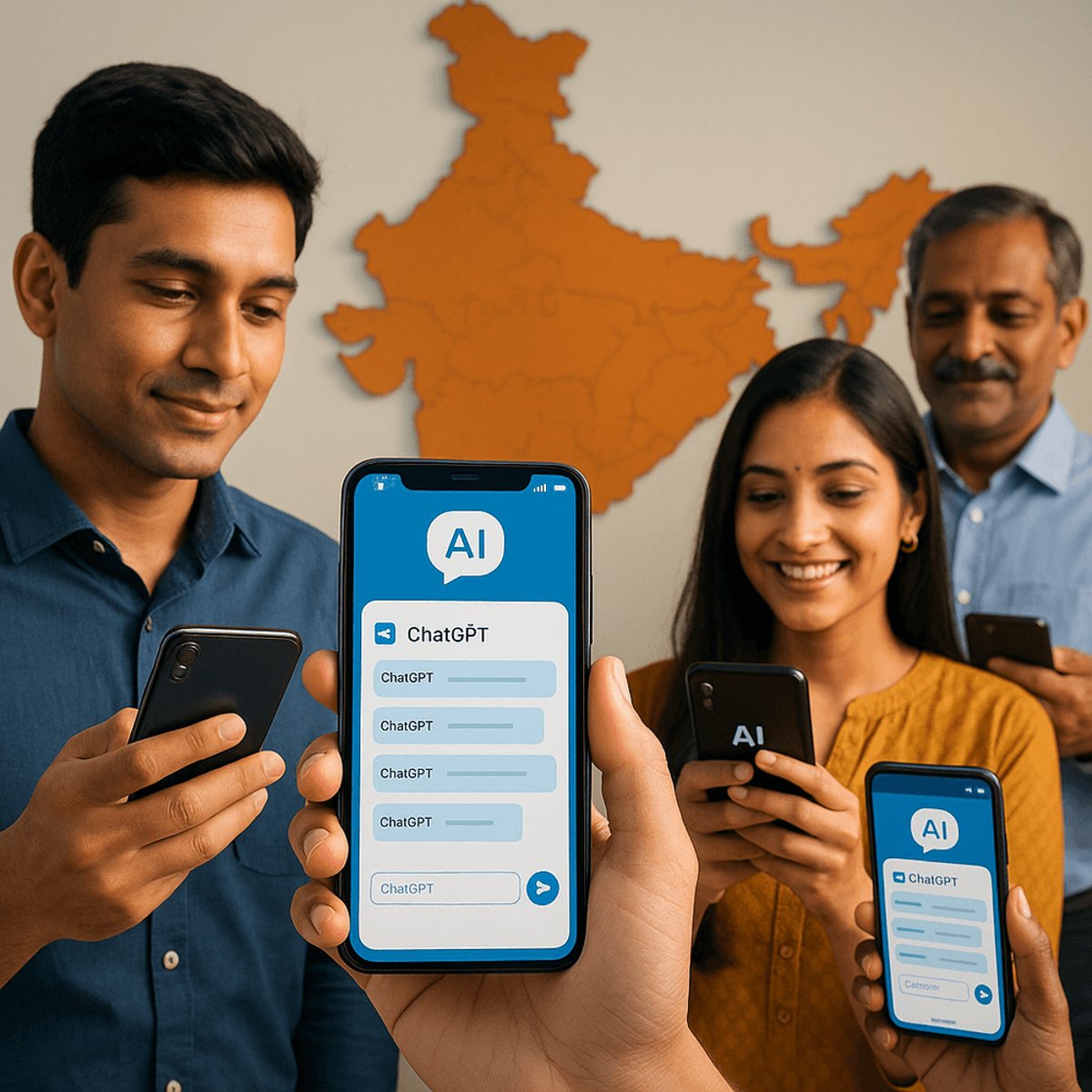
OpenAI just dropped a bombshell for its second-largest market. The company's offering ChatGPT Go completely free for an entire year to users in India, starting November 4th. This isn't just about generosity - it's a strategic play to crack the code on monetizing India's massive but price-sensitive user base of over 700 million smartphone users.
OpenAI is making its biggest bet yet on India's potential. The company announced Tuesday it's giving away ChatGPT Go subscriptions - normally priced under $5 monthly - for free to Indian users who sign up during a promotional window starting November 4th. Even existing subscribers get the deal.
The timing isn't coincidental. OpenAI CEO Sam Altman has called India the company's second-largest market after the US, but the revenue numbers tell a different story. According to Appfigures data reviewed by TechCrunch, ChatGPT racked up over 29 million downloads in India during the 90 days leading to August, yet generated just $3.6 million in in-app purchases. That's roughly 12 cents per download.
"Since initially launching ChatGPT Go in India a few months ago, the adoption and creativity we've seen from our users has been inspiring," Nick Turley, OpenAI's VP and head of ChatGPT, said in a statement. The enthusiasm is there - the willingness to pay isn't.
ChatGPT Go launched in India this August as OpenAI's most affordable paid tier, offering 10 times more usage than the free version for generating responses, creating images, and uploading files. It also features improved memory for personalized interactions. But even at under $5 monthly, it struggled to convert India's massive user base into paying customers.
The company's doubling down on India in other ways too. OpenAI opened its New Delhi office in August and is building a local team. The service has expanded beyond India to Indonesia and 16 other Asian countries, suggesting the pricing strategy is working elsewhere.
But OpenAI isn't alone in courting India's billion-plus internet users. The competition's heating up fast. Perplexity recently partnered with telecom giant Airtel to offer free Perplexity Pro subscriptions to the operator's 360 million subscribers. Google launched a free one-year Gemini Advanced plan for students across the country.
The stakes are enormous. India represents the world's largest English-speaking market after the US, with a young, tech-savvy population that's increasingly comfortable with AI tools. But it's also notoriously price-sensitive, with consumers expecting premium services at local pricing.
OpenAI's DevDay Exchange conference in Bengaluru on November 4th - the same day the free promotion starts - is expected to unveil India-specific features and partnerships. Turley teased on Twitter that "exciting updates" are coming for Indian users over the next couple weeks.
The free year strategy could be OpenAI's way of building habits first, monetizing later. If users get hooked on the premium features during their free year, they might be more willing to pay when the promotion ends. It's a classic freemium playbook, scaled to a market of over 700 million smartphone users.
The question is whether a year is enough time to change payment behavior in a market where free alternatives abound and spending power varies dramatically across regions.
This free year gambit represents OpenAI's biggest attempt to crack India's monetization puzzle. With rivals aggressively pursuing the same massive market and local user habits still forming around AI tools, the company's betting that a year of premium access will create enough stickiness to drive future revenue. The real test comes when the free period ends and users face their first billing cycle. For now, Indian users get a year to explore what premium AI can do - and OpenAI gets crucial time to prove its tools are worth paying for in one of the world's most price-conscious markets.