A curious narrative is taking hold in Washington and Silicon Valley: OpenAI, Republican lawmakers, and tech investors are pointing fingers at China for fueling local opposition to data center construction across the US. But experts studying the anti-data center movement say the reality is far messier. The claims, surfacing amid a heated national debate over AI infrastructure expansion, reflect a broader pattern of attributing domestic policy conflicts to foreign interference without substantial evidence.
The AI infrastructure wars just got a geopolitical spin. OpenAI, several Republican lawmakers, and tech investors are pushing a narrative that ties grassroots opposition to data center construction in the US to Chinese interference campaigns. But researchers who've studied these local movements aren't buying it.
The claims emerged as communities across America push back against massive data center projects that promise to power the next generation of AI systems. From rural Virginia to suburban Arizona, residents are filing lawsuits, attending zoning meetings, and organizing against facilities they say will strain local power grids and water supplies. Now some of tech's biggest players are suggesting there's a foreign hand behind the pitchforks.
According to experts interviewed by Wired, the reality is considerably more complicated. Local opposition to data centers predates recent concerns about Chinese influence and stems from tangible community impacts. A single large-scale data center can consume as much electricity as a small city - up to 100 megawatts or more - while demanding millions of gallons of water daily for cooling systems.
The timing of these accusations is notable. OpenAI and its backers are racing to build infrastructure for increasingly powerful AI models, competing directly with Chinese firms in what's been framed as a technological arms race. Data centers are the ammunition factories in this conflict, and local resistance threatens to slow American AI development.
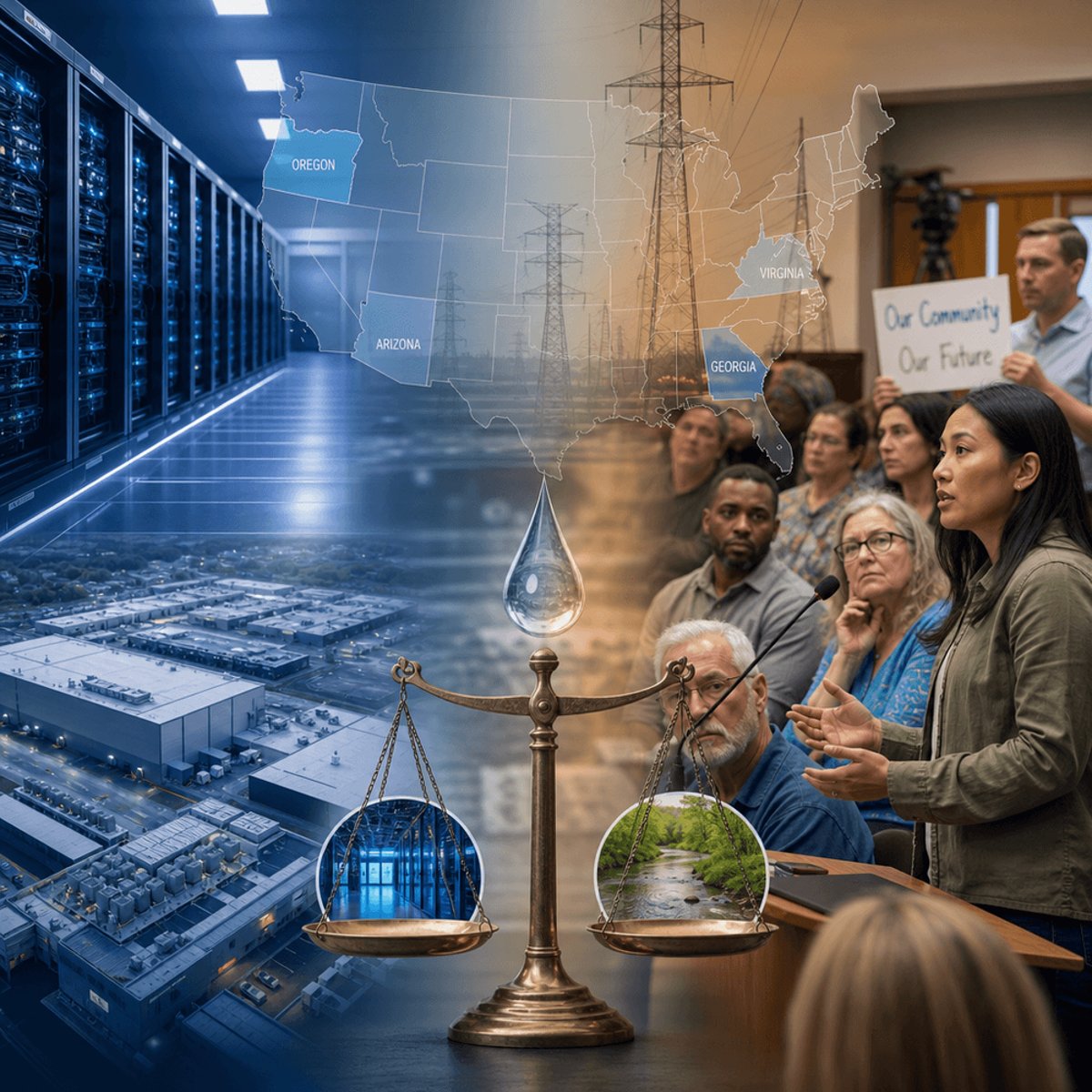
But attributing that resistance to Beijing's influence conveniently sidesteps uncomfortable questions about resource allocation and environmental impact. In Loudoun County, Virginia - home to the world's largest concentration of data centers - residents have fought expansion for years based on concerns about noise pollution, property values, and electrical grid capacity. Similar battles are playing out in Oregon, where water-scarce communities worry about data center cooling demands, and in Georgia, where residents question whether local infrastructure can support new facilities.
The disinformation angle isn't entirely invented. Foreign actors, including Chinese state-affiliated accounts, have amplified divisive political issues in the US before. But researchers studying online activity around data center opposition haven't found evidence of coordinated foreign campaigns driving the movement. The opposition appears organic, rooted in local concerns and organized through traditional community channels like town halls and county commissioner meetings.
What experts do see is a familiar pattern: tech companies invoking national security when facing regulatory or community pushback. It happened with TikTok restrictions, with semiconductor export controls, and now with data center zoning battles. Framing opposition as foreign interference transforms local policy debates into matters of patriotism.
The strategy carries risks. By crying wolf about Chinese influence, tech firms and their political allies may delegitimize genuine community concerns. Residents worried about their power bills or water access get painted as unwitting pawns in a geopolitical game rather than citizens exercising democratic rights.
For OpenAI, the stakes are existential. Training frontier AI models like GPT-5 or GPT-6 requires unprecedented computational resources. Without rapid data center expansion, the company risks falling behind competitors - including Chinese AI labs that face fewer domestic infrastructure constraints. That pressure creates incentive to remove obstacles quickly, even if it means bypassing community input.
The GOP's involvement adds another dimension. Republican lawmakers have increasingly framed AI development as a national security priority, with some proposing to streamline data center permitting through federal legislation. Linking opposition to Chinese interference strengthens the case for federal preemption of local zoning authority.
But governance experts warn that rushing infrastructure decisions invites long-term problems. Data centers built without community buy-in can strain relationships between tech companies and the regions hosting their facilities. And overriding local concerns in the name of national security sets precedents that extend beyond AI infrastructure.
The reality is that America's AI ambitions collide with practical constraints. The country's electrical grid wasn't designed for the explosive growth in data center demand. Water resources in key data center markets face pressure from drought and competing uses. These are engineering and policy challenges, not intelligence operations.
What happens next will shape both AI development and local governance. If tech companies and lawmakers successfully frame opposition as foreign interference, they may secure faster permitting and reduced community oversight. But if the narrative fails to convince, they'll need to engage seriously with resource constraints and community concerns - a slower, messier process that acknowledges trade-offs in the AI infrastructure buildout.
The blame-China narrative around data center opposition reveals more about tech industry anxiety than foreign interference. As AI companies race to build infrastructure, they're discovering that community concerns about power grids and water supplies don't vanish with accusations of foreign manipulation. The real challenge isn't Chinese disinformation - it's reconciling Silicon Valley's infrastructure ambitions with the physical and social limits of the communities expected to host them. How this tension resolves will determine not just the pace of American AI development, but the relationship between tech companies and the public whose resources they need.