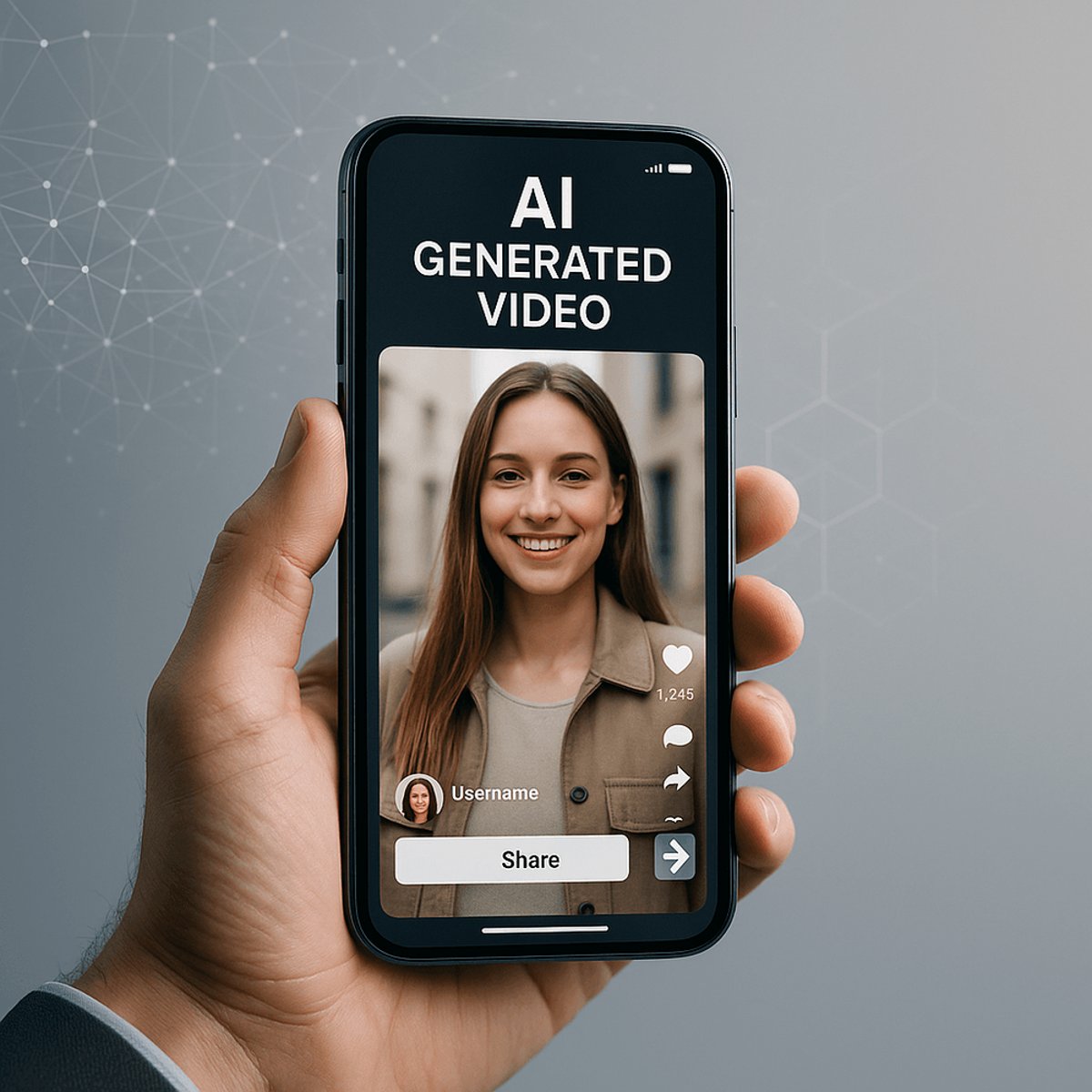
OpenAI is preparing to launch a standalone social video app powered by its next-generation Sora 2 model, marking the company's boldest expansion into consumer social media. The TikTok-like platform, already generating buzz among internal employees who've been using it so heavily that managers joke about productivity concerns, could reshape how users interact with AI-generated video content.
OpenAI just made its most aggressive play yet for consumer attention. The company is preparing to launch a standalone app for Sora 2 that looks and feels exactly like TikTok - vertical video feeds, swipe navigation, For You pages, and all - except every piece of content is entirely AI-generated.
According to documents viewed by WIRED, the app launched internally last week and has already become such a hit among employees that managers are joking about it becoming "a drain on productivity." That's exactly the kind of organic engagement OpenAI needs to prove its consumer social media ambitions can work.
The platform's standout feature is its identity verification system, which lets users confirm their likeness and then use themselves in AI-generated videos. Friends can tag each other and create videos together - imagine generating a clip of you and your buddy riding roller coasters at Disney World without ever leaving your couch. Users get notifications whenever their likeness appears in someone else's creation, even in draft form.
The timing couldn't be more strategic. With President Trump's ongoing TikTok deal creating uncertainty around the Chinese-owned app's future in the US, OpenAI sees a window to capture users looking for alternatives. Internally, sources tell WIRED there's a feeling this moment represents a unique opportunity to launch a short-form video platform without geopolitical baggage.
OpenAI originally launched Sora in December 2024 as a web-based tool before integrating it into ChatGPT. While impressive for its time, the original model struggled with physics and realistic action sequences, particularly in longer clips. Sora 2 appears designed to address these limitations while powering an entirely new social experience.
The competitive landscape is heating up fast. Meta just introduced "Vibes," a dedicated AI video feed within its Meta AI app, while Google is integrating its Veo 3 model directly into YouTube. But OpenAI's approach differs by creating an entirely separate platform focused exclusively on AI-generated content rather than mixing it with traditional uploads.
TikTok itself has taken a more cautious stance, recently updating its policies to explicitly ban AI-generated content that's "misleading about matters of public importance or harmful to individuals." This conservative approach might give OpenAI room to establish itself as the go-to platform for AI video creation.
However, the company faces significant hurdles. Sources say the Sora 2 app frequently refuses to generate videos due to copyright safeguards and content filters. This comes as OpenAI battles multiple lawsuits over alleged copyright infringement, including a high-profile case from The New York Times claiming the company trained models on copyrighted material without permission.
Child safety concerns also loom large. OpenAI just released new parental controls for ChatGPT, including account linking between parents and teens, plus an age-prediction tool to automatically route minors to restricted versions. It's unclear what age restrictions will apply to the Sora 2 app, but given the social nature and identity features, this will be crucial to address before public launch.
The app currently limits users to 10-second clips and doesn't allow uploads from camera rolls or other apps - a deliberate choice to keep content purely AI-generated. This constraint could be either a feature or limitation depending on user adoption patterns.
OpenAI declined to comment on the app, but the internal enthusiasm suggests they're betting big on changing how people interact with AI video technology. Just as ChatGPT helped users understand the potential of AI-generated text, the Sora 2 app could be the breakthrough that makes AI video creation mainstream and social.
OpenAI's Sora 2 app represents a pivotal moment in the AI wars - the first major attempt to create a purely AI-generated social platform that could rival TikTok's cultural impact. With internal employees already hooked and competitors scrambling to match the offering, success could establish OpenAI as more than just a productivity tool company. But navigating copyright battles, safety concerns, and user adoption challenges will determine whether this bold social media experiment becomes the next ChatGPT-level breakthrough or a cautionary tale about AI overreach in consumer spaces.