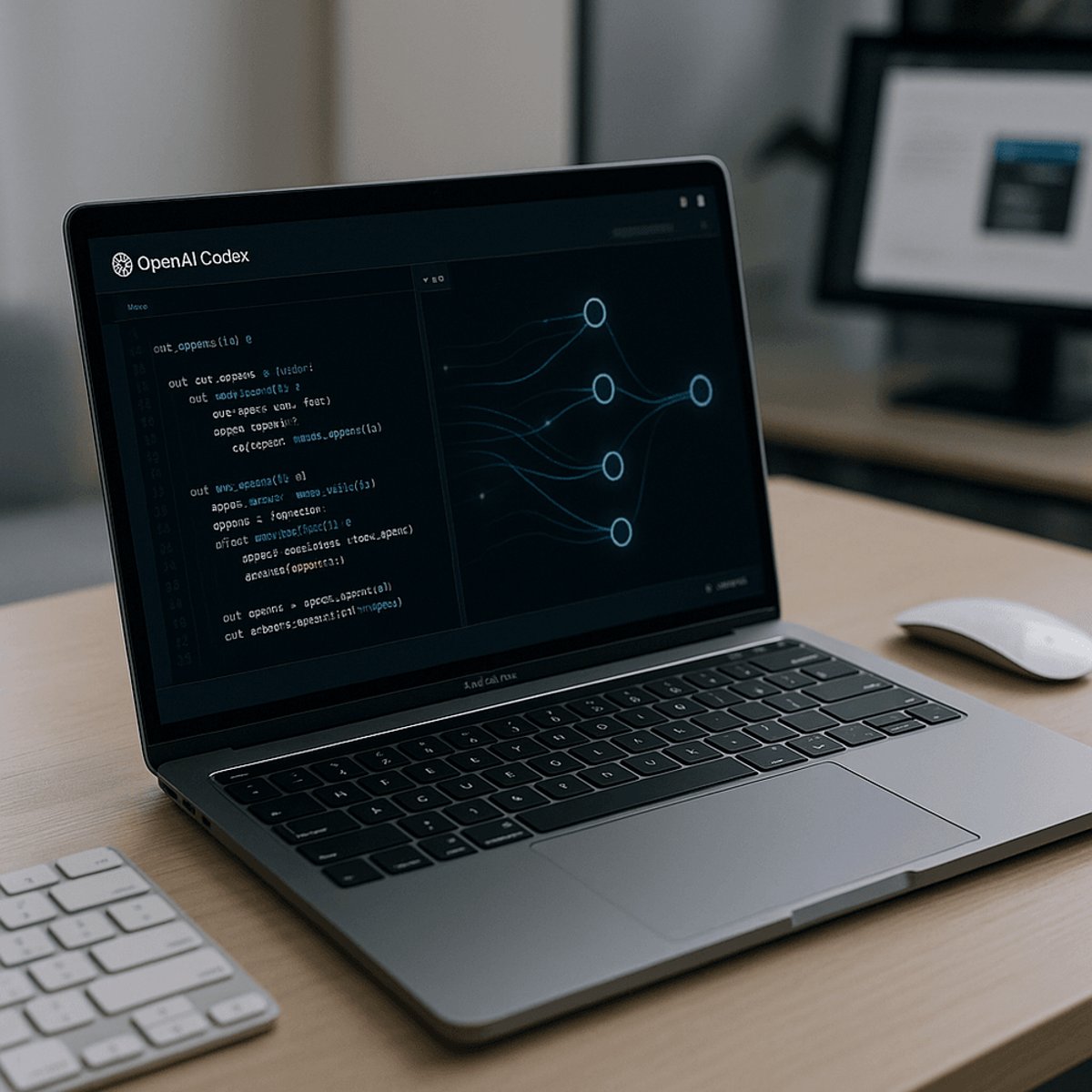
OpenAI just dropped a native MacOS app for Codex that could shake up how developers work with AI coding assistants. The new release integrates the agentic workflows that have made tools like Claude Code popular, letting multiple AI agents tackle complex programming tasks in parallel. It's OpenAI's most aggressive move yet to compete in the rapidly evolving AI coding space, coming just weeks after the company unveiled GPT-5.2-Codex, its most powerful coding model to date.
OpenAI is making its boldest play yet for the developer market. The company launched a native MacOS app for Codex on Monday, packed with the multi-agent workflows and autonomous coding features that have become table stakes in AI development tools.
The release puts OpenAI in direct competition with Anthropic's Claude Code and Cowork apps, which have defined what agentic coding looks like in practice. These systems let AI agents work independently on programming tasks, breaking down complex projects into manageable chunks that multiple agents can tackle simultaneously.
For OpenAI, it's a critical catch-up moment. The company first released Codex as a command-line tool last April, then expanded to a web interface a month later. But while competitors were shipping polished native apps with sophisticated agent orchestration, OpenAI was still asking developers to work through terminal windows and browsers.
The new MacOS app changes that equation. It's built around parallel agent workflows, meaning multiple AI assistants can collaborate on different parts of a project at the same time. Developers can set up automations that run on schedules, churning through coding tasks in the background while they focus on higher-level problems. When they return, completed work sits in a review queue waiting for approval.
"If you really want to do sophisticated work on something complex, 5.2 is the strongest model by far," CEO Sam Altman told reporters on a press call, referring to the GPT-5.2-Codex model that powers the app. "However, it's been harder to use, so taking that level of model capability and putting it in a more flexible interface, we think is going to matter quite a bit."
But the performance claims get murky when you dig into the benchmarks. GPT-5.2 does hold the top spot on TerminalBench, a test measuring how well AI handles command-line programming tasks. Yet agents from Google's Gemini 3 and Anthropic's Claude Opus have logged roughly equivalent scores, within the margin of error. SWE-bench, which tests AI's ability to fix real-world software bugs, tells a similar story with no clear winner.
The reality is that agentic coding has proven difficult to benchmark effectively. State-of-the-art models can vary wildly in user experience even when their test scores look identical on paper. That's where OpenAI is betting its interface advantages will matter.
The Codex app includes features designed to smooth out the rough edges of working with AI agents. Developers can select different personalities for their agents, ranging from pragmatic to empathetic, depending on their working style and the nature of the task. It's a small touch, but one that acknowledges coding isn't just about raw performance—it's about collaboration between human and machine.
OpenAI also emphasizes the sheer speed this enables. "You can use this from a clean sheet of paper, brand new, to make a really quite sophisticated piece of software in a few hours," Altman said. "As fast as I can type in new ideas, that is the limit of what can get built."
That speed claim matters in a market where developer productivity has become the central battleground. AI coding assistants have moved from autocomplete helpers to autonomous agents that can architect entire features. The companies that make that workflow feel natural—and fast—stand to capture massive market share as enterprises retool their development processes.
The timing of this launch is telling. OpenAI released GPT-5.2-Codex less than two months ago, and they're already pushing it into a consumer-friendly package with the MacOS app. That suggests the company sees an urgent need to compete with Anthropic, which has been gaining ground with developers through its Claude-powered coding tools.
For Apple developers specifically, a native MacOS app represents a major improvement over browser-based alternatives. It integrates more naturally with local development environments, file systems, and the terminal—all critical for the kind of sophisticated, multi-file projects where agentic coding shines.
The broader developer tools market is watching this race closely. Microsoft's GitHub Copilot still dominates in terms of raw user numbers, but the agentic coding space remains wide open. Whoever cracks the interface problem—making powerful AI agents feel intuitive and controllable—could reshape how software gets built for the next decade.
OpenAI's Codex MacOS app represents more than just a new product release—it's a clear signal that the race for developer mindshare is heating up fast. While GPT-5.2's benchmark performance gives OpenAI a technical edge on paper, the real test will be whether developers actually prefer working with Codex over the increasingly popular Claude-powered alternatives. With agentic coding still in its early days, the company that nails the interface and workflow experience could lock in developers for years to come. For now, the message is clear: AI coding tools are no longer about simple autocomplete, they're about fundamentally rethinking how software gets built.