TL;DR
- - OpenAI's GPT-5 aims to boost AI accessibility and application.
- - Lower hallucination rates enhance reliability across industries.
- - Massive user base and planned valuation increase its market significance.
- - Investment thesis: Back technologies integrative with GPT-5 for superior edge.
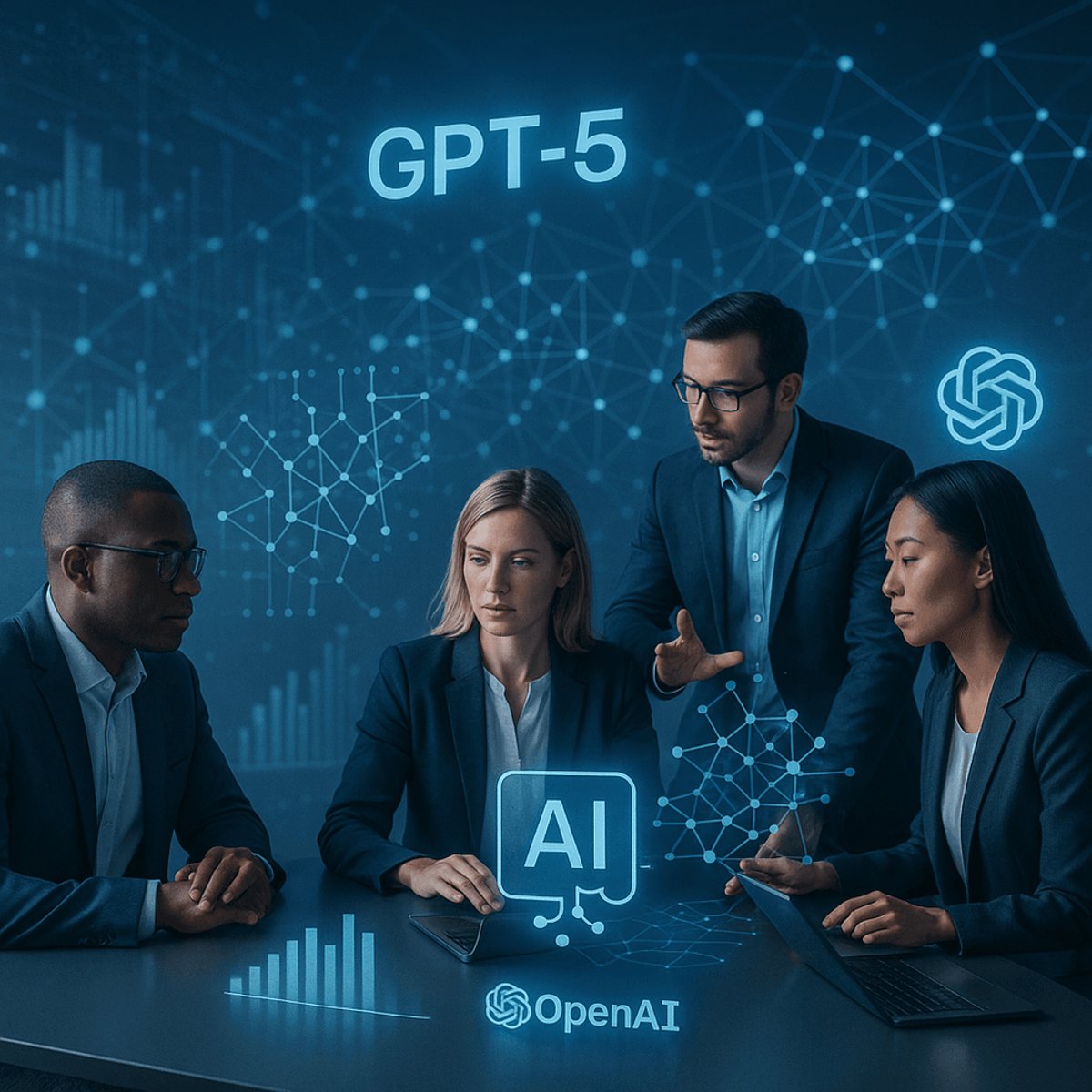
OpenAI's introduction of the GPT-5 model marks a seismic shift in AI accessibility and capability. Revealed by CEO Sam Altman, GPT-5 promises to outperform its predecessors by offering smarter, faster, and more secure responses. Unlike GPT-4, its reduced "hallucination" rate enhances reliability across writing, coding, and healthcare. It's crucial for executives and stakeholders to grasp how GPT-5 can amplify operational efficiencies and drive innovation.
Opening Analysis: GPT-5's launch brings a new dawn for artificial intelligence, building upon significant advancements made since ChatGPT first entered the market in 2022. With over 700 million predicted weekly users and ongoing investment discussions valuing OpenAI at $500 billion, the stakes are monumental. The developments are not just technological leaps but also potential shifts in how organizations may leverage AI for efficiency and innovation.
Market Dynamics: GPT-5 emerges at a time when AI competition is fierce. Rival systems like Google's Bard are continuously evolving, but OpenAI's significant user base gives it a powerful launch pad for GPT-5. Organizations should weigh these dynamics when considering adoption, as the model's lower hallucination rate promises fewer accuracy issues—a critical advantage in industries relying heavily on AI for precision.