The Pentagon just dropped an unprecedented ban on Anthropic, formally designating the AI startup as a supply chain risk in a move that will ripple across the entire defense tech ecosystem. The Department of Defense now requires all contractors and vendors to certify they're not using Claude in any Pentagon work, even as reports surface of the AI model being deployed inside Iran. It's the first time a major U.S. AI company has faced this level of exclusion from defense operations, reshaping the competitive landscape overnight.
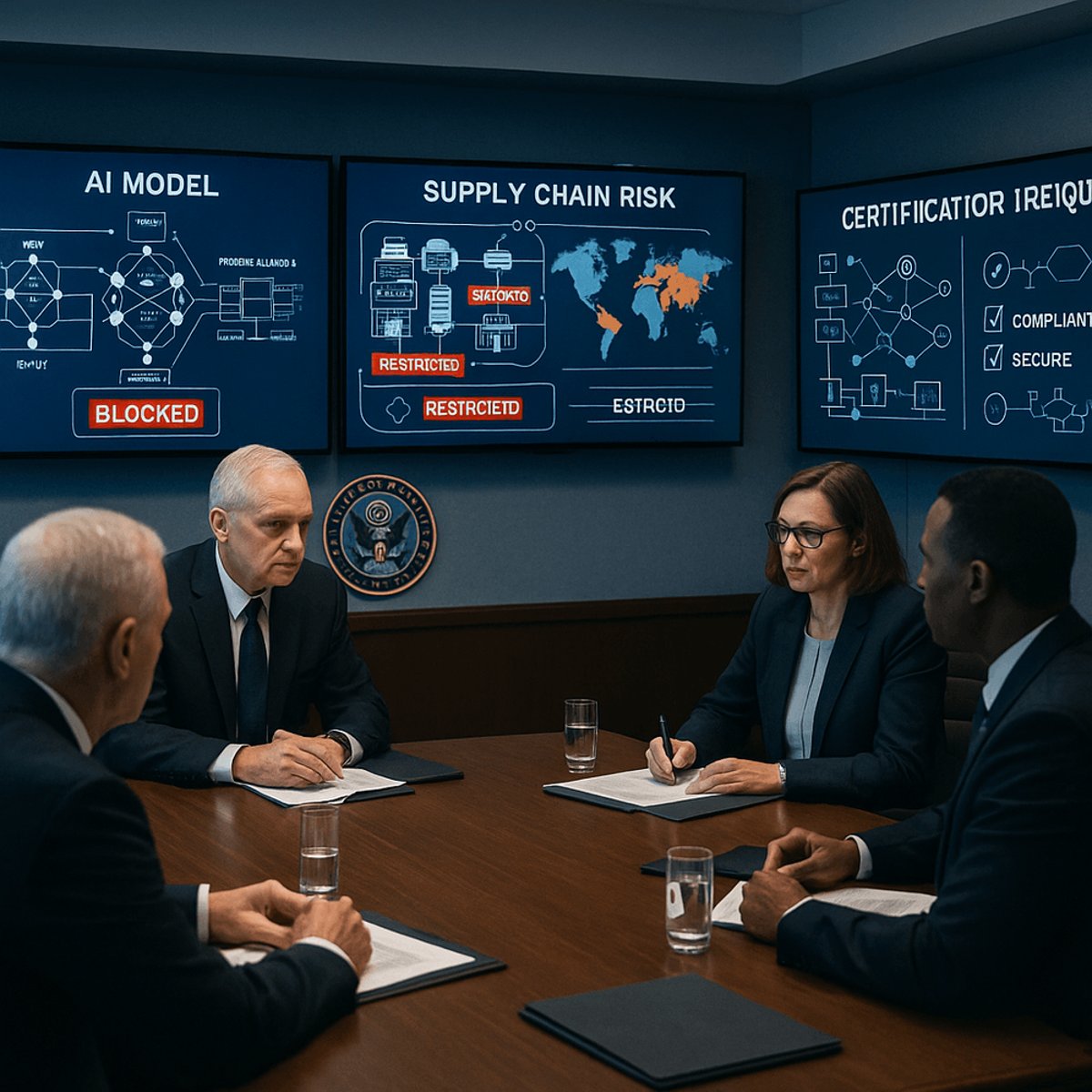
The Department of Defense just made Anthropic radioactive for anyone doing business with the Pentagon. In a formal declaration issued Thursday, the DOD classified the AI startup behind Claude as a supply chain risk, forcing defense contractors to immediately certify they're not using the company's models in any military-related work. The move is stunning in its scope and unprecedented in targeting a Silicon Valley AI darling that's raised billions from the likes of Google and received backing from some of the industry's most prominent investors.
What makes this particularly explosive is the timing. According to sources familiar with the matter, the ban directly coincides with intelligence reports showing Claude being actively used inside Iran. The dual reality of a U.S.-based AI model simultaneously being blocked by the Pentagon while operating in a adversarial nation creates a geopolitical nightmare that defense officials can no longer ignore. The formal supply chain risk designation isn't just symbolic - it triggers mandatory compliance requirements across thousands of contractors.
The certification mandate hits immediately. Every company in the defense industrial base, from prime contractors like Lockheed Martin and Northrop Grumman down to small AI startups building tools for military applications, must now audit their technology stacks and formally attest they're not using Anthropic's models. That includes Claude in all its versions, from the base model to Claude Enterprise deployments. For contractors who've integrated Claude into their workflows, this means urgent scrambles to find alternatives and potential project delays.
The Iran connection is what pushed this from concern to crisis. While the Pentagon hasn't released detailed intelligence publicly, defense sources indicate Claude's presence in Iran represents more than just unauthorized usage - it suggests fundamental questions about Anthropic's ability to control where its models end up. Unlike traditional software where licensing can be enforced, AI models can be copied, fine-tuned, and deployed in ways that make control difficult. The company's safety-first positioning, which has been central to its brand identity, now faces serious scrutiny.
For OpenAI, this is a massive gift. The company already had deep Pentagon relationships and has been positioning GPT-4 and its successors for defense applications. With Anthropic suddenly off-limits, OpenAI becomes the default choice for contractors needing cutting-edge language models. Microsoft, OpenAI's primary backer and cloud provider, also stands to benefit as defense contractors migrate to Azure-based AI solutions. The competitive dynamics in defense AI just shifted dramatically.
The formal supply chain designation puts Anthropic in rare company. Typically these labels are reserved for foreign companies, particularly Chinese firms like Huawei and ZTE that the U.S. government views as national security threats. Applying this framework to a San Francisco-based startup backed by American venture capital represents a major escalation in how seriously the Pentagon takes AI security risks. It also sets a precedent that other U.S. AI companies are surely watching nervously.
Anthropichas built its reputation on constitutional AI and safety principles, arguing it takes a more responsible approach than competitors racing to deploy powerful models. But the Pentagon's action suggests safety claims mean little if you can't prevent your models from ending up in adversarial hands. The company has raised over $7 billion in funding and was most recently valued at $18 billion, with Google investing $2 billion and Amazon committing $4 billion. Those corporate backers now face questions about their own AI strategies.
The immediate impact cascades across multiple sectors. Defense tech startups that bet on Claude for their products face existential pivots. Enterprise customers in adjacent industries like aerospace and intelligence may reconsider their own Claude deployments to avoid future complications. And Anthropic's broader commercial momentum takes a hit as the supply chain risk label, even if technically limited to defense work, carries reputational damage that extends beyond Pentagon contracts.
What happens next depends partly on whether this is a temporary designation pending investigation or a permanent ban. The DOD hasn't specified remediation pathways or conditions under which Anthropic might be reinstated. For now, defense contractors are in scramble mode, auditing dependencies and planning migrations. The Iran usage question remains murky - whether it's unauthorized access, leaked models, or something else entirely will determine how deep this crisis goes.
This isn't just about one company losing access to defense contracts. The Pentagon's formal supply chain risk designation of Anthropic rewrites the rules for how AI companies must think about model security, distribution control, and geopolitical exposure. For an industry built on open research and broad deployment, the message is stark: if you can't prove where your models are being used, you're a liability. Defense contractors face immediate disruption as they purge Claude from their systems, while OpenAI and Microsoft inherit a windfall of displaced customers. But the bigger question looms larger - if a safety-focused U.S. company can't keep its models out of Iran, what does that mean for the entire AI industry's ability to prevent misuse? The Pentagon just drew a line, and every AI company is now scrambling to make sure they're on the right side of it.