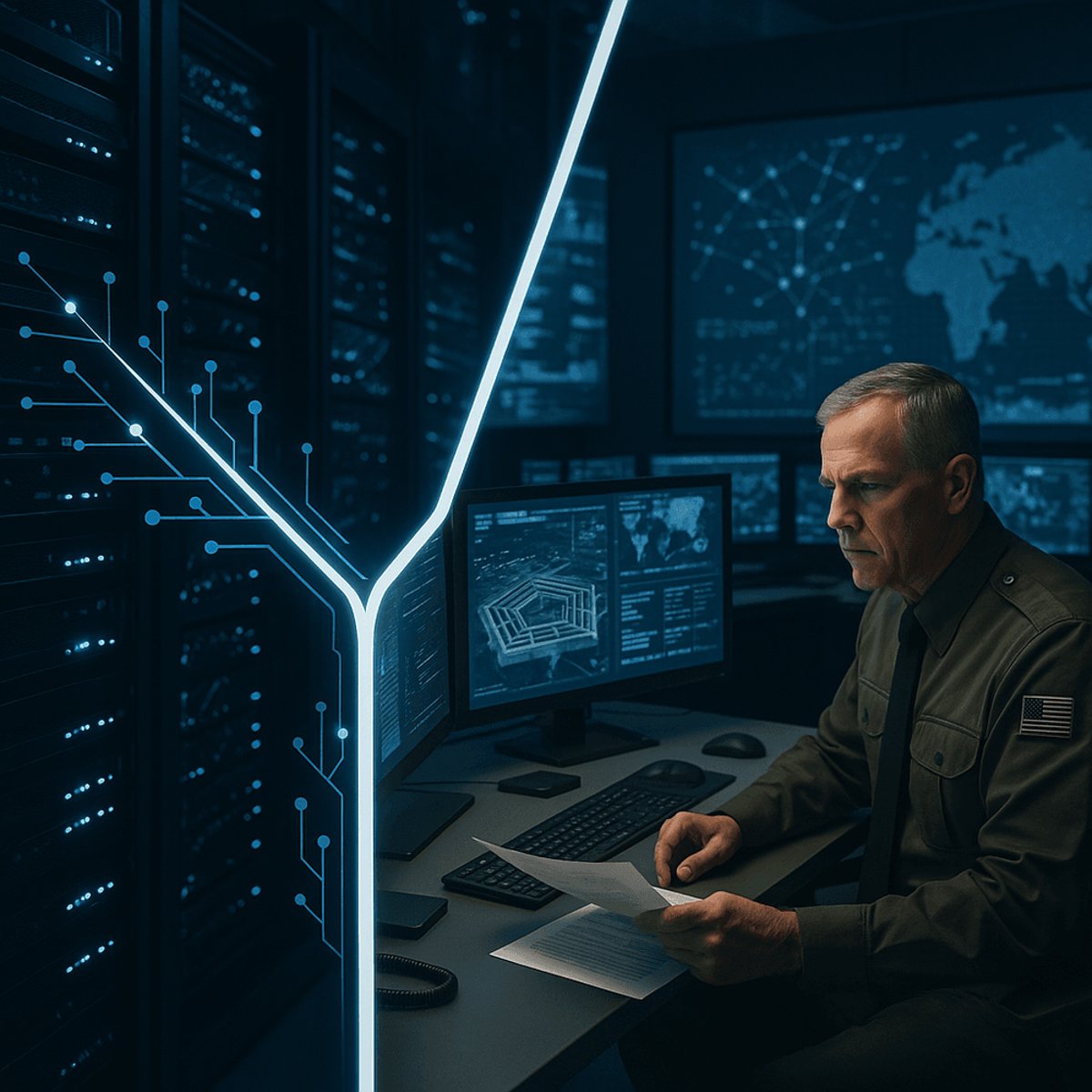
The Pentagon is moving forward without Anthropic. Following a dramatic split with the AI safety company, the Department of Defense is now actively developing alternative artificial intelligence solutions for defense applications, according to a new report from TechCrunch. The pivot marks a significant shift in how the U.S. military approaches AI procurement and signals growing tensions between Silicon Valley's AI ethics movement and national security imperatives.
The relationship between Anthropic and the U.S. Department of Defense appears to be over for good. After what sources describe as a "dramatic falling out," the Pentagon is now pursuing its own path forward, developing alternative AI systems that don't rely on the Claude maker's technology.
The breakdown represents more than just a failed partnership. It's a flashpoint in the ongoing debate about whether AI companies built on safety principles can reconcile those values with military applications. Anthropic has long positioned itself as an AI safety company, founded by former OpenAI executives who left over disagreements about the pace and direction of AI development.
According to the TechCrunch report, the Pentagon isn't waiting around to patch things up. Defense officials are actively working on backup plans that could involve partnerships with other major AI players or even building proprietary systems in-house. The urgency reflects how critical AI capabilities have become to modern military operations, from intelligence analysis to logistics optimization.
The timing couldn't be more significant. Just weeks ago, OpenAI announced expanded partnerships with government agencies, while Microsoft and Google have both deepened their defense sector engagements. The Pentagon's break with Anthropic opens the door for these competitors to capture what could be billions in future government AI contracts.
What caused the split remains unclear, but industry insiders point to fundamental tensions. Anthropic raised over $7 billion from investors including Google and has maintained strict acceptable use policies that limit military applications. The company's constitutional AI approach emphasizes safety guardrails that may not align with defense department requirements for flexibility and control.
The Pentagon's pivot also reflects a broader rethinking of AI procurement strategy. Rather than depending on a single vendor, defense planners are likely pursuing a multi-vendor approach that reduces risk and increases competition. This mirrors trends in the commercial sector, where enterprises increasingly adopt best-of-breed AI strategies rather than going all-in with one provider.
For Anthropic, losing Pentagon business may actually align with the company's stated values around responsible AI development. But it also raises questions about the company's long-term positioning. Can an AI company compete at scale while maintaining strict ethical boundaries that exclude major customer segments? The question becomes more pressing as competitors like OpenAI embrace government partnerships.
The defense department's alternative solutions could take multiple forms. Options range from partnering with OpenAI, which already works with defense contractors, to leveraging Microsoft's Azure AI services deployed in secure government clouds. Google's recent defense AI initiatives, despite employee pushback in years past, position the search giant as another potential beneficiary.
There's also the possibility of the Pentagon investing more heavily in open-source AI models that can be customized and deployed without vendor restrictions. This approach would give defense planners maximum control while reducing dependence on commercial AI companies whose priorities may shift with leadership changes or market conditions.
The fallout arrives as Congress increases scrutiny of AI adoption across government agencies. Lawmakers from both parties have called for accelerated AI deployment to maintain technological superiority over strategic competitors, particularly China. The Anthropic situation could fuel arguments that over-reliance on safety-focused AI companies creates national security vulnerabilities.
The Pentagon's decision to move beyond Anthropic isn't just about one failed partnership - it's a signal about how government AI procurement will evolve. As defense agencies become more sophisticated AI buyers, they'll demand flexibility, control, and reliability that safety-first AI companies may struggle to provide. The companies that thread the needle between responsible development and practical military applications stand to capture massive government contracts, while those that can't or won't make compromises may find themselves on the outside looking in. For now, the Pentagon is making clear it won't let AI ethics debates slow its technological ambitions.