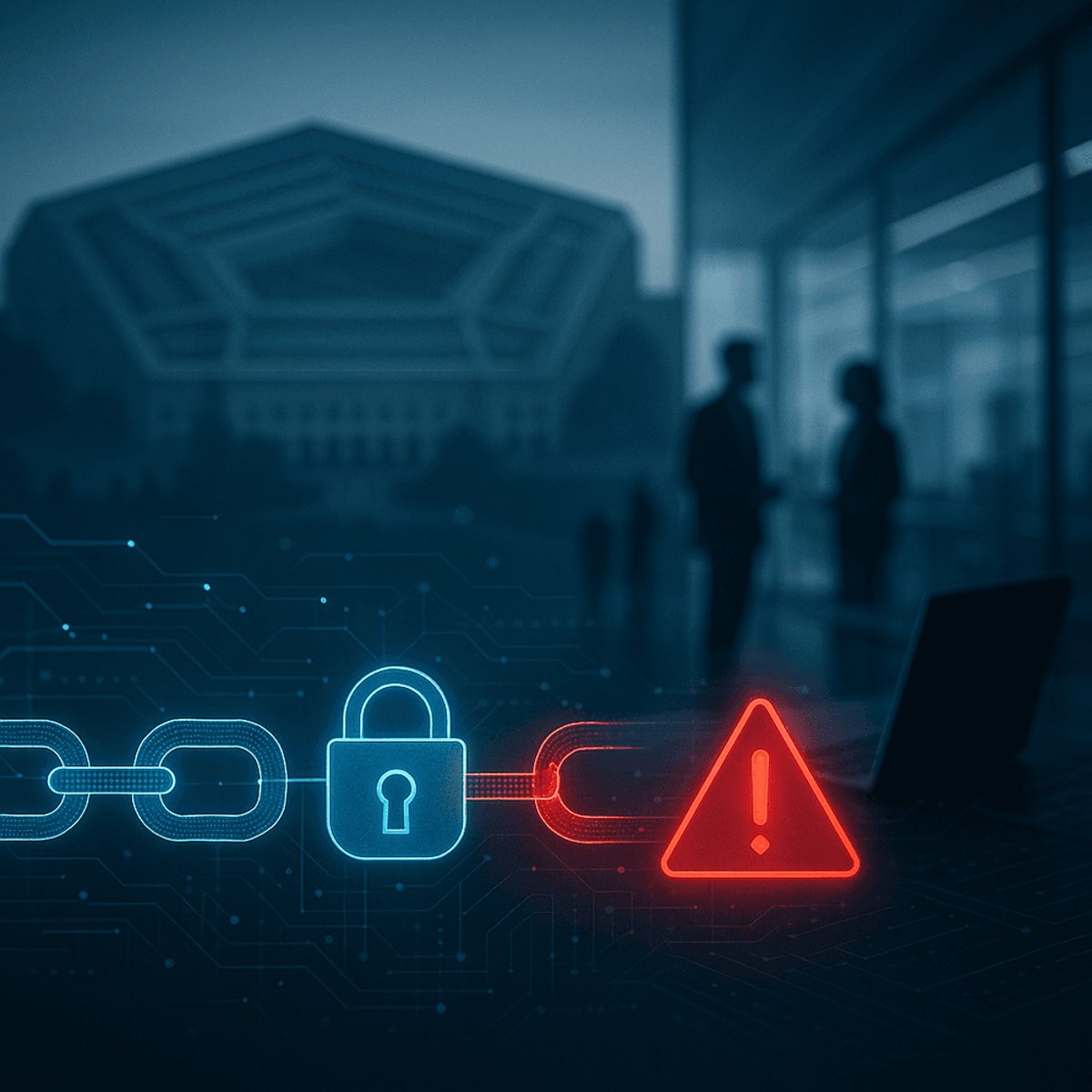
The Department of Defense just dropped a bombshell that's sending shockwaves through Silicon Valley. In an unprecedented move, the Pentagon has officially designated Anthropic as a supply chain risk - making the AI safety startup the first American company to receive this label typically reserved for foreign adversaries. The designation comes even as the DOD continues deploying Anthropic's Claude AI models in sensitive operations, creating a bizarre paradox that's raising eyebrows across the defense and tech sectors.
The Department of Defense has officially designated Anthropic as a supply chain risk, according to a statement released Thursday. The move represents a stunning about-face for the Pentagon, which has been quietly integrating the San Francisco-based startup's Claude AI models into military intelligence operations over the past year.
This is the first time an American technology company has received the supply chain risk designation - a label the DOD has historically reserved for foreign entities like Huawei, ZTE, and other Chinese tech firms deemed threats to national security. The classification puts Anthropic in unprecedented territory and raises fundamental questions about how the U.S. government views AI safety concerns versus operational needs.
What makes this situation particularly surreal is that the DOD isn't actually stopping its use of Anthropic's technology. According to the TechCrunch report, the Pentagon continues deploying Claude AI models in Iran operations, creating a contradictory policy that has defense contractors and AI companies scrambling to understand the implications.
The designation likely stems from growing Pentagon concerns about Anthropic's funding structure and potential foreign influence. The company raised $7.3 billion in its latest funding round, with significant investment from Amazon, which holds a reported $4 billion stake. But it's the involvement of international investors and Anthropic's open approach to AI safety research - including sharing findings with global researchers - that may have triggered DOD alarm bells.
AnthropicCEO Dario Amodei has been vocal about the company's commitment to Constitutional AI principles and transparent safety research. That openness, ironically designed to make AI safer, may have backfired in the eyes of defense officials worried about adversaries gaining insights into cutting-edge AI capabilities. The company hasn't issued an official response to the designation yet, but sources close to Anthropic say leadership was blindsided by the announcement.
The timing couldn't be worse for Anthropic. The startup was reportedly in advanced negotiations for additional defense contracts worth hundreds of millions, positioning itself as the "safe" AI alternative to OpenAI and Google for sensitive government work. Those discussions are now in limbo as the supply chain designation triggers mandatory security reviews across all federal agencies.
This development sends ripples far beyond Anthropic. Microsoft-backed OpenAI and Google DeepMind are watching closely, knowing they could face similar scrutiny if the Pentagon decides to apply a more aggressive stance toward AI firms with complex funding structures or international research partnerships. The defense establishment has been quietly nervous about AI supply chain vulnerabilities for months, but this marks the first concrete action.
Defense analysts point out the fundamental contradiction at play. "You can't label a company a supply chain risk while simultaneously depending on their technology for active operations," one former DOD official told TechCrunch. "This suggests either the risk assessment is overblown or the Pentagon's operational needs are overriding security concerns - neither is a good look."
The designation will almost certainly impact Anthropic's valuation, currently estimated at $18 billion following its most recent funding round. Enterprise customers, particularly in regulated industries like finance and healthcare, may pause deployments while assessing whether the Pentagon's concerns apply to their use cases. Competitors are already positioning themselves as more "government-friendly" alternatives.
What happens next depends largely on how Anthropic responds and whether the company can address whatever specific concerns triggered the designation. The supply chain risk label isn't permanent - companies can be removed if they restructure operations, adjust governance, or provide additional transparency. But the stigma may prove harder to shake than the formal designation itself.
For now, the AI industry is left grappling with a new reality where being an American company with a focus on safety research doesn't automatically translate to government trust. The Pentagon's move signals that in the high-stakes world of AI and national security, even domestic players aren't immune from scrutiny traditionally reserved for foreign adversaries.
The Pentagon's unprecedented designation of Anthropic as a supply chain risk while continuing to use its AI technology reveals the messy collision between national security concerns and operational reality in the AI era. This isn't just about one company - it's a warning shot that even well-funded American AI firms with safety-first reputations aren't immune from government scrutiny. The contradiction between the risk label and ongoing deployment suggests the Pentagon itself is still figuring out how to balance AI capabilities with security concerns. For the broader AI industry, this creates a new layer of regulatory uncertainty that could reshape how companies structure funding, partnerships, and research disclosure. What looked like Anthropic's strength - transparency and safety research - may have become its vulnerability in the eyes of defense officials increasingly paranoid about AI supply chains.