Qualcomm just fired the starting gun in the autonomous driving arms race. The chip giant's new self-driving system with BMW is designed to be licensed to any automaker, and CEO Cristiano Amon expects a 'domino effect' as competitors scramble to catch up with what could reshape how cars think and drive.
Qualcomm just turned the autonomous driving market into a high-stakes licensing game. The chip giant's partnership with BMW isn't just about one luxury car - it's about creating a self-driving platform that any automaker can plug into their vehicles.
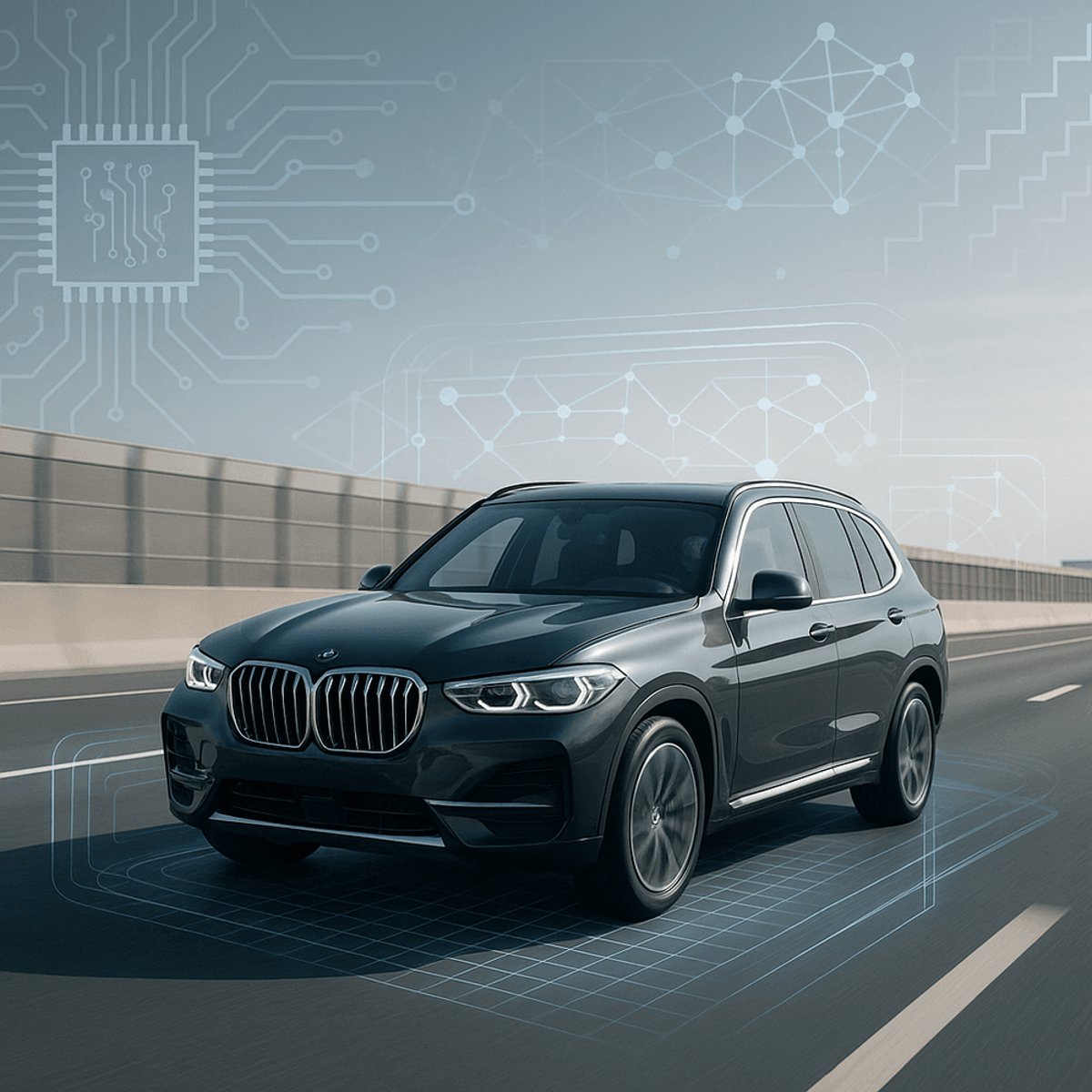
The Snapdragon Ride Pilot Automated Driving System debuts on BMW's new iX3 next year, rolling out across 100 countries by 2026. But here's the kicker: while BMW gets first dibs, Qualcomm built this tech to be shopped around to every major automaker looking to catch up in the autonomous race.
'Everybody's been waiting for this moment, including ourselves, because people wanted to see how it performs in the street,' CEO Cristiano Amon told CNBC Tuesday. The BMW iX3 becomes the real-world testing ground that'll either validate Qualcomm's bet or expose its limitations.
The system handles hands-free highway driving and lane changes - not full autonomy, but enough to matter in a market where European automakers are getting steamrolled by Chinese competitors with better tech. 'I think what I expect to happen, as OEMs see how it compares and how competitive it is, that's going to ignite a domino effect,' Amon said, hinting that other carmakers are already circling.
Qualcomm's automotive division brought in nearly $1 billion last quarter, growing 21% year-over-year as the company pivots hard away from its smartphone chip dependence. Amon's betting big on hitting $8 billion in auto revenue by fiscal 2029 - a massive jump that requires exactly this kind of platform play.
The timing couldn't be better for traditional automakers feeling the heat. While Tesla dominates headlines with Full Self-Driving beta, Chinese companies like Xpeng are quietly shipping cars with advanced driver assistance that European brands can't match. Qualcomm's plug-and-play approach offers a lifeline to legacy manufacturers who don't want to build this tech from scratch.
'[Qualcomm] are building a whole ecosystem led by software,' Murtuza Ali, senior analyst at Counterpoint Research, told CNBC. 'The main thing is they are a fully integrated solution provider for autonomy, which is what they were lacking.'
The company's also hedging its bets across the entire vehicle. Beyond self-driving, Qualcomm chips power in-car entertainment systems, and this week they announced a Google Cloud partnership for custom digital assistants. It's classic Qualcomm strategy - own the silicon that makes everything else possible.
But the real test comes when that BMW iX3 hits public roads in 60 countries next year. Every mile driven becomes a demo for potential customers, every smooth lane change a sales pitch to automotive executives watching from the sidelines. Amon admitted Qualcomm has 'made a lot of progress' in talks with other automakers but isn't ready to name names yet.
The stakes couldn't be higher for traditional car companies, especially in Europe where the autonomous driving gap with Chinese rivals keeps widening. Qualcomm's bet is that most automakers would rather license proven technology than spend years and billions trying to build their own. If the BMW partnership proves that bet right, we're about to see a fundamental shift in how cars get their brains.
This isn't just another tech partnership - it's Qualcomm positioning itself as the Intel of autonomous driving. If the BMW rollout succeeds and triggers Amon's predicted domino effect, Qualcomm could own the silicon backbone of self-driving cars the same way it dominates smartphone chips. For automakers feeling pressure from Chinese competitors, that licensing model might be the fastest path to staying relevant in an industry that's increasingly defined by software, not just horsepower.