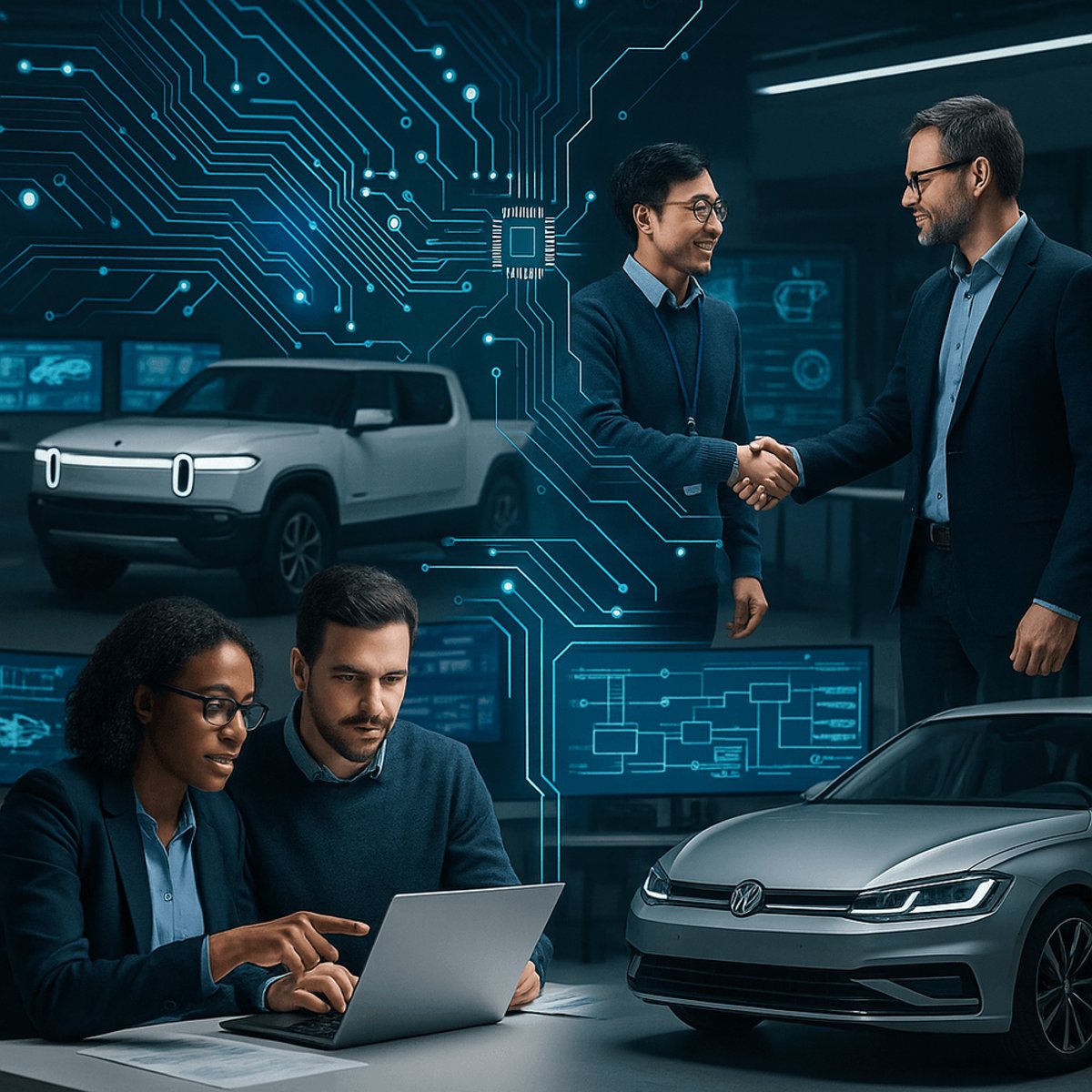
Rivian just locked in another $1 billion from Volkswagen, deepening one of the auto industry's most ambitious tech partnerships. The fresh capital injection expands the joint venture launched to integrate Rivian's software and electrical architecture into VW's global EV lineup. With traditional automakers scrambling to match Tesla's tech edge, VW is betting big that Rivian's platform can accelerate its electric transformation across multiple brands.
Volkswagen is writing another billion-dollar check to Rivian, reinforcing one of the automotive industry's boldest bets on software-driven electric vehicles. The German automaker's latest $1 billion commitment deepens their joint venture, which launched in 2024 with an initial pledge to share Rivian's technology across VW's sprawling brand portfolio.
The partnership represents a fundamental shift in how legacy automakers approach EV development. Rather than spending years building proprietary software stacks, VW is essentially licensing Rivian's proven electrical architecture and software platform. The move acknowledges what industry insiders have known for years - traditional car companies are struggling to match the software sophistication that Tesla pioneered and Chinese EV makers have rapidly adopted.
According to TechCrunch, the collaboration aims to integrate Rivian's technology into vehicles across VW Group brands, including Audi, Porsche, and the upcoming Scout lineup. The timing couldn't be more critical for both companies. VW faces mounting pressure to accelerate its electric transition while managing massive R&D costs, and Rivian needs cash to scale production beyond its current R1T truck and R1S SUV models.
For Rivian, the fresh billion provides vital breathing room as it navigates the capital-intensive challenge of ramping manufacturing. The California-based startup has impressed the industry with its software capabilities and over-the-air update system, but burning through cash while scaling production has been its Achilles heel. Previous funding rounds and the initial VW partnership helped stabilize the balance sheet, and this extension buys more runway.
The joint venture structure itself is unusual in the auto world, where partnerships often involve simple component supply agreements. Instead, VW and Rivian created a dedicated entity to develop and deploy the technology across multiple vehicle programs. Engineers from both companies work together on adapting Rivian's zonal architecture - a modern approach that reduces wiring complexity and enables more sophisticated software features.
What makes Rivian's technology particularly valuable is its integrated approach to vehicle software. Unlike older architectures where dozens of separate computers control different functions, Rivian built a centralized system that's easier to update and more powerful for advanced driver assistance features. This is exactly what VW struggled to develop internally, leading to delays and quality issues with its own ID software platform.
The investment also reflects broader industry dynamics as Chinese EV manufacturers like BYD and NIO flood global markets with software-rich vehicles at competitive prices. European and American automakers realize they can't afford to fall further behind on the technology front while also competing on price. Strategic partnerships like the VW-Rivian deal offer a faster path than going it alone.
For VW's premium brands like Porsche and Audi, adopting Rivian's technology could help differentiate their electric offerings with more responsive software and better integration between vehicle systems. The Scout brand, which VW is reviving as a Rivian competitor in the rugged EV space, particularly stands to benefit from access to proven off-road capable technology.
The market reaction to the deal will likely focus on whether $1 billion is enough to meaningfully accelerate the joint venture's timeline. Developing and validating automotive software for multiple vehicle platforms across different markets involves enormous complexity and regulatory hurdles. But with VW's manufacturing scale and Rivian's technology foundation, the partnership has a credible shot at delivering results faster than either company could alone.
Industry analysts will be watching how quickly VW can bring Rivian-powered vehicles to market and whether the technology transfer happens smoothly. Previous automotive partnerships have stumbled over cultural clashes and integration challenges. The success or failure of this venture could influence whether other traditional automakers pursue similar deals or double down on internal development.
VW's second billion-dollar bet on Rivian underscores how dramatically the automotive landscape has shifted. Software capabilities now matter as much as horsepower and handling, and legacy automakers increasingly recognize they can't build everything in-house fast enough to compete. For Rivian, the partnership provides essential capital and validation while opening a massive distribution channel through VW's global reach. The real test comes in the next 18 months as the first VW vehicles running Rivian technology hit the road - proving whether this ambitious collaboration can deliver on its promise or becomes another cautionary tale of automotive partnership challenges.