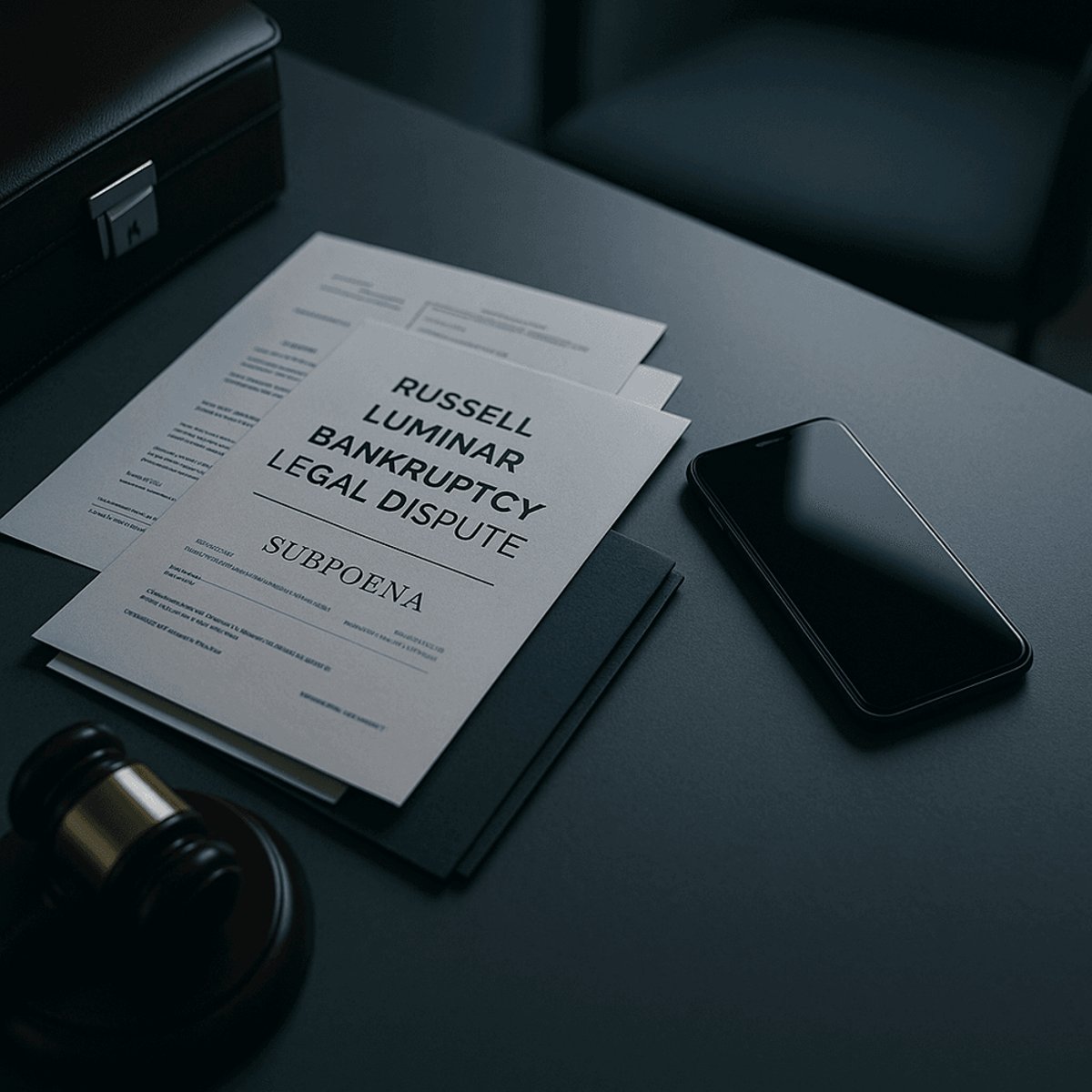
The legal standoff is over. Luminar founder Austin Russell has agreed to accept an electronic subpoena for information on his phone as part of the lidar maker's Chapter 11 bankruptcy case, ending a weeks-long dispute that saw the founder dodge process servers at his Florida mansion. The move gives Russell 14 days to comply and opens the door for Luminar's lawyers to examine his device as they decide whether to pursue legal action against their former CEO.
After weeks of refusing to hand over his phone to Luminar in its bankruptcy case, founder Austin Russell has finally agreed to surrender the device. The agreement, filed Tuesday in bankruptcy court, ends an increasingly messy legal dispute that played out across multiple court filings and involved Russell physically turning away process servers at his home.
Russell had been resistant since Luminar's lawyers first demanded access to his phone. His core concern was straightforward: he didn't want to hand over a device containing personal information without guarantees that Luminar would keep that data confidential. The company's lawyers, meanwhile, were determined to get access as they investigate whether Russell's actions as CEO warrant legal action.
The Tuesday filing shows both sides found middle ground. Russell agreed to accept the subpoena, and they've hammered out a framework for how his personal data will be protected once the device is examined. Russell now has seven days to formally object or file a motion to quash the subpoena, or he'll have 14 days to fully comply.
This is the latest chapter in what's been a dramatic fall for the lidar startup and its young founder. Luminar filed for Chapter 11 bankruptcy protection in December after losing massive contracts with customers like Volvo and Mercedes-Benz. The company also faced intensifying competition from Chinese lidar makers and struggled to land the kind of automotive partnerships that were supposed to drive growth.
Russell himself exited the CEO role abruptly in September after an ethics inquiry, though neither he nor Luminar has ever publicly detailed what prompted the investigation. He was replaced by interim leadership, but Russell remained involved and tried to buy the company outright in October, months before the bankruptcy filing. That bid went nowhere.
Now Luminar is in full wind-down mode. The company has already agreed to sell its lidar assets to Quantum Computing Inc. for $22 million, with another deal in the works to sell its semiconductor division to QCI for $110 million. But Luminar is holding an auction at the end of this month to see if anyone will top QCI's offers.
Russell is still in the mix. Representatives from his new venture, Russell AI Labs, told TechCrunch that he remains interested in submitting a bid for the lidar assets. But there's been no formal offer yet, and getting access to the details he needs to make an informed bid while simultaneously being forced to surrender his phone in a legal investigation creates an awkward dynamic.
The phone subpoena is part of a broader effort by Luminar to gather information about Russell's actions. He's already turned over multiple computers, but the phone has been the sticking point. Luminar originally claimed it was looking for two phones - one provided by the company and one personal - but Russell later argued in court filings that he only ever had one phone during his time as CEO.
As for what's actually on that phone, nobody outside the bankruptcy process knows yet. But given that Luminar is specifically seeking this information to evaluate potential legal claims against Russell, whatever they find could be significant. The company's lawyers clearly believe the phone contains evidence relevant to their investigation.
Russell's agreement to accept the subpoena removes a major obstacle in Luminar's bankruptcy proceedings, but it's also a symbolic moment in the startup's unraveling. The fact that the founder is now fighting to buy the lidar assets of the company he built while simultaneously being investigated by its bankruptcy team shows just how messy startup collapses can get. What's on that phone could determine whether this story ends with Russell making a comeback bid or facing legal fallout from his time as CEO.