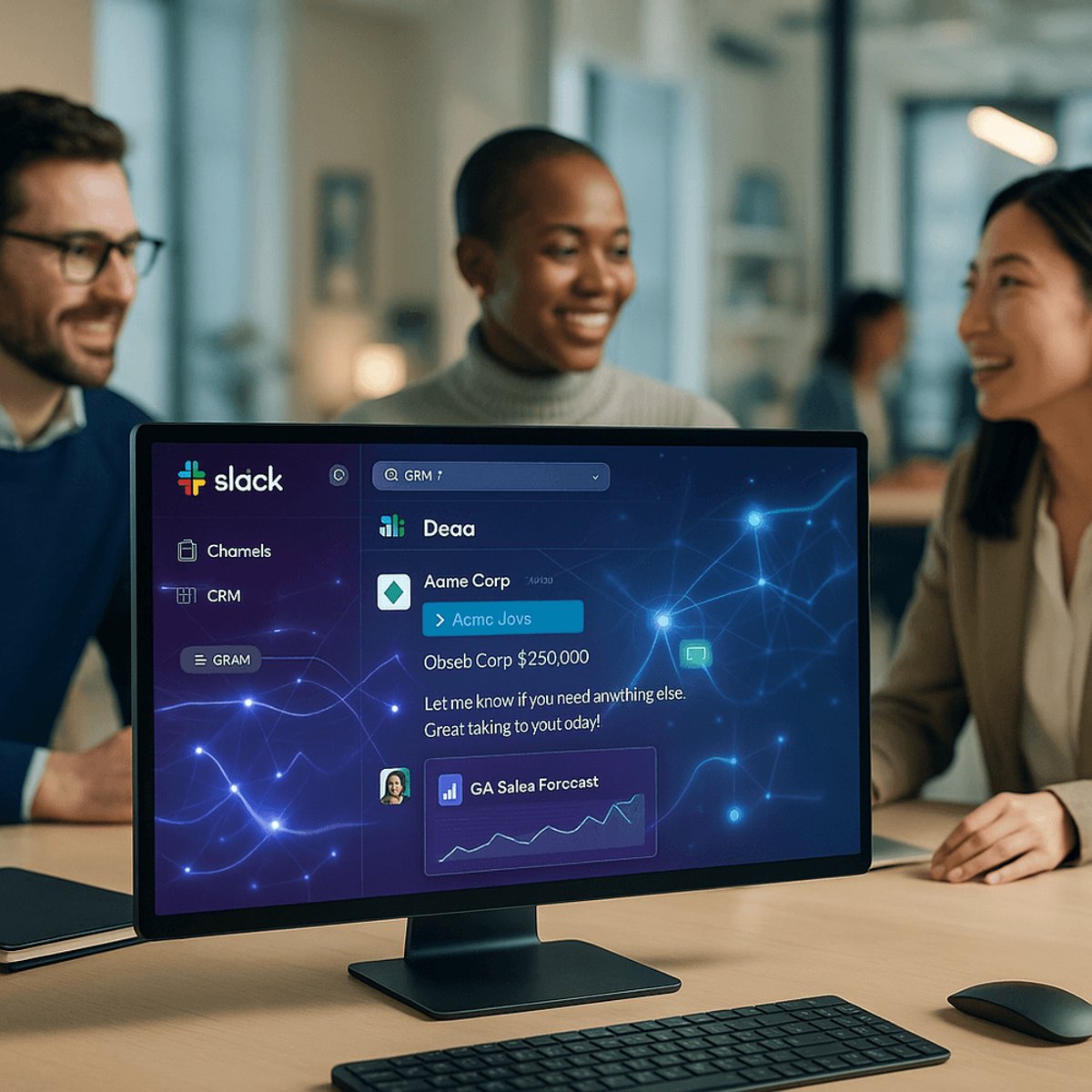
Salesforce just rolled out the biggest transformation to Slack since acquiring the workplace chat platform for $27.7 billion in 2021. The enterprise giant announced 30 new AI-powered features that fundamentally reshape how teams collaborate, signaling CEO Marc Benioff's bet that AI agents - not just chatbots - will define the future of work. The update arrives as Microsoft Teams and Google Workspace race to embed similar AI capabilities, turning workplace collaboration into the next major AI battleground.
Salesforce didn't just update Slack - it rebuilt the collaboration platform from the ground up with AI baked into nearly every function. The company unveiled 30 new features today that transform the workplace messaging app into what executives are calling an "AI-first" collaboration hub, marking the most aggressive product evolution since Salesforce acquired Slack for $27.7 billion back in 2021.
The timing couldn't be more strategic. As enterprise software giants scramble to prove their AI credentials to investors and customers alike, Salesforce is making a clear statement that Slack will serve as the central nervous system for AI-powered work. CEO Marc Benioff has repeatedly emphasized that AI agents - autonomous software that can complete tasks without human intervention - represent the next phase of enterprise software, and this Slack overhaul brings that vision into sharp focus.
The new features span everything from intelligent message summarization and automated task creation to AI-powered search that understands context across conversations, files, and integrated apps. But the real game-changer is how deeply Salesforce is weaving its Einstein AI platform into Slack's core functionality. Users will soon interact with AI agents that can pull data from Salesforce CRM, generate reports, schedule meetings, and even draft responses based on conversation history - all without leaving the Slack interface.
This puts Salesforce in direct competition with Microsoft, which has been aggressively pushing its Copilot AI across Teams and the entire Office suite. Google hasn't been sitting still either, integrating its Gemini AI into Workspace tools. The collaboration software market, valued at over $50 billion and growing, has become the frontline in the enterprise AI wars.
What makes this update particularly significant is the scale. Thirty new features represents a massive engineering effort that signals Salesforce views Slack as central to its future, not just an acquired asset. The company has faced criticism in recent years for not fully capitalizing on the Slack acquisition, with some analysts questioning whether the hefty price tag would ever pay off. This AI-heavy makeover appears designed to silence those doubts.
The enhanced Slackbot - now powered by large language models - can understand natural language queries and surface relevant information from across an organization's entire Slack history. That's a huge shift from the basic keyword search most teams rely on today. For enterprises drowning in information sprawl, the ability to ask "What did the product team decide about the Q2 launch timeline?" and get an intelligent answer could genuinely move the productivity needle.
Salesforce is also betting that tighter integration with its core CRM platform will create stickiness that competitors can't match. Sales teams will be able to update deals, check pipeline status, and collaborate on accounts without context-switching between applications. That seamless workflow between communication and business data represents the kind of integrated experience that enterprise customers have been demanding.
The rollout begins immediately, though Salesforce hasn't disclosed pricing details for premium AI features - a critical question as companies evaluate whether to adopt these tools broadly or limit access to specific teams. The enterprise software giant has previously indicated that AI capabilities would command premium pricing, following the industry playbook established by Microsoft and others.
For the broader enterprise software ecosystem, this update confirms that AI integration isn't optional anymore - it's table stakes. Every major collaboration platform is racing to embed intelligent features that promise to reduce busywork and surface insights faster. The question is whether these AI capabilities deliver enough tangible value to justify the investment, or if they're mostly flashy demos that fall short in daily use.
Early enterprise AI adoption has been uneven, with some companies reporting genuine productivity gains while others struggle with accuracy issues and employee resistance. Salesforce will need to prove that these 30 new Slack features solve real problems rather than adding complexity to already overloaded workflows.
This isn't just another feature drop - it's Salesforce drawing a line in the sand about where workplace collaboration is headed. By flooding Slack with 30 AI-powered capabilities, the company is betting that enterprises will choose the platform that makes AI feel native rather than bolted on. The real test comes in the next few quarters as customers decide whether these intelligent features genuinely transform how work gets done, or if they're sophisticated solutions searching for problems. For now, the message is clear: the collaboration platform wars just entered their AI phase, and Salesforce is swinging hard.