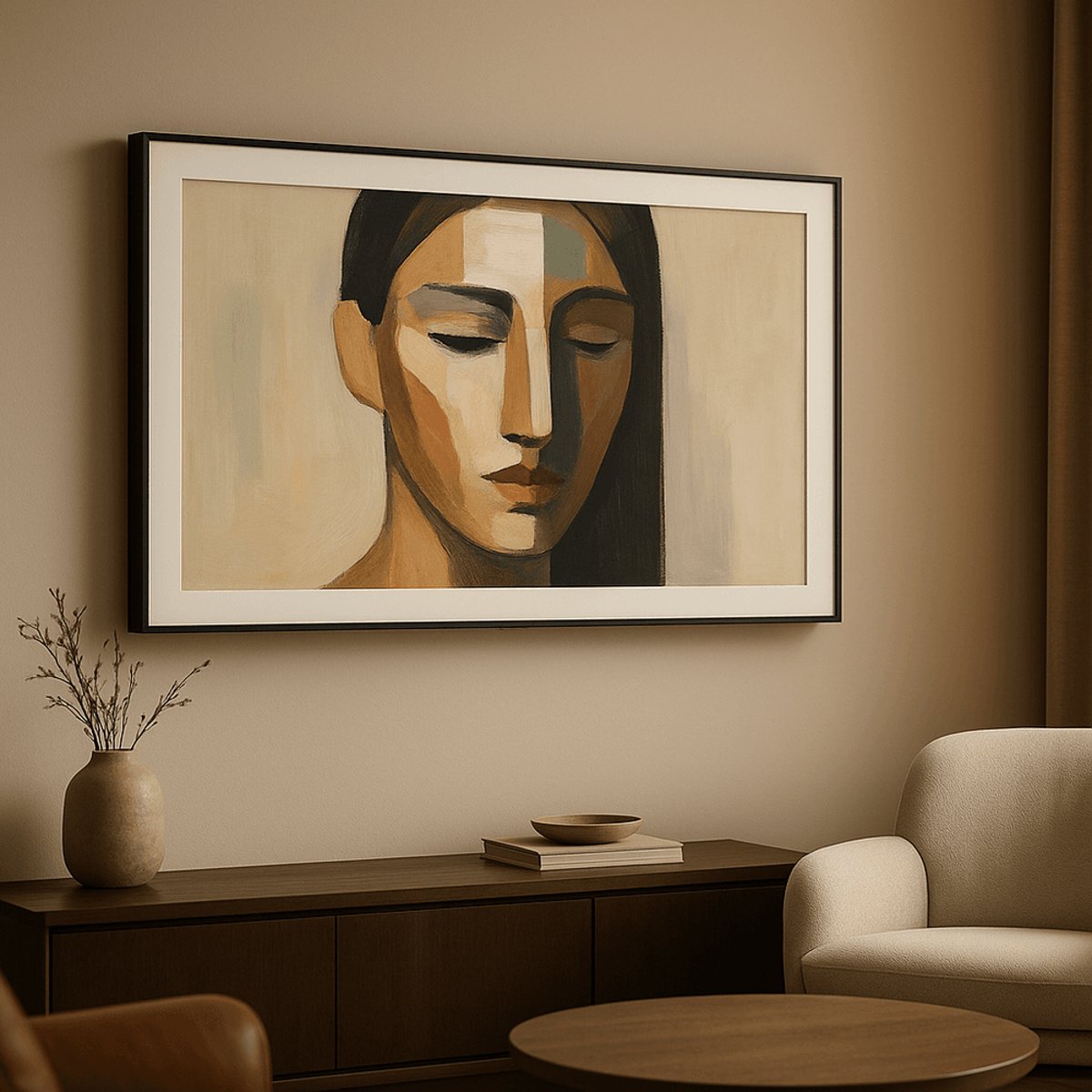
Samsung is bringing contemporary artist Sun Yitian's large-scale painting "Ken" (2023) to living rooms worldwide through its Art Store platform, following Art Basel Hong Kong 2026. The collaboration marks another push by the electronics giant to blend high art with consumer displays, offering over 5,000 artworks in 4K across its 2026 Art TV lineup - including The Frame Pro, OLED S95H, and Micro RGB models. Sun, known for her precise yet emotionally ambiguous paintings of mass-produced objects, scaled her Barbie boyfriend portrait to three meters specifically to make "the male figure become the object of the gaze," she told Samsung Newsroom.
Samsung is betting that people want museum-quality art on their TVs when they're not streaming Netflix. The company just added contemporary Chinese artist Sun Yitian's "Ken" (2023) to its Art Store platform, part of an expanding collaboration with Art Basel that's turning living room displays into rotating digital galleries.
Sun's three-meter painting of Barbie's boyfriend - rendered with unsettling precision - now appears alongside more than 5,000 other artworks available through Samsung's Art TV subscription service. The piece is featured in the new Art Basel Hong Kong 2026 Collection, accessible on Samsung's 2026 lineup including The Frame Pro, OLED S95H, and Micro RGB models.
"I wanted the male figure in the painting to become the object of the gaze," Sun explained in an interview with Samsung Newsroom. "Barbie's boyfriend feels very characteristic of our current moment. He has had all roughness and resistance removed. He is handsome, healthy and radiant. But he is empty. Inside, he is just plastic."
The collaboration represents Samsung's ongoing strategy to differentiate its premium TV lineup through cultural partnerships. As official display partner of Art Basel, the company curates digital exhibitions from artists showcased at four global venues - Hong Kong, Basel, Paris, and Miami Beach. The Art Store platform has grown to include works from over 800 artists and 80+ institutional partners, all rendered in 4K quality.
Sun's artistic approach stems from her childhood in 1990s Wenzhou, China, during a period of rapid manufacturing expansion. Growing up as an only child - common for her generation - she spent time alone with dolls while visiting local factories owned by family friends. Those assembly lines filled with toys and goods destined for global export became source material for her "Man-Made Objects" series.
"I feel attached to these fleeting things made on assembly lines," Sun told Samsung. "They were my companions in childhood, and they also carry the imprint of the time we live in." Her work has evolved to examine how mass-produced objects carry emotional weight despite - or because of - their industrial origins.
The digital presentation creates an interesting tension for an artist who emphasizes painting's physical presence. "What matters to me is the painting's physical presence," Sun noted. "That is the key difference between a painting and an image of a painting on a screen: the painting exists physically as a real, tangible object."
But she sees value in the Samsung partnership's ability to bring art into everyday spaces. "When my work is shown in a more private and intimate setting through a digital screen, it can take on a different feeling from the original painting," she said. The physical "Ken" is currently on view at the Long Museum in Shanghai, while the digital version lives on Samsung displays globally.
Sun's precise yet ambiguous style has made her one of the most watched voices in contemporary painting. She developed her technique through years of practice that began copying Shogo Hirata's fairy tale books and obsessively drawing Sailor Moon characters as a child. One kindergarten memory stands out: cutting slits into a drawn princess dress and holding it to sunlight, making it appear to glow for delighted classmates.
"I think that may have been the moment I realized how interesting drawing could be - and that I wanted to keep doing it," Sun recalled.
Her approach to painterliness is deliberately restrained. "I do not want my brushwork to be too expressive or too obvious," she explained. "I prefer to let it emerge quietly, in hidden and subtle places." That precision creates space for the emotional ambiguity that defines her work - objects rendered with near-photographic clarity that somehow feel unsettling.
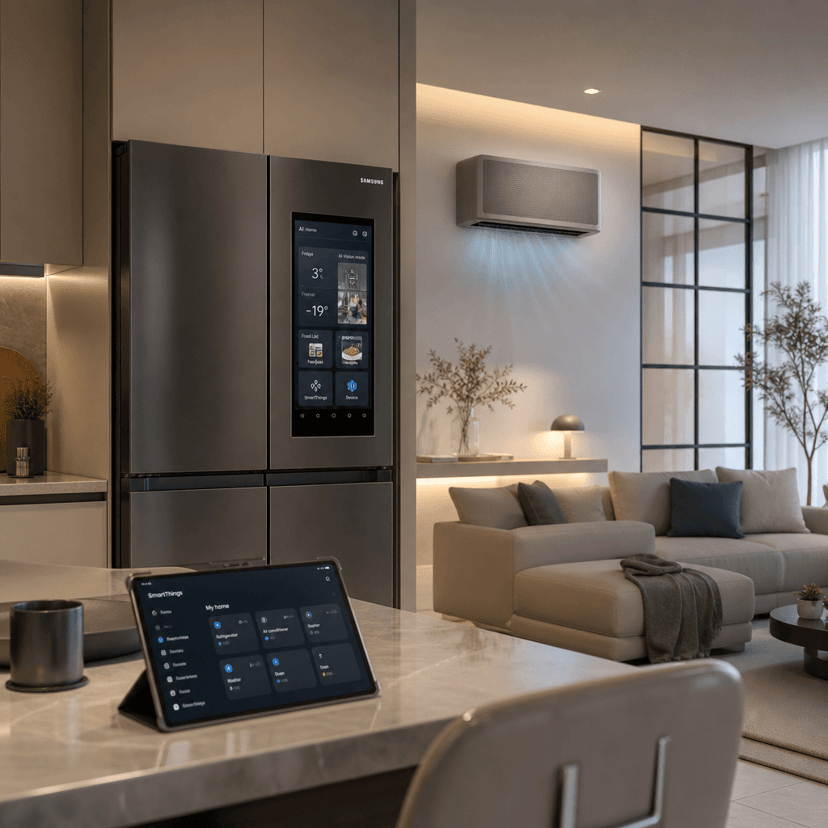
For Samsung, the Art Store represents a growing ecosystem beyond hardware sales. The subscription service transforms premium TVs into rotating galleries, potentially justifying higher price points for models like The Frame that double as wall art when not actively displaying content. The Art Basel partnership lends cultural credibility while filling the platform with recognizable contemporary work.
Sun remains pragmatic about technology's role in her practice. "As a painter, I know painting is a very old medium," she said. "But as a younger artist, I am open to trying new languages and new tools." Those tools don't necessarily appear directly in her paintings - instead, they push her to reflect on what painting means right now.
As for her hopes for the Samsung collaboration? "I just hope my friends turn on their Samsung TV, see my giant 'Ken' and get a little surprise," Sun said.
Samsung's Art Store collaboration with Sun Yitian highlights how consumer electronics companies are positioning premium displays as cultural platforms, not just entertainment hardware. By partnering with Art Basel and offering subscription access to thousands of curated artworks, Samsung creates differentiation in a crowded TV market while giving contemporary artists new distribution channels. Whether digital reproductions on 4K screens can capture the emotional complexity Sun builds into her physical paintings remains an open question - but for now, viewers can compare for themselves, with the original "Ken" still hanging at Shanghai's Long Museum.