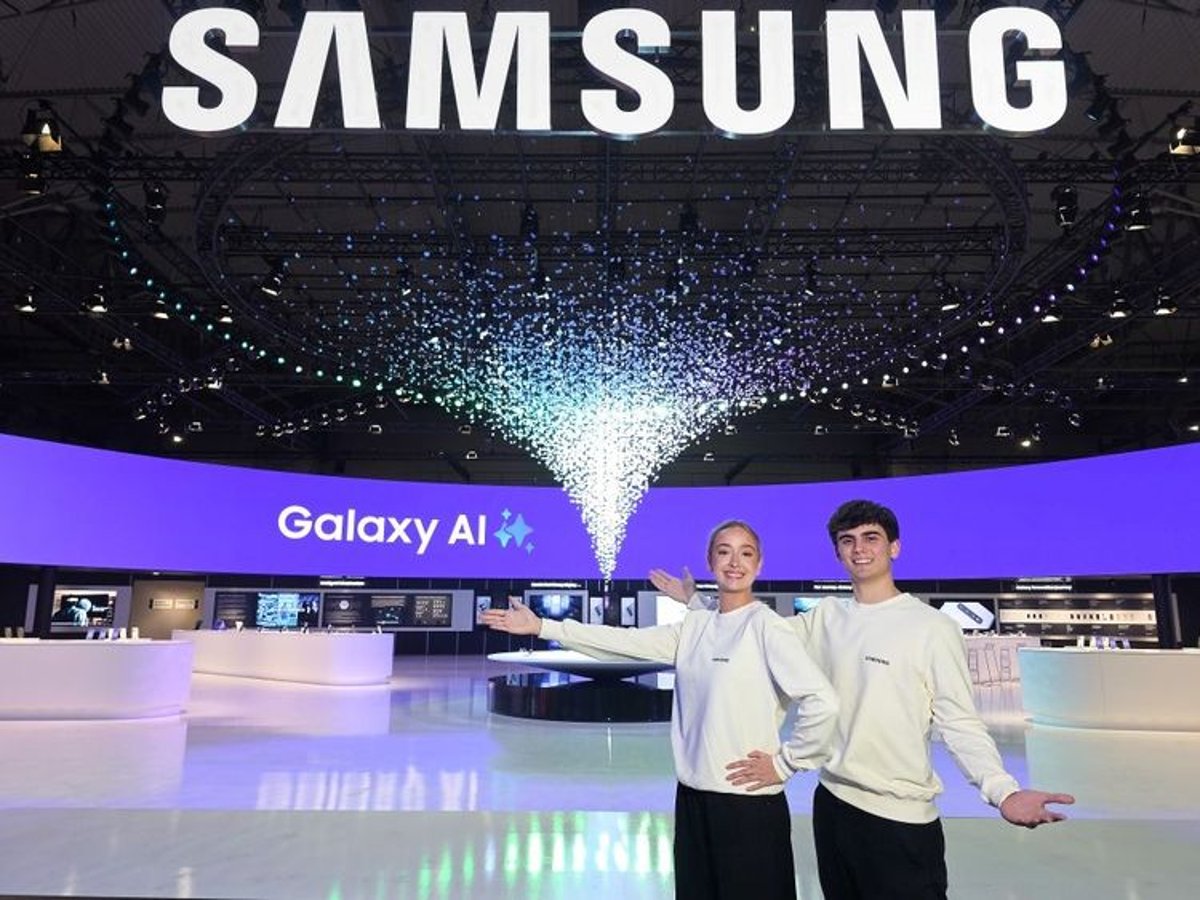
Samsung just laid out the most ambitious industrial AI roadmap yet. The tech giant announced today it's converting every factory it operates worldwide into fully autonomous, AI-driven facilities by 2030 - deploying the same 'agentic AI' technology that powers its Galaxy S26 phones to run assembly lines, quality control, and supply chains. The strategy positions Samsung as the first major electronics manufacturer to commit to full-scale autonomous production, leapfrogging competitors still experimenting with piecemeal automation.
Samsung is taking its AI bet from smartphones straight to the factory floor. The company announced today it's converting its entire global manufacturing network into what it calls 'AI-Driven Factories' by 2030, deploying autonomous AI agents that can independently plan, execute, and optimize production decisions without human intervention.
The centerpiece of this transformation is 'agentic AI' - the same technology Samsung launched with its Galaxy S26 series - now being repurposed for industrial-scale manufacturing. Unlike traditional factory automation that follows pre-programmed rules, these AI agents can understand operational context in real time and make judgment calls on everything from supply chain logistics to quality inspection protocols.
"The next phase of manufacturing innovation lies in building autonomous environments where AI truly understands operational contexts in real time and independently executes optimal decisions," YoungSoo Lee, Executive Vice President and Head of Global Technology Research at Samsung Electronics, told Samsung Newsroom. "We're committed to leading the transformation toward AI-powered global manufacturing innovation."
Samsung's strategy spans the complete manufacturing value chain - from inbound material logistics through production and quality inspection to final shipment. The company will implement digital twin-based simulations across every process, creating virtual replicas of physical production lines that AI agents can test and optimize before deploying changes to actual facilities.
The move represents a major escalation in the industrial AI race. While competitors like Apple and Google have focused AI investments primarily on consumer products and cloud services, Samsung is betting it can create competitive advantage by applying advanced AI directly to how things get made. That's particularly significant for a company that manufactures everything from memory chips to refrigerators across dozens of facilities worldwide.
Samsung will deploy specialized AI agents for distinct functions: quality control agents that can detect defects invisible to human inspectors, production agents that optimize manufacturing workflows, and logistics agents that coordinate autonomous material handling. The company says this agent-based approach will enable "standardized, world-class excellence across every global site" - addressing one of manufacturing's persistent challenges of maintaining consistent quality across geographically dispersed facilities.
But Samsung isn't stopping at software. The company is progressively introducing humanoid and task-specialized robotics across production lines, including Operating Robots for line operations and facility management, Logistics Robots for autonomous material handling, and Assembly Robots for precision manufacturing tasks. In hazardous environments where human access is limited, Samsung will deploy Environmental Safety Robots integrated with digital twins to monitor conditions and proactively mitigate risks.
The robotics push puts Samsung in direct competition with companies like Tesla, which has been developing its Optimus humanoid robot partly for use in its own factories. But Samsung appears to be taking a more diversified approach, deploying task-specialized robots alongside humanoids rather than betting entirely on general-purpose robotics.
Samsung is also expanding AI into Environmental, Health and Safety operations - using proactive detection and automated hazard prevention systems to enhance workplace safety. That's a notable application given ongoing scrutiny of working conditions in electronics manufacturing, and it signals Samsung sees AI as a tool for regulatory compliance as much as productivity.
The company will showcase its industrial AI strategy at Mobile World Congress 2026 in Barcelona, demonstrating how these systems enhance safety and efficiency in real-world environments. At the Samsung Mobile Business Summit (SMBS) - celebrating its 10th anniversary this year - Samsung plans to introduce what it calls a "governance strategy for expanding AI autonomy" that embeds safety mechanisms from the initial design stage.
That governance framework could prove crucial. Fully autonomous factories raise questions about accountability when AI agents make decisions that affect product quality, worker safety, or supply chain reliability. Samsung's emphasis on embedded safety mechanisms suggests the company is trying to get ahead of regulatory concerns before they become obstacles to deployment.
The 2030 timeline gives Samsung roughly four years to execute this transformation - an aggressive schedule for overhauling global manufacturing infrastructure. The company hasn't disclosed investment figures, but transitioning every facility to AI-driven operations with digital twins, specialized agents, and humanoid robotics will likely require billions in capital expenditure.
For Samsung's competitors, the announcement creates pressure to articulate their own industrial AI strategies. If Samsung can actually deliver on autonomous factories that improve quality and efficiency, it could translate into cost advantages and faster time-to-market for new products - competitive edges that would be difficult to overcome through product innovation alone.
Samsung's AI-driven factory strategy represents the clearest signal yet that industrial AI is moving from pilot projects to full-scale deployment. If the company delivers on its 2030 timeline, it will fundamentally reshape expectations for what modern manufacturing looks like - and put enormous pressure on every other hardware manufacturer to follow suit or risk falling behind on both cost and quality. The real test won't be whether Samsung can build autonomous factories, but whether those factories can actually outperform traditional manufacturing at the scale required to justify the investment. That answer will determine if this becomes the industry playbook or an expensive experiment.