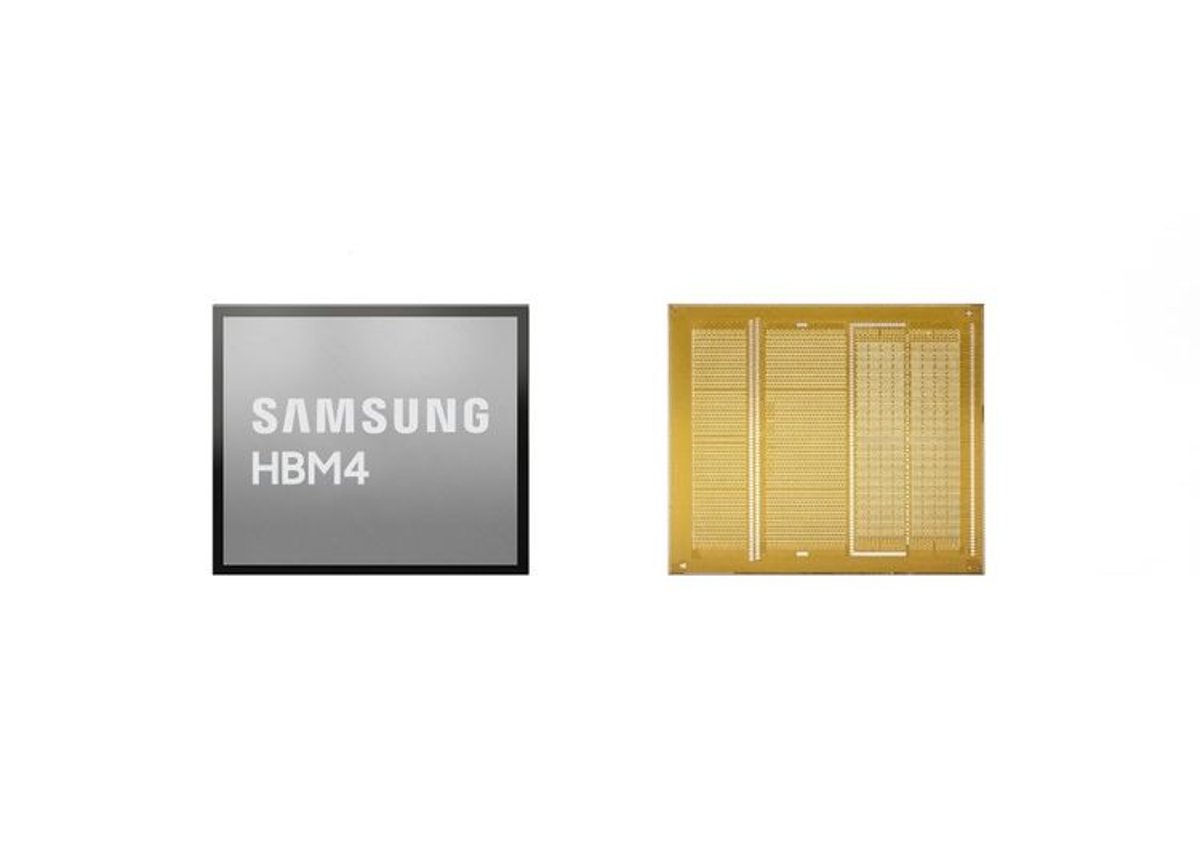
Samsung just threw down the gauntlet in the AI memory wars. At NVIDIA GTC 2026, the company unveiled its next-generation HBM4E memory delivering 16Gbps per pin while announcing it's already mass-producing sixth-gen HBM4 for NVIDIA's Vera Rubin platform. The move positions Samsung as the only player offering end-to-end AI solutions from memory to packaging, directly challenging rivals in the red-hot AI infrastructure market where every nanosecond of speed matters.
Samsung is making its boldest play yet for AI infrastructure supremacy. The Korean giant used NVIDIA GTC 2026 in San Jose to showcase not just one but two generations of high-bandwidth memory, while revealing a partnership with NVIDIA that spans everything from massive data centers to smartphones in your pocket.
The headline grabber is HBM4E, Samsung's next-generation memory that pushes bandwidth to 16 gigabits per second per pin and delivers 4.0 terabytes per second of total bandwidth. That's the kind of speed AI models need to process training data without bottlenecks. According to Samsung's announcement, this marks the first public display of the technology that could define the next wave of AI accelerators.
But here's what caught the industry off guard: Samsung's already shipping production volumes of HBM4, the sixth-generation memory designed specifically for NVIDIA's Vera Rubin platform. While competitors scramble to validate their designs, Samsung's manufacturing HBM4 at scale with consistent 11.7Gbps speeds, nearly 50% faster than the 8Gbps industry baseline. The company says it can even push that to 13Gbps for customers willing to pay premium.
The secret sauce? Samsung's leveraging its most advanced 1c DRAM process, a sixth-generation 10-nanometer-class technology that squeezes more performance from every silicon wafer while maintaining stable yields. That manufacturing edge matters when you're stacking memory dies 12 layers high and trying to keep everything cool enough to function.
Speaking of cooling, Samsung previewed hybrid copper bonding technology at GTC 2026 that could solve one of HBM's biggest headaches. Current thermal compression bonding hits thermal limits around 12-14 layers. Samsung's HCB approach promises 16 or more layers while slashing heat resistance by over 20%. For AI training runs that can cost millions in compute time, better thermal management translates directly to faster results and lower power bills.
The NVIDIA partnership runs deeper than memory chips. Samsung dedicated an entire "NVIDIA Gallery" within its booth to showcase products purpose-built for NVIDIA's ecosystem. The SOCAMM2 memory module, based on low-power DRAM, is already in mass production, making Samsung the first to ship this form factor at scale for AI servers.
"We've been preparing for this shift since Q2," Samsung's emphasis on production readiness reveals how the company's betting on being first to market while others perfect their designs. The PM1763 SSD, built on the bleeding-edge PCIe 6.0 interface, will demonstrate its capabilities on servers running NVIDIA's SCADA programming model, showing how storage can keep pace with compute.
Then there's the AI Factory collaboration that hints at where this partnership is headed. Samsung plans to implement NVIDIA Omniverse across its chip manufacturing operations, creating digital twins of fabrication facilities that span memory, logic, foundry and advanced packaging. Yong Ho Song, Executive VP and Head of AI Center at Samsung, will detail this vision in his March 17 session titled "Transforming Semiconductor Manufacturing with Agentic AI from Design and Engineering to Production."
The implications are fascinating: NVIDIA's AI tools will optimize the very factories producing the memory that powers NVIDIA's chips. It's a virtuous cycle that could accelerate Samsung's process technology while giving NVIDIA unprecedented visibility into manufacturing constraints.
Samsung's not ignoring the edge, either. For NVIDIA DGX Spark personal AI supercomputers, Samsung's showing off PM9E3 and PM9E1 NAND storage solutions. And the company's LPDDR5X memory, hitting 25Gbps per pin while cutting power consumption 15%, targets premium smartphones and tablets where AI inference is exploding.
LPDDR6 pushes that even further to 30-35Gbps with adaptive voltage scaling and dynamic refresh control. Those features matter for running large language models on-device without draining batteries in an hour.
This comprehensive showcase positions Samsung as the only semiconductor company offering complete AI solutions across every layer of the stack. While SK hynix focuses primarily on memory and Micron fights for data center share, Samsung's betting its breadth, from foundry services to packaged solutions, creates sustainable competitive advantage.
The timing couldn't be better. AI infrastructure spending is projected to hit $200 billion annually by 2027, with high-bandwidth memory representing roughly 40% of an AI accelerator's bill of materials. Getting design wins with NVIDIA, which controls over 90% of the AI training chip market, essentially guarantees Samsung massive revenue growth.
What remains unclear is how aggressively Samsung can ramp HBM4E production. Memory manufacturing is notoriously cyclical, and announcing a technology is very different from shipping it at the volumes hyperscalers demand. SK hynix has historically led in HBM shipments, and Micron just secured major contracts with cloud providers.
Samsung's answer appears to be speed and integration. By tying memory, storage, and manufacturing AI into a unified NVIDIA partnership, the company's not just selling components. It's positioning itself as the strategic partner that can deliver entire subsystems optimized end-to-end.
Samsung's GTC 2026 showcase isn't just about faster memory chips - it's a statement about vertical integration in the AI era. By mass-producing HBM4 while previewing HBM4E, demonstrating hybrid copper bonding, and weaving NVIDIA partnerships across data center to edge, Samsung's challenging the notion that specialists always beat generalists. If the company can execute on manufacturing ramp and maintain its technology lead through LPDDR6 and beyond, it'll force rivals to either consolidate or accept narrower roles in the AI supply chain. The next 12 months will reveal whether Samsung's breadth becomes a moat or just creates more fronts to defend.