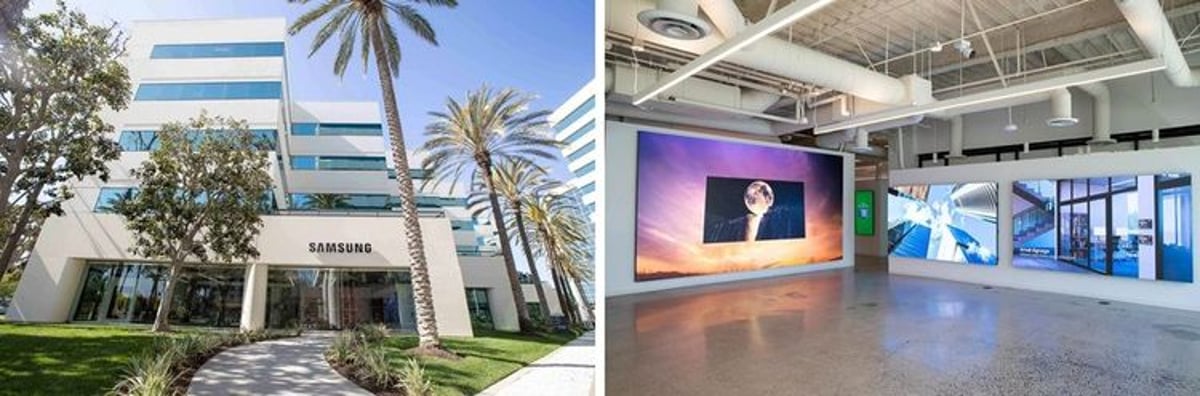
Samsung is betting that seeing is believing when it comes to enterprise display sales. The company's 7,500-square-foot Connected Experience Center in Irvine transforms how businesses evaluate professional displays by letting them test everything from conference room LED walls to virtual production setups with their own content before buying.
Samsung just changed how it sells enterprise displays, and the results are already showing up in deal sizes. The company's new Connected Experience Center in Irvine represents a big shift from traditional B2B sales - instead of PowerPoint presentations and spec sheets, clients now get hands-on time with cutting-edge display tech using their own content.
The approach is working better than expected. "What began as a visit to compare a 98-inch display quickly evolved into a broader vision," explains Lupe Verdin, Samsung's B2B Visual Display Liaison. "The client ended up expanding their project to seven LED walls for conference rooms, a showroom, and a security operations center." That's the kind of deal expansion that happens when customers can actually see their content running on 0.9mm COB LED displays instead of just imagining it.
The timing makes sense for Samsung. Enterprise display spending is heating up as companies return to offices and invest in hybrid work technology. But competition from Chinese manufacturers like BOE and TCL is getting fierce on price. Samsung's betting that superior picture quality and integration capabilities will win deals - if customers can experience the difference firsthand.
"You can't always explain with words what must be experienced with eyes," Verdin notes. The 7,500-square-foot facility lets clients compare indoor, outdoor, and specialty LED solutions side by side. More importantly, they can upload their own presentations, videos, and brand content to see exactly how it'll look in their space.
The smartest play might be Samsung's SmartThings Pro showcase, which demonstrates how displays integrate with building automation systems. For hospitality clients, this means showing automated check-ins, adaptive lighting, and personalized streaming - all managed through one platform. "Efficiency and guest satisfaction don't have to be trade-offs," says Noor Armar, Solution Enablement Manager at Samsung's North America Display Office.
But Samsung's also eyeing the booming virtual production market. The center features the Vu One Mini, developed with Vu Technologies, which brings Hollywood-style LED walls to smaller productions. "Most organizations don't have access to Hollywood sound stages," explains Chris Simpson, Senior Business Development Manager for Virtual Production at Samsung Electronics America. "But with the right software and a portable LED solution, we can bring that same creative power into corporate, academic, government, sports settings."
The proof is in the partnerships. Hyundai America Technical Center used the center to configure The Wall - Samsung's modular MicroLED display - for their Michigan headquarters lobby. Even individual clients like entrepreneur Phil Trubey started their luxury home cinema journey with a CEC visit. "The Wall is so bright we usually don't even use the full intensity of the screen," Trubey told Samsung.
What's interesting is how Samsung is positioning these centers as co-design spaces rather than just showrooms. Clients work with Samsung engineers to test ideas, explore trends, and prototype solutions aligned with their business goals. It's less about pushing products and more about solving specific use cases - whether that's a retail flagship store, corporate boardroom, or entertainment venue.
The model clearly works well enough that Samsung's planning global expansion. Each location will adapt to regional market needs, but the core concept remains: let customers experience the technology with their own content before they commit to six or seven-figure display installations. In a market where a single LED wall can cost more than a luxury car, that hands-on validation becomes crucial for closing deals.
Samsung's experience center strategy represents a smart evolution in B2B tech sales. By letting customers test expensive display technology with their own content, Samsung's converting more prospects and expanding deal sizes. As the company rolls out similar centers globally, expect other display manufacturers to follow suit - because in a market where a single installation can cost hundreds of thousands of dollars, hands-on validation isn't just nice to have, it's becoming essential for closing deals.