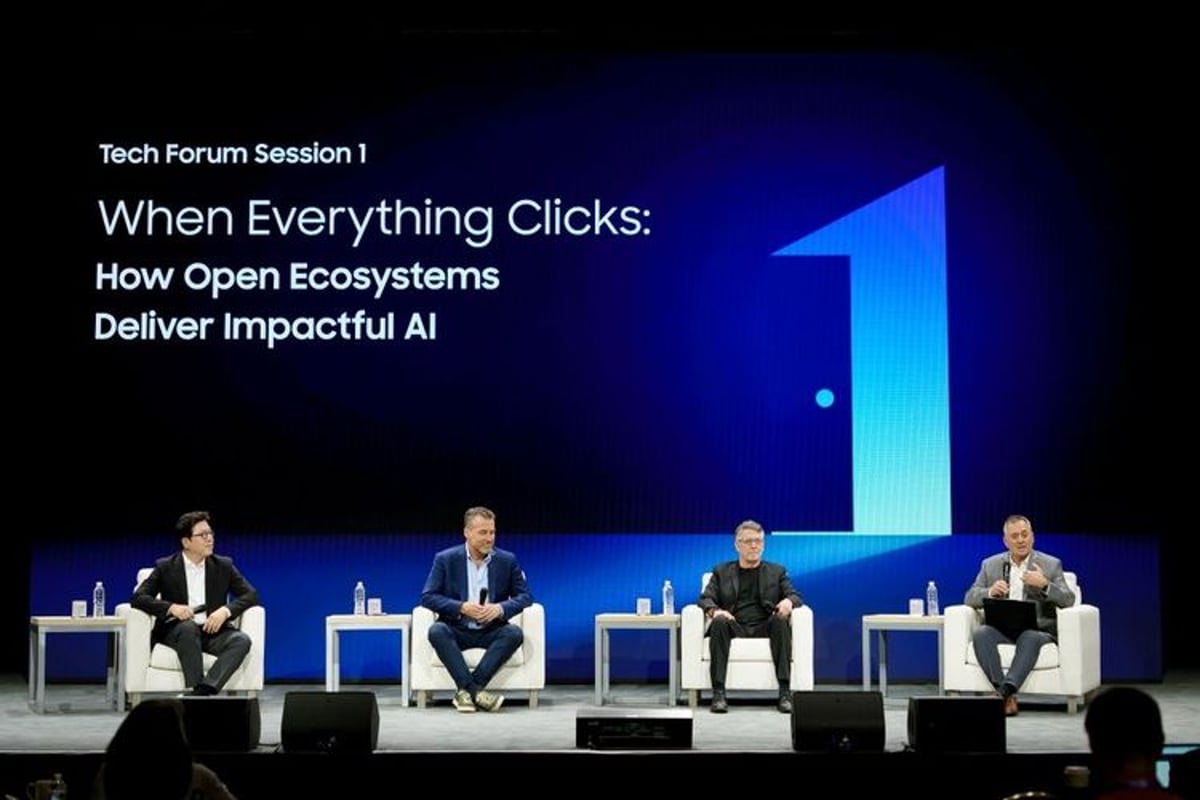
Samsung's doubling down on a radical bet: the future of home AI isn't about closed ecosystems, it's about everything working together. At CES 2026, the company convened industry leaders to argue that interoperability across brands, not proprietary lock-in, will unlock the real promise of AI in homes. The move comes as Samsung's SmartThings platform has already reached over 500 million users, giving the company serious leverage to shape how home automation actually evolves.
Samsung just laid down a challenge to the entire smart home industry: stop building walled gardens. At a packed Tech Forum panel at CES 2026 in Las Vegas, the company and a roster of industry partners made the case that the next era of home intelligence depends on cross-brand collaboration, not the kind of locked-down ecosystems that have defined consumer tech for the past decade.
The stakes couldn't be higher. As homes fill with more connected devices—refrigerators that talk to energy systems, thermostats that coordinate with security, kitchens that integrate with insurance providers—the question isn't whether AI will power these devices. It's whether they'll actually work together or remain isolated features that frustrate consumers.
"Home is the most personal place in our lives, so home AI must earn trust," said Yoonho Choi, President and Chair of the Board of the Home Connectivity Alliance and Head of Strategic Alliances at Samsung. "That requires interoperability across brands, so the home works as one system instead of disconnected features." Choi emphasized that openness isn't just nice-to-have—it's fundamental to delivering "safer homes, simpler routines and measurable savings."
That argument carries weight coming from Samsung. The company's SmartThings platform has already reached over 500 million users, giving it more than a decade of data on how connected living actually works. The scale matters because it means Samsung understands the friction points. A user shouldn't have to juggle three different apps to manage their kitchen. Insurance shouldn't require manual paperwork when a water sensor already detected a leak. Appliances shouldn't operate in isolation when they could coordinate to save energy.
Michael Wolf, founder and editor-in-chief of The Spoon, echoed the sentiment during the panel discussion. "It's crucial to deliver tangible user benefits that make people's lives better," Wolf said. He pointed to the connected kitchen as the killer app—where a refrigerator that knows what's inside coordinates with water and heating networks to enable preventative action. That's not possible in siloed environments. It requires real interoperability.
What makes Samsung's pitch credible isn't just rhetoric. The company highlighted a partnership with Hartford Steam Boiler, the insurance company, as proof that open ecosystems deliver measurable consumer outcomes. This isn't theoretical. Smart home data, used responsibly and transparently, can directly reduce insurance claims by catching problems before they escalate.
"We're at a point where the connected home can bring seamless integration into user lifestyles," said Jed Usich, Senior Vice President of Strategic Growth Solutions at Hartford Steam Boiler. "Through our partnership with Samsung, we've created a bridge to the insurance industry that takes simple datapoints and turns them into tangible savings for consumers." That's the real differentiator: when data flows safely across industries, everyone benefits.
But there's a design philosophy underpinning all this that Samsung and its partners kept circling back to. For home AI to actually work, it can't feel like an intrusion. It needs to feel like a calm, reliable companion that operates in the background—coordinating routines around cooking, relaxing, entertaining and caring for families without demanding attention.
The panel consensus was clear: the future of home AI depends on interoperability, responsible data use, and collaboration across industries. That's the opposite of how big tech usually operates. Apple guards its ecosystem fiercely. Amazon prefers to own as much of the smart home stack as possible. Google pushes its own standards. Samsung is betting that open collaboration will win because it actually serves users better.
Is the company right? That depends on whether the industry follows. The panel certainly suggested momentum is building. But openness only works if others participate. If Samsung ends up building a more open garden while competitors remain closed, it might end up at a disadvantage. The bet is that transparency and measurable consumer benefits will eventually pull the entire industry toward interoperability. That's the real story to watch.
Samsung is making a calculated bet that the smart home industry's future belongs to platforms that collaborate rather than compete through walled gardens. With 500 million SmartThings users, meaningful partnerships with insurance companies, and industry leaders backing the interoperability thesis, the company is positioning itself as the architect of openness in home AI. Whether other tech giants follow or double down on closed ecosystems will determine whether Samsung's vision becomes the standard or remains a minority position in a fractured market.