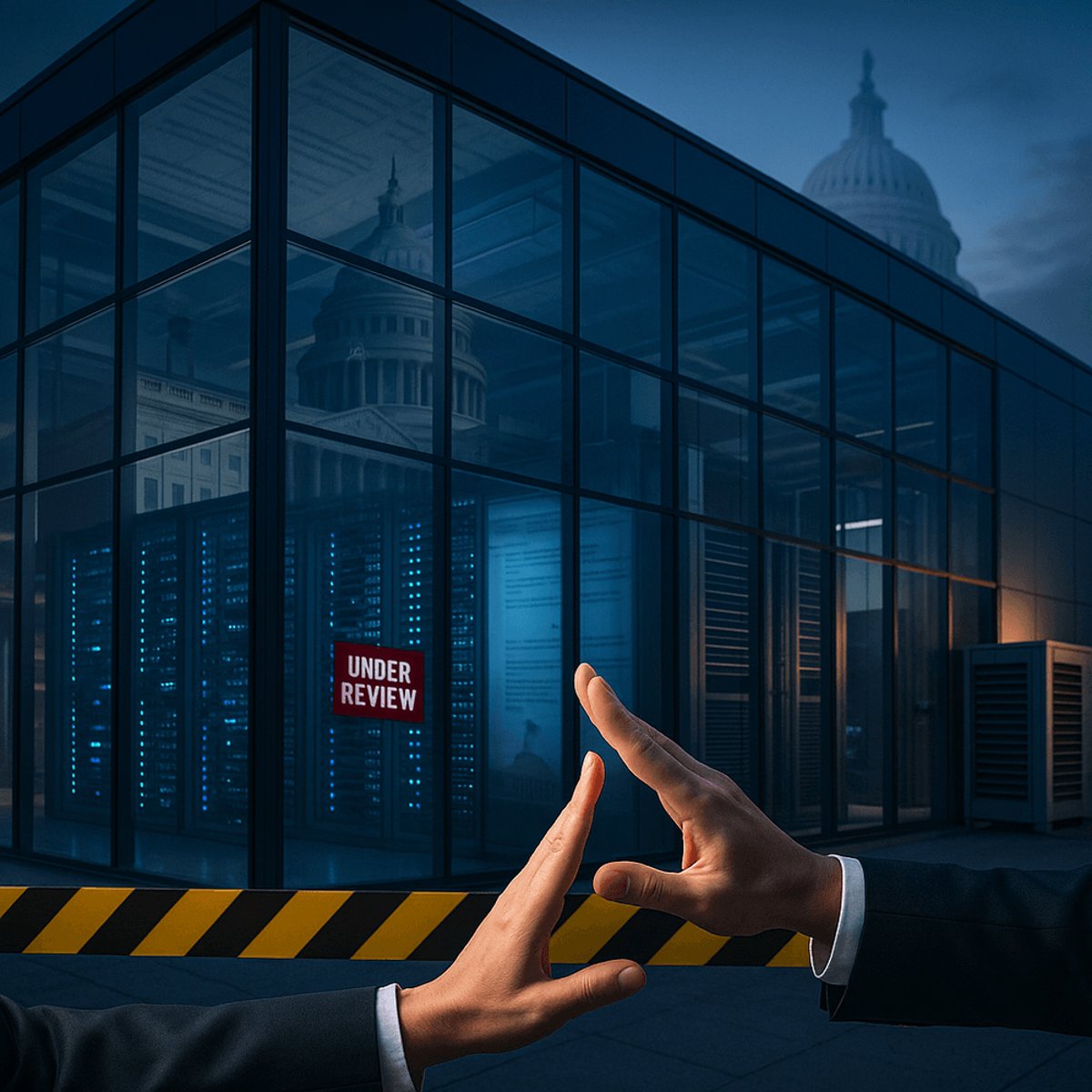
Senator Bernie Sanders and Representative Alexandria Ocasio-Cortez just dropped a bombshell that could freeze billions in AI infrastructure investment. The progressive lawmakers introduced companion legislation today that would halt all new data center construction until Congress passes comprehensive AI regulation. The proposal comes as tech giants race to build massive facilities to power their AI ambitions, with over $50 billion in projects announced this year alone.
Senator Bernie Sanders and Representative Alexandria Ocasio-Cortez are taking their most aggressive swing yet at Big Tech's AI expansion. The duo introduced matching bills in the Senate and House today that would impose an immediate moratorium on new data center construction until Congress enacts comprehensive AI regulation.
The timing couldn't be more disruptive for the tech industry. Amazon, Microsoft, Google, and Meta have collectively announced over $50 billion in data center projects this year, racing to build the computational infrastructure needed to train and deploy increasingly powerful AI models. Each company has touted these facilities as critical to maintaining competitive position in the AI arms race.
The proposed legislation would effectively freeze that buildout in its tracks. While details remain sparse from the initial TechCrunch report, the companion bills represent the most direct congressional intervention in AI infrastructure development to date. Previous regulatory efforts have focused on algorithmic bias, content moderation, and antitrust concerns, but this marks the first attempt to physically constrain the industry's expansion.
Data centers have become ground zero in the AI battle. These massive facilities, some spanning millions of square feet, house the specialized chips and cooling systems required to train large language models and run inference at scale. Microsoft recently committed $10 billion to new facilities to support its OpenAI partnership, while Google has been quietly acquiring land across the Midwest for additional compute capacity.
The construction boom has sparked local controversies over power consumption and water usage. A single large-scale AI data center can consume as much electricity as a small city, straining regional power grids. In some rural communities, residents have pushed back against projects they say threaten water supplies needed for agriculture. Sanders and Ocasio-Cortez have previously criticized tech companies over environmental impact, suggesting this legislation may tie AI regulation to sustainability concerns.
The proposal faces steep odds in a divided Congress. Tech industry groups have long argued that prescriptive AI regulation could hand competitive advantage to China and other nations racing to dominate the technology. Any moratorium on physical infrastructure would likely trigger intense lobbying from not just tech giants but also construction firms, chip manufacturers, and energy companies that stand to benefit from the buildout.
Still, the Sanders-AOC alliance carries symbolic weight. Both lawmakers command significant media attention and progressive grassroots support, even if they lack the votes to pass controversial legislation. The proposal signals growing frustration among some Democrats that AI development has raced ahead of meaningful guardrails, with companies deploying increasingly powerful systems while Congress debates foundational questions about safety, bias, and accountability.
For tech companies, the threat may be less about this specific bill passing and more about the political climate it represents. If progressive Democrats gain more leverage in future congressional sessions, infrastructure constraints could become part of a broader regulatory package. That uncertainty alone could slow some investment decisions, even without a formal ban.
The legislation also arrives as companies grapple with AI profitability questions. Despite massive investments, few firms have articulated clear paths to returns that justify their capital expenditures. A construction moratorium could provide convenient cover for executives looking to pump the brakes on spending, while publicly opposing the measure.
What happens next depends largely on whether moderate Democrats embrace the proposal or distance themselves from it. Senate Majority leadership has shown little appetite for aggressive tech regulation that could impact jobs and economic growth. But with 2026 midterms approaching, pressure could mount to demonstrate action on AI concerns that polls show resonate with voters across party lines.
Whether this legislation gains traction or dies in committee, it marks a new phase in Washington's approach to AI governance. By targeting physical infrastructure rather than just algorithmic oversight, Sanders and Ocasio-Cortez are betting that constraining the means of AI production could force the regulatory conversation that years of hearings and white papers haven't delivered. For an industry built on moving fast and breaking things, the prospect of a construction freeze represents an existential challenge to that philosophy. Tech executives will be watching closely to see if this proposal remains a progressive outlier or becomes the opening salvo in a broader infrastructure fight.