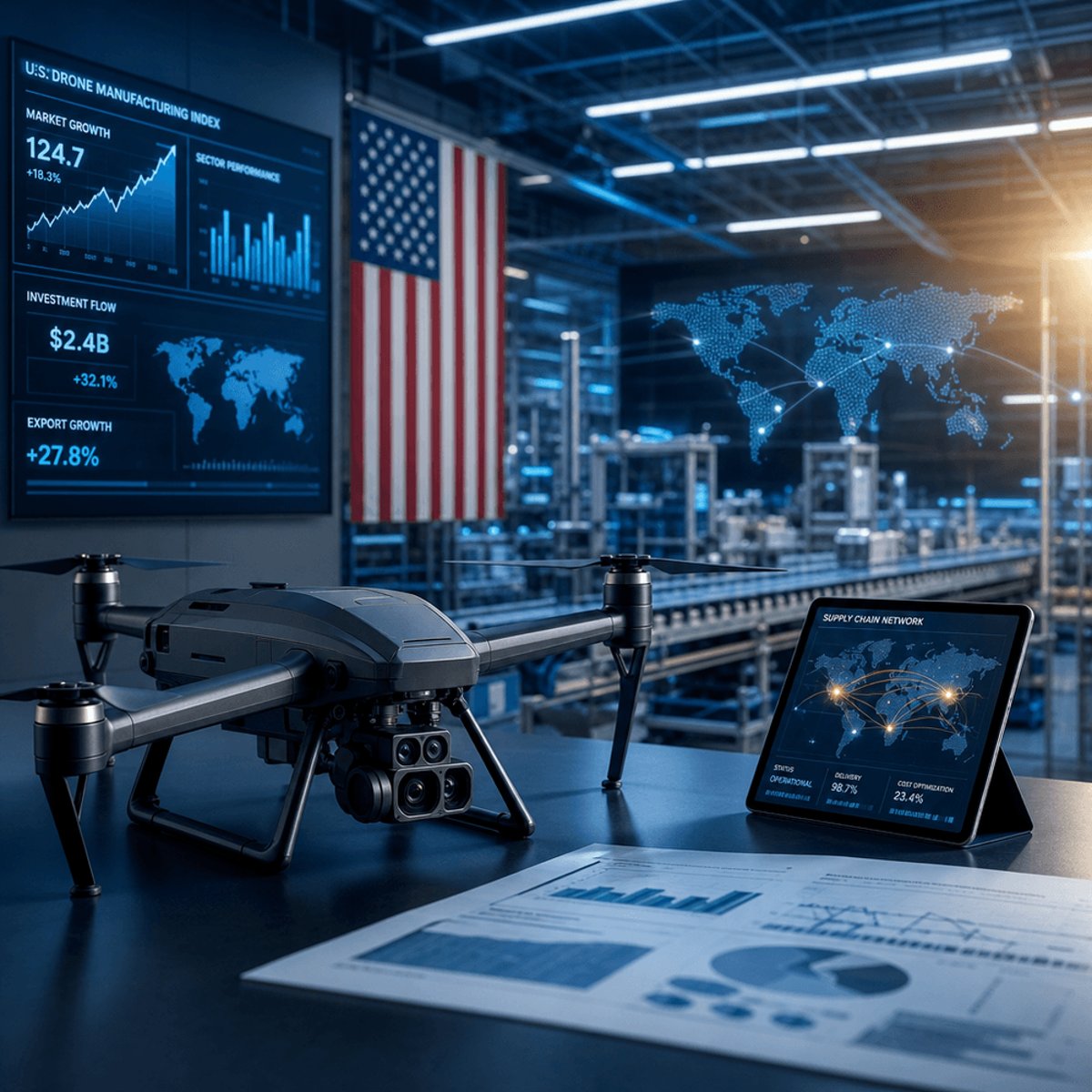
U.S. drone manufacturers are rallying after the Trump administration announced sweeping tariffs on foreign-made drone components, marking the latest escalation in Washington's campaign to wrestle control of unmanned aerial systems away from China's grip. The move sent domestic drone stocks climbing in Friday trading as investors bet on a domestic manufacturing renaissance in a sector that's become critical to both national security and commercial operations.
The tariff announcement landed Friday morning like a shot across the bow to DJI, the Shenzhen-based giant that's dominated global drone markets for over a decade. According to CNBC, the administration is targeting foreign-made drone components as part of a broader strategy to rebuild America's defense manufacturing base and chip away at China's stranglehold on unmanned systems.
The market reaction was immediate. Domestic drone manufacturers - many of whom have struggled to compete against Chinese rivals on price - saw their stocks surge on expectations that the tariffs will finally level a playing field that's been tilted toward Beijing for years. It's a bet that American companies can capture market share if foreign competitors suddenly face steeper import costs.
This isn't the first time Washington has taken aim at Chinese drones. The Pentagon banned DJI systems from military use back in 2018 over data security concerns, and the Commerce Department added the company to its Entity List in 2020. But those measures focused on government procurement. These new tariffs could reshape the entire commercial drone ecosystem if they make Chinese components expensive enough to shift purchasing decisions.
The timing reflects growing anxiety in defense circles about America's reliance on foreign drone technology. Ukraine's war demonstrated how critical unmanned systems have become to modern warfare - from reconnaissance to strike missions to electronic warfare. Yet U.S. military services still depend heavily on foreign suppliers for everything from motors to sensors to flight controllers, creating vulnerabilities that adversaries could exploit.
"We've essentially ceded an entire technology category to China," one defense industry analyst noted in recent congressional testimony. The tariffs represent an attempt to reverse that trend by making domestic manufacturing economically viable again, even if American-made components cost more to produce.
But rebuilding drone supply chains won't happen overnight. Chinese manufacturers benefit from massive economies of scale, vertically integrated production, and years of R&D investment. American companies will need more than tariff protection - they'll need capital, skilled workers, and time to build competitive products. The question is whether tariffs alone can jumpstart that process or whether they'll simply raise costs without delivering alternatives.
The defense implications extend beyond military drones. Commercial unmanned systems are proliferating across critical infrastructure - from energy facilities to ports to telecommunications networks. If those systems contain components that could be remotely compromised, they represent potential vectors for sabotage or espionage. The administration appears to view tariffs as a national security tool, not just a trade policy.
Industry watchers are now waiting to see the tariff details. Will they apply to all foreign drone components or just those from specific countries? What rates will be imposed? And how will the administration handle components that simply aren't manufactured in America yet? Those specifics will determine whether this policy actually spurs domestic production or just creates shortages and price spikes.
For American drone startups that have struggled to gain traction, the tariffs represent a potential lifeline. Companies building everything from agricultural drones to delivery systems to inspection platforms could suddenly find themselves cost-competitive against Chinese rivals. But they'll need to execute flawlessly to capitalize on the window before foreign manufacturers find workarounds.
The move also signals that the Trump administration views advanced manufacturing as a strategic priority worth protecting through trade policy. Drones join semiconductors, electric vehicles, and solar panels as sectors where Washington is willing to use tariffs to reshape supply chains and reduce dependence on geopolitical rivals. Whether that approach ultimately strengthens American competitiveness or simply raises costs for consumers remains hotly debated.
The tariff announcement marks a pivotal moment in America's effort to reclaim leadership in unmanned systems after years of ceding ground to Chinese manufacturers. Whether the policy successfully rebuilds domestic drone manufacturing or simply disrupts supply chains without delivering alternatives will depend on execution details still to come. For U.S. companies, it's a rare opportunity to compete on more favorable terms - but only if they can scale production and deliver quality products before market dynamics shift again. Investors are betting they can, sending stocks higher on the prospect of a domestic drone renaissance powered by trade policy and national security imperatives.