Waymo and Tesla executives made their case to the US Senate Wednesday for federal autonomous vehicle legislation, but after two hours of intense questioning on safety failures, Chinese manufacturing, and legal liability, the path forward remains unclear. Lawmakers grilled both companies over recent incidents - including Waymo robotaxis illegally passing school buses and striking a child in Santa Monica - while debating whether Congress can finally advance regulation that's been stalled for years.
Waymo and Tesla executives walked into a buzzsaw Wednesday. During a two-hour Senate Commerce Committee hearing, both companies pitched federal lawmakers on the urgent need for autonomous vehicle legislation - only to face a barrage of questions about safety lapses, Chinese supply chains, and whether America's regulatory apparatus can handle the job.
The hearing, overseen by Sen. Ted Cruz (R-TX), was supposed to advance the conversation around integrating self-driving cars into the Surface Transportation Reauthorization Act. Instead, it exposed deep divisions over whether these companies deserve federal protection or stricter oversight. Lars Moravy, Tesla's VP of vehicle engineering, warned that outdated regulations are holding back innovation. "Federal regulations for vehicles have not kept up with the pace of the rapid evolution of technology," he told senators. "Many standards were implemented decades ago and do not adequately address modern advancements, such as electric drive trains, automated driving systems, and over-the-air software updates."
But Sen. Maria Cantwell (D-WA) wasn't buying it. She zeroed in on Tesla's marketing practices, noting the company was allowed to brand driver-assistance features as "Autopilot" despite requiring constant human supervision. "Tesla was allowed to market their technology, which they knew needed human supervision, as Autopilot because there were no federal guardrails," Cantwell said during the hearing. She questioned whether the federal government can effectively regulate the industry after NHTSA lost 25% of its workforce under Elon Musk's DOGE initiative, leaving the Office of Automation with just four staffers at one point.
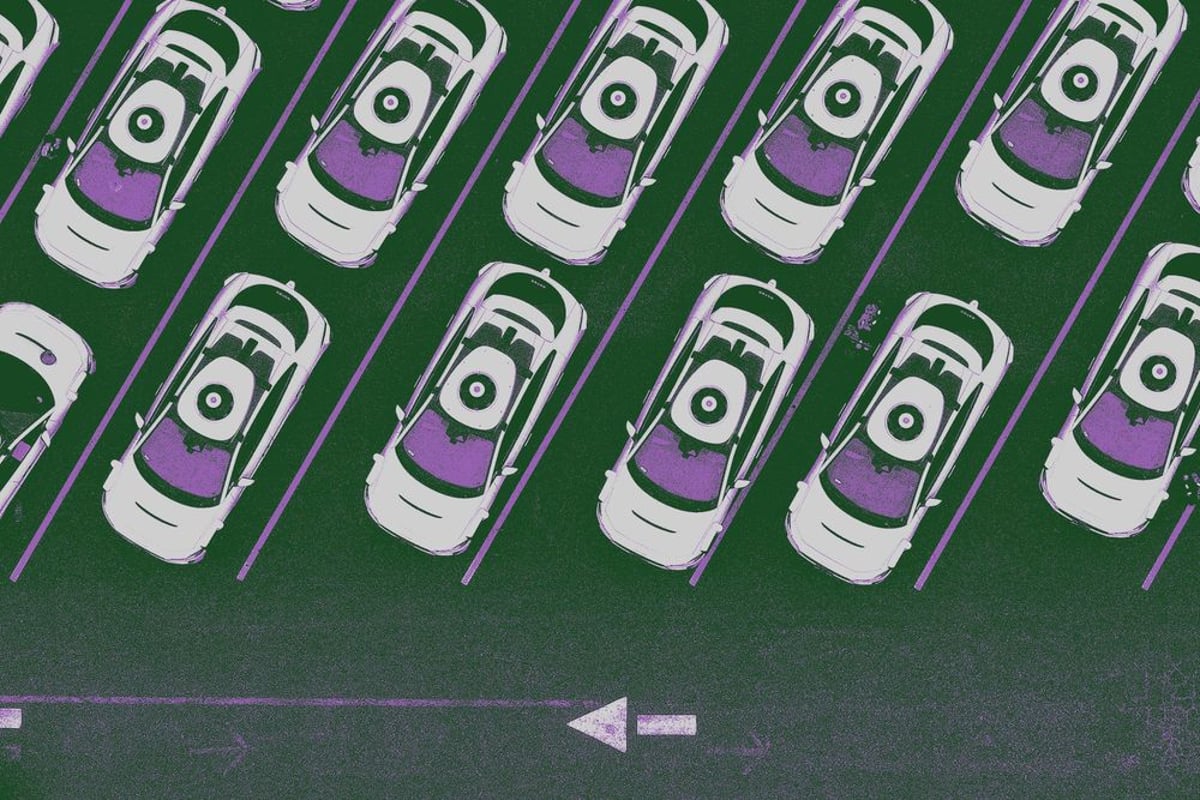
The safety question dominated the proceedings. Waymo found itself defending multiple incidents where its robotaxis illegally passed stopped school buses in Austin, Texas - even after the company issued a software patch meant to fix the problem. Mauricio Peña, Waymo's chief safety officer, insisted the company is "collecting data across different lighting patterns and conditions" to prevent recurrence. He emphasized that Waymo navigates thousands of school bus encounters safely each week. What he didn't address: why the fixes haven't worked yet.
Then there's the incident in Santa Monica, California, where a Waymo robotaxi struck a child at low speed. The crash, which NHTSA is investigating, came up repeatedly as senators pressed Peña on whether autonomous systems are truly ready for widespread deployment. Sen. Cantwell's pointed question - "Are we going to just continue to let people die in the United States?" - hung in the air.
Tesla faced its own reckoning. Sen. Ed Markey (D-MA) hammered the company for refusing to impose geographic limitations on its Autopilot and Full Self-Driving features, unlike every other AV manufacturer. "Tesla is putting American lives at risk," Markey said. "And that is unconscionable." He also criticized the company's decision to remove radar sensors from its vehicles, a move that contradicts industry best practices.
China emerged as a recurring flashpoint. Sen. Bernie Moreno (R-OH) grilled Peña over Waymo's decision to use vehicles manufactured by Chinese automaker Geely for its next-generation robotaxi fleet. Under current US law, vehicles with Chinese-origin autonomous or connectivity software are banned. Peña explained that Geely ships the vehicles software-free, with Waymo installing all autonomy systems domestically and keeping data entirely within US borders. Moreno wasn't satisfied. "So giving a natural market to a Chinese company to ship us cars is making us better and creating more jobs for Americans?" he shot back. "That's completely ridiculous."
Jeff Farrah, CEO of the Autonomous Vehicle Industry Association, warned that without congressional action, China could become the "global leader" in autonomous vehicles - a national security concern that resonated with several lawmakers but didn't resolve the fundamental disagreements about how to regulate the technology.
The liability question proved equally contentious. Both Peña and Moravy committed that their companies would accept legal responsibility when their technology causes crashes. But binding arbitration - where companies force customers into private dispute resolution that typically favors the corporation - remains a sticking point. Cantwell said flatly she won't support legislation that prevents injured parties from suing robotaxi operators. Moreno echoed the concern from the Republican side, pressing both witnesses on whether lengthy terms of service would shield companies from accountability.
Then came an unexpected revelation: Waymo employs remote operators in the Philippines to assist robotaxis with complex navigation scenarios. Markey expressed alarm that Peña couldn't provide a percentage breakdown of US versus overseas operators for what he called a "safety-critical" function. He warned about latency issues, cybersecurity vulnerabilities, and the irony of automating American driving jobs while outsourcing the human oversight roles. "The idea of 'transatlantic backseat drivers' is both dangerous and unacceptable," Markey said.
Bryant Walker Smith, a University of South Carolina professor specializing in transportation law and engineering, testified that NHTSA has historically driven cultural change by confronting manufacturers over defective technologies - citing the airbag scandals as precedent. But with the agency's depleted workforce and reduced enforcement capacity, that watchdog role is in question. Cantwell noted NHTSA initiated significantly fewer recall investigations in 2025 compared to prior years.
Despite both companies arguing that federal preemption is essential to prevent a patchwork of conflicting state regulations, Cruz acknowledged uncertainty about whether autonomous vehicle provisions will make it into the Surface Transportation Reauthorization Act. The hearing made clear that while industry executives want speed, lawmakers want answers - and those two timelines aren't aligning.
The hearing exposed a fundamental tension: the AV industry wants federal regulations that accelerate deployment, while Congress wants assurance that companies won't cut corners on safety. With NHTSA weakened, Chinese manufacturing raising national security concerns, and both Waymo and Tesla facing scrutiny over recent incidents, the path to legislation looks more complicated than ever. Sen. Cruz says he believes AV provisions can be included in the upcoming transportation bill, but Wednesday's contentious exchanges suggest lawmakers are nowhere near consensus on how to balance innovation with accountability. For now, the regulatory vacuum continues - and states are stepping in to fill it.