Shopify is betting big on AI shopping agents to fundamentally reshape how people buy things online. President Harley Finkelstein says the company's already laying groundwork for a future where autonomous AI assistants handle everything from product discovery to checkout, potentially upending the traditional e-commerce playbook that Shopify itself helped write. It's a striking admission from an executive whose platform powers millions of online stores - and a signal that the retail industry's about to get seriously disrupted.
Shopify just acknowledged what many in the industry have been quietly preparing for: AI agents are about to change everything about online shopping. President Harley Finkelstein's comments, reported by TechCrunch, mark one of the most direct admissions yet from a major e-commerce platform that the era of browsing and clicking through product pages might be ending.
The timing isn't coincidental. We're seeing agentic AI systems - autonomous agents that can understand complex requests, make decisions, and take actions on behalf of users - rapidly mature across multiple industries. OpenAI, Google, and Microsoft have all accelerated development of AI agents that can handle multi-step tasks. Now those capabilities are coming for the $5.7 trillion global e-commerce market.
What Finkelstein's describing isn't just smarter product recommendations. It's a world where your AI assistant knows you need running shoes, understands your preferences, compares options across thousands of Shopify-powered stores, negotiates the best deal, and completes the purchase - all without you clicking through a single product listing. That's simultaneously exciting for consumers and terrifying for merchants who've spent years optimizing conversion funnels that might become obsolete.
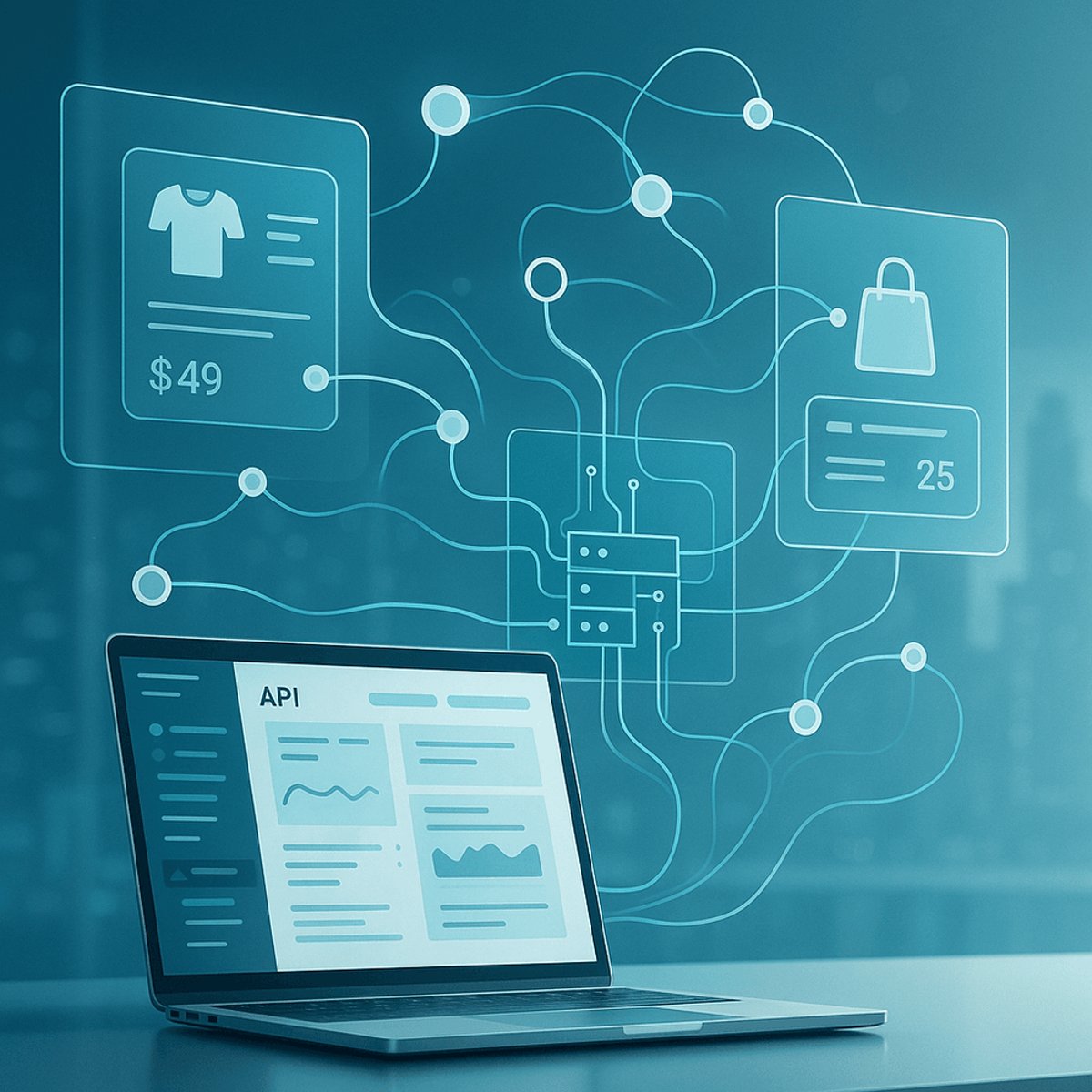
For Shopify, this shift requires rethinking its entire platform architecture. The company built its empire by making it easy for merchants to create beautiful storefronts and optimize every step of the customer journey. But if AI agents bypass those storefronts entirely, communicating directly with backend systems through APIs, then the user experience that merchants obsess over becomes far less important than structured product data and agent-friendly interfaces.
The strategic implications are massive. Shopify currently serves over 2 million merchants and facilitated $235 billion in gross merchandise volume last year. If shopping agents become the primary interface for e-commerce, Shopify needs to ensure its platform becomes the preferred backend for these AI systems - not just for human shoppers. That means investing heavily in API infrastructure, structured data standards, and agent authentication systems.
Finkelstein's comments also highlight a competitive race that's just beginning. Amazon has been testing AI shopping assistants, while Google is positioning its AI models as shopping advisors. Meta is exploring commerce integrations with its AI assistant across WhatsApp and Instagram. Every major tech platform sees the same future that Shopify's preparing for, and they're all scrambling to own the agent layer that sits between consumers and merchants.
But there's a paradox at the heart of this transformation. Shopify's success has been built on empowering individual merchants to build direct relationships with customers through branded experiences. AI shopping agents threaten to commoditize those relationships, reducing merchants to interchangeable suppliers competing purely on price and availability. That's the exact opposite of what Shopify has championed for years.
The company's bet seems to be that by preparing early and building the infrastructure that AI agents will need, Shopify can maintain its position as the backbone of independent e-commerce even as the front-end experience changes completely. It's trying to make sure that when your AI assistant goes shopping, it's pulling from Shopify's merchant network rather than being locked into Amazon's ecosystem or Google's shopping graph.
Industry analysts have been predicting this shift for months, but hearing it directly from Shopify's president carries extra weight. This isn't speculation about distant possibilities - it's a major platform preparing for imminent change. Other e-commerce providers, payment processors, and logistics companies are now on notice that agentic AI isn't coming eventually, it's coming now.
The technical challenges are substantial. AI agents need standardized ways to verify product availability, compare shipping options, handle returns, and authenticate transactions across millions of independent stores. They need to understand nuanced product attributes and merchant policies. And they need to do all this while maintaining security and preventing fraud at scale. Shopify's infrastructure teams are presumably working on all of this right now.
For merchants, the message is clear: start preparing your product data, APIs, and backend systems for a world where AI agents might drive significant portions of your sales. The merchants who adapt quickly to this new reality will have an advantage over those who cling to traditional e-commerce optimization tactics.
What's still unclear is how quickly this transition will happen. Consumer adoption of AI assistants for shopping could take years, or it could accelerate rapidly if the experience proves significantly better than manual browsing. Either way, Shopify's making sure it's ready when the inflection point arrives.
Shopify's preparing for an e-commerce future that looks radically different from today's click-and-browse model. By acknowledging the coming dominance of AI shopping agents, Finkelstein is signaling that the company plans to be infrastructure rather than obstruction to this shift. The merchants and platforms that adapt their systems for agentic AI will thrive in this new environment, while those that resist could find themselves bypassed entirely. What remains to be seen is whether Shopify can maintain its merchant-first philosophy while simultaneously enabling AI agents that might commoditize the very branded experiences Shopify has championed. It's a delicate balance, and how the company navigates it will define the next era of e-commerce.