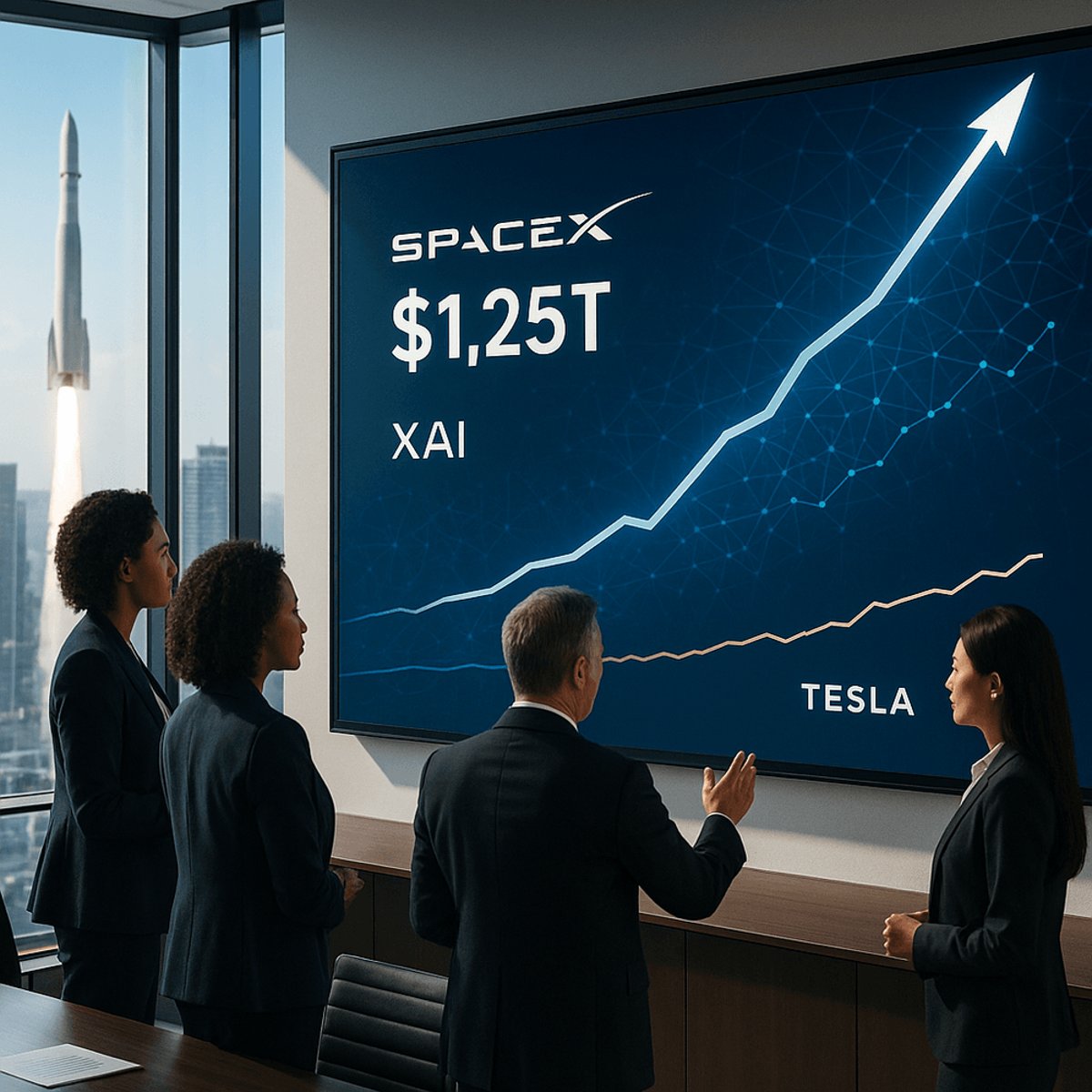
SpaceX just became Elon Musk's most valuable company. The rocket maker's merger with his AI startup xAI values the combined entity at $1.25 trillion - just 26% below Tesla's $1.58 trillion market cap, according to documents viewed by CNBC. The deal marks a dramatic shift in the so-called "Muskonomy," with SpaceX now representing more than half of Musk's $852 billion fortune despite Tesla's decade-long run as his crown jewel.
The changing of the guard in Elon Musk's corporate empire became official Monday night. SpaceX, the rocket company that's been Musk's quieter bet for two decades, just absorbed his money-burning AI venture xAI in a deal that values the combined entity at $1.25 trillion. That puts it within striking distance of Tesla's $1.58 trillion market cap - a gap of just 26% that would've been unthinkable even a year ago.
The math tells the real story. Musk owns an estimated 43% stake in SpaceX compared to his 13% slice of Tesla, meaning the rocket maker now represents more than half of his $852 billion paper fortune, according to the Forbes Real Time Billionaires index. And while Tesla's stock has dropped 6% so far this year, SpaceX is reportedly prepping for an IPO that could cement its position as Musk's most valuable asset.
Tesla's stumble feels almost inevitable in hindsight. The EV maker reported a 16% year-over-year drop in vehicle deliveries in early January, followed by the company's first annual revenue decline on record - total sales fell 3% in 2025. The core auto business is getting hammered by Chinese and European EV competition, the elimination of the federal EV tax credit in the U.S., and what analysts delicately call "brand headwinds" from Musk's increasingly polarizing political activities.
Last week, Musk told analysts Tesla is ending production of its Model S and X vehicles - the luxury sedans that once defined the company. Those models made up less than 3% of 2025 deliveries, and the assembly lines will now be repurposed for Optimus humanoid robots, a market where Tesla has no real business yet. It's a pivot that underscores how desperately Tesla is searching for its next act.
SpaceX, meanwhile, operates from a position of strength that feels almost boring by comparison. The company dominates orbital launch services through multi-billion-dollar contracts with NASA and the Department of Defense. Its Starlink satellite internet service has over 9,000 satellites in orbit serving roughly 9 million customers. According to Reuters, SpaceX pulled in $15 billion in revenue last year with $8 billion in profit. Tesla, by contrast, generated nearly $95 billion in sales but only $5 billion in adjusted earnings - a steep decline from 2024.
The timing of the xAI merger is telling. Musk has said SpaceX acquired the AI startup to build data centers in space, citing energy constraints on Earth. But Moffett Nathanson analysts noted Tuesday that SpaceX's proposal to the Federal Communications Commission for orbital data centers would require launching up to 1 million satellites with "simply enormous" capital needs. "At a bare minimum, one can safely conclude that a full-fledged build is not happening anytime soon, given the requisite operational maturity, supply chain development, and financial requirements," they wrote.
What's more likely: SpaceX's $8 billion in annual profit will now subsidize xAI's hefty infrastructure costs and mounting legal problems. The AI company is being investigated by authorities in Europe, India, Malaysia, and by the California attorney general after its Grok image generator allowed users to create deepfake explicit images of children and women. On Tuesday, French investigators raided X's offices and summoned Musk for questioning over suspected algorithm abuse. He called it a "political attack" on X.
Eric Talley, a law professor at Columbia University, told CNBC that SpaceX investors may now have to shoulder regulatory risks that were previously xAI's problem alone. "Different regulatory entities may say you have to be in good standing overall as an organization" to keep doing business in their jurisdiction, he said. That's particularly concerning for SpaceX's international Starlink business, even if its U.S. defense contracts remain insulated.
The merger creates an interesting bind for Tesla shareholders, too. The EV company agreed to invest $2 billion in xAI as part of a funding round that closed earlier this month. "Tesla's recent xAI investment is now a SpaceX investment," Ann Lipton, a law professor at the University of Colorado and former securities lawyer, said in an email. "The merger is just more proof that Musk is willing to engage in transactions across his empire, but we already knew that."
Fans and institutional backers have long referred to Musk's intertwined companies as the "Muskonomy." The xAI-SpaceX deal, which values xAI at $250 billion, follows last year's tie-up when xAI acquired social media platform X (formerly Twitter) in a stock transaction. It's a corporate structure that would make any governance professor's head spin, but it's kept Musk's wealth growing even as Tesla stumbles.
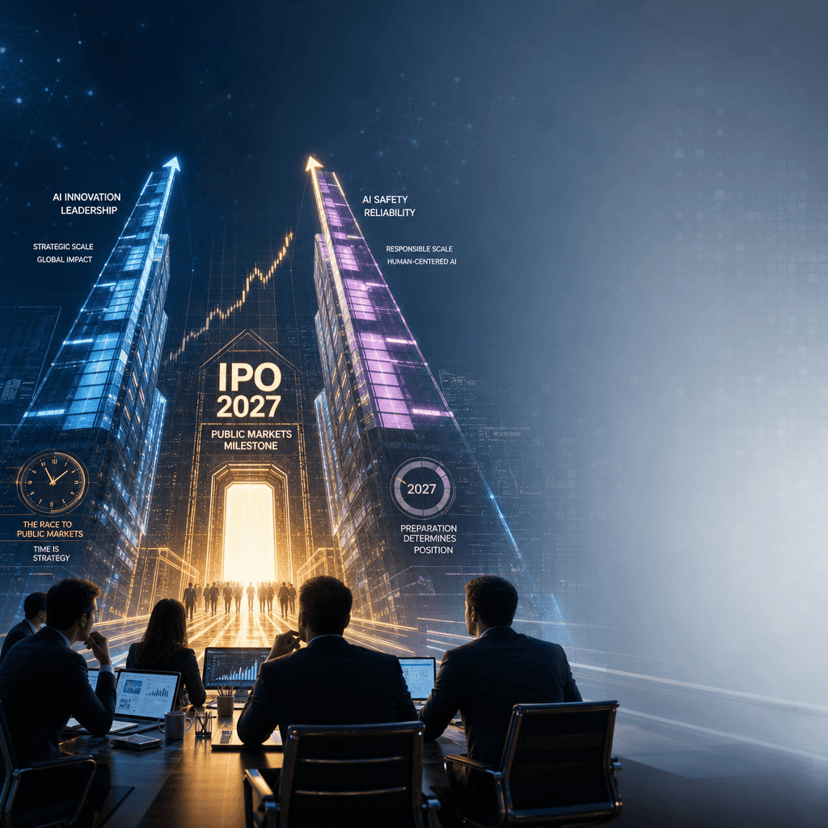
The real test comes if SpaceX goes public this year as reported. The company's ability to command a $1 trillion-plus valuation on public markets while absorbing xAI's regulatory baggage and massive capital requirements is far from guaranteed. But Musk has some built-in cheerleaders - including Jared Isaacman, a former SpaceX investor who now runs NASA as administrator.
For Tesla investors nervous about Musk's divided attention, there's at least one reason to hope he doesn't stray too far. The billionaire's pay package, approved by shareholders in November, consists of 12 tranches of stock grants tied to performance milestones over the next decade. The first tranche pays out only if Tesla hits a $2 trillion market cap - about $400 billion more than its current valuation. That's a hefty incentive to keep Tesla relevant, even as SpaceX eclipses it in Musk's personal wealth portfolio.
The SpaceX-xAI merger represents more than just another deal in the Muskonomy - it's a fundamental reordering of Musk's corporate priorities and personal wealth. With SpaceX now worth more to Musk personally than Tesla despite the EV maker's public market premium, the rocket company's reported IPO plans this year will be the real litmus test. Can Wall Street embrace a $1 trillion-plus valuation for a company that's absorbing AI infrastructure costs, regulatory investigations, and the technical challenges of building data centers in space? The answer will determine whether Musk's bet on rockets over cars was prescient or just another expensive distraction from the company that made him famous.