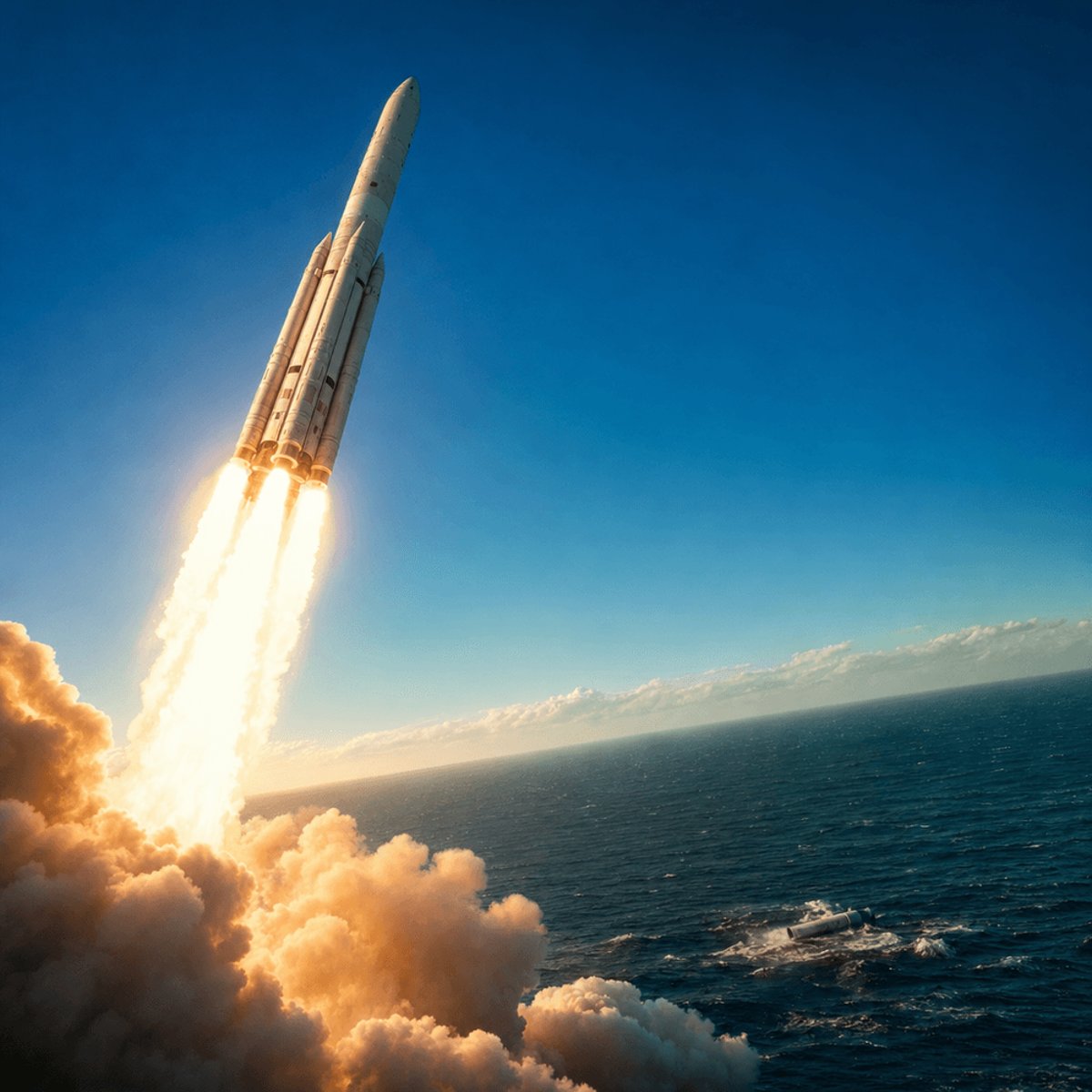
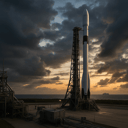
SpaceX just flew its most advanced rocket yet—and almost stuck the landing. The company's upgraded Starship V3 lifted off from Starbase, Texas today in what marks a critical milestone for Elon Musk's ambitions to colonize Mars, deploy thousands more Starlink satellites, and win NASA's lunar lander contract. While the massive upper stage performed flawlessly, the Super Heavy booster was lost during its return attempt, underscoring the razor-thin margins in reusable rocket development.
SpaceX pulled off a bittersweet victory today as its next-generation Starship V3 rocket roared to life for the first time, delivering a textbook upper stage flight but losing the massive Super Heavy booster somewhere over the Gulf of Mexico during its return journey.
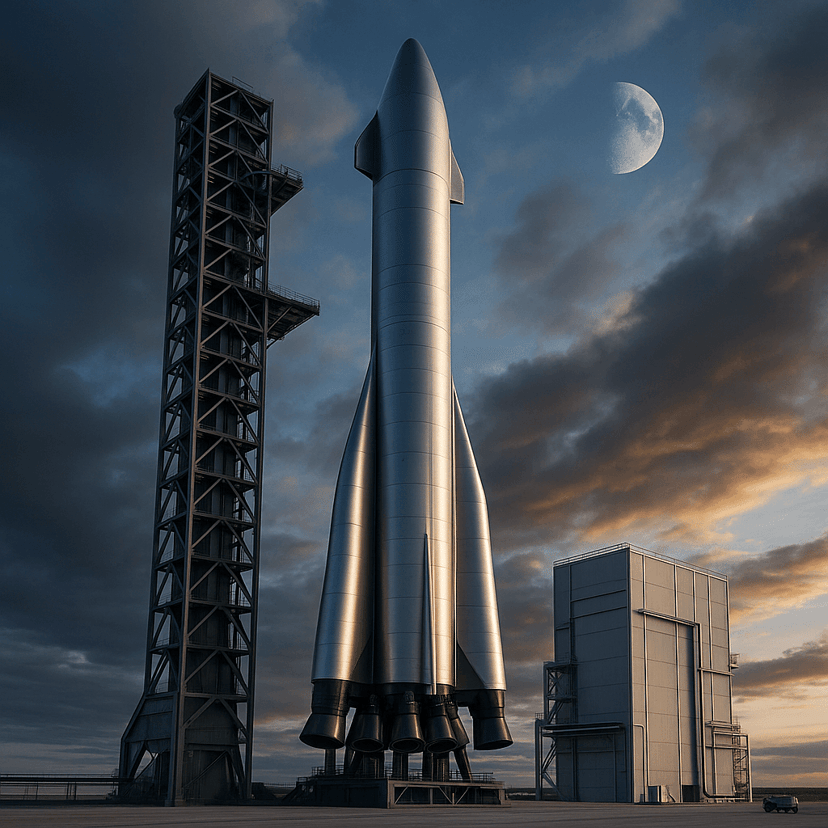
The launch from Starbase in Boca Chica, Texas, represents more than just another test flight. Starship V3 is the workhorse variant SpaceX needs to fulfill its towering stack of commitments: landing NASA astronauts on the Moon, deploying the next generation of Starlink satellites, and eventually establishing a permanent human presence on Mars. Without V3, those timelines slip further right.
According to TechCrunch, the company achieved a "mostly successful" debut despite the booster loss. That's aerospace-speak for celebrating what worked while immediately diagnosing what didn't. The upper stage—the 50-meter-tall spacecraft that will eventually carry cargo and crew—completed its flight profile, marking a major validation of V3's upgraded design.
But reusability remains the holy grail, and losing the Super Heavy booster stings. SpaceX has spent years perfecting the choreographed dance of separating the booster, flipping it around, reigniting its Raptor engines, and guiding it back to either the launch mount or a controlled ocean splashdown. When that 69-meter-tall first stage worth tens of millions of dollars doesn't come home, it's not just an engineering setback—it's a financial one.
The V3 variant incorporates lessons from dozens of previous Starship flights, including upgraded heat shielding, more reliable Raptor 3 engines, and structural reinforcements based on data from earlier test campaigns. These improvements are critical as SpaceX transitions from experimental test flights to operational missions. NASA is counting on a variant of this rocket to land Artemis astronauts on the lunar surface, while the company's own Starlink division needs the increased payload capacity to launch its next-generation V3 satellites.
The timing of today's flight also comes as SpaceX faces mounting pressure to deliver. Competitors like Blue Origin are making progress with their New Glenn rocket, while traditional aerospace giants are watching nervously as SpaceX continues to iterate at a pace that would make Silicon Valley blush. The company's philosophy—test early, fail fast, learn constantly—has revolutionized spaceflight development, but it also means public setbacks like today's booster loss.
What makes Starship such a game-changer isn't just its size, though it is the largest and most powerful rocket ever built. It's the fully reusable design. If SpaceX can nail the complete recovery process—both stages returning intact—it could reduce launch costs by orders of magnitude. Losing the booster today means the economics still don't work as planned, even if the technology inches closer.
The aerospace community will now scrutinize telemetry data to understand what went wrong during the booster's descent. Was it an engine relight issue? Guidance system glitch? Structural failure from reentry forces? SpaceX's iterative approach means the next flight could come within weeks, incorporating whatever fixes the engineering team devises.
For Starlink, the successful upper stage performance matters most. The satellite constellation has already transformed global internet access, but SpaceX has plans to launch tens of thousands more satellites to increase capacity and reduce latency. Only Starship has the volume and mass capacity to make that economically viable. Today's flight proves V3 can get payloads to orbit—now it's about getting the booster home reliably.
The loss also complicates SpaceX's cadence ambitions. Elon Musk has previously stated the company wants to fly Starship dozens of times this year, ramping toward hundreds of flights annually. Each booster lost means building another one, consuming time and factory capacity that could otherwise go toward expanding the fleet. Reusability isn't just about saving money per launch—it's about achieving the flight rates necessary to support SpaceX's grandest visions.
Despite today's setback, the V3 debut moves SpaceX closer to operational status. The rocket performed the parts that matter most for customers: getting off the pad, reaching the right altitude, and delivering payloads. Recovery is the bonus that makes the business model work, but it's a bonus SpaceX has proven it can eventually master through sheer iteration.
SpaceX's Starship V3 debut tells the story of modern aerospace: breakthrough achievement shadowed by persistent challenges. The successful upper stage flight validates years of design work and keeps critical timelines alive for NASA, Starlink, and Mars ambitions. But the booster loss reminds us that reusability—the economic foundation of SpaceX's entire strategy—remains tantalizingly close yet frustratingly elusive. The company's test-and-iterate philosophy means another attempt is likely weeks away, with engineers already poring over data to solve today's puzzle. For SpaceX, mostly successful is progress, but fully successful is the only destination that matters.