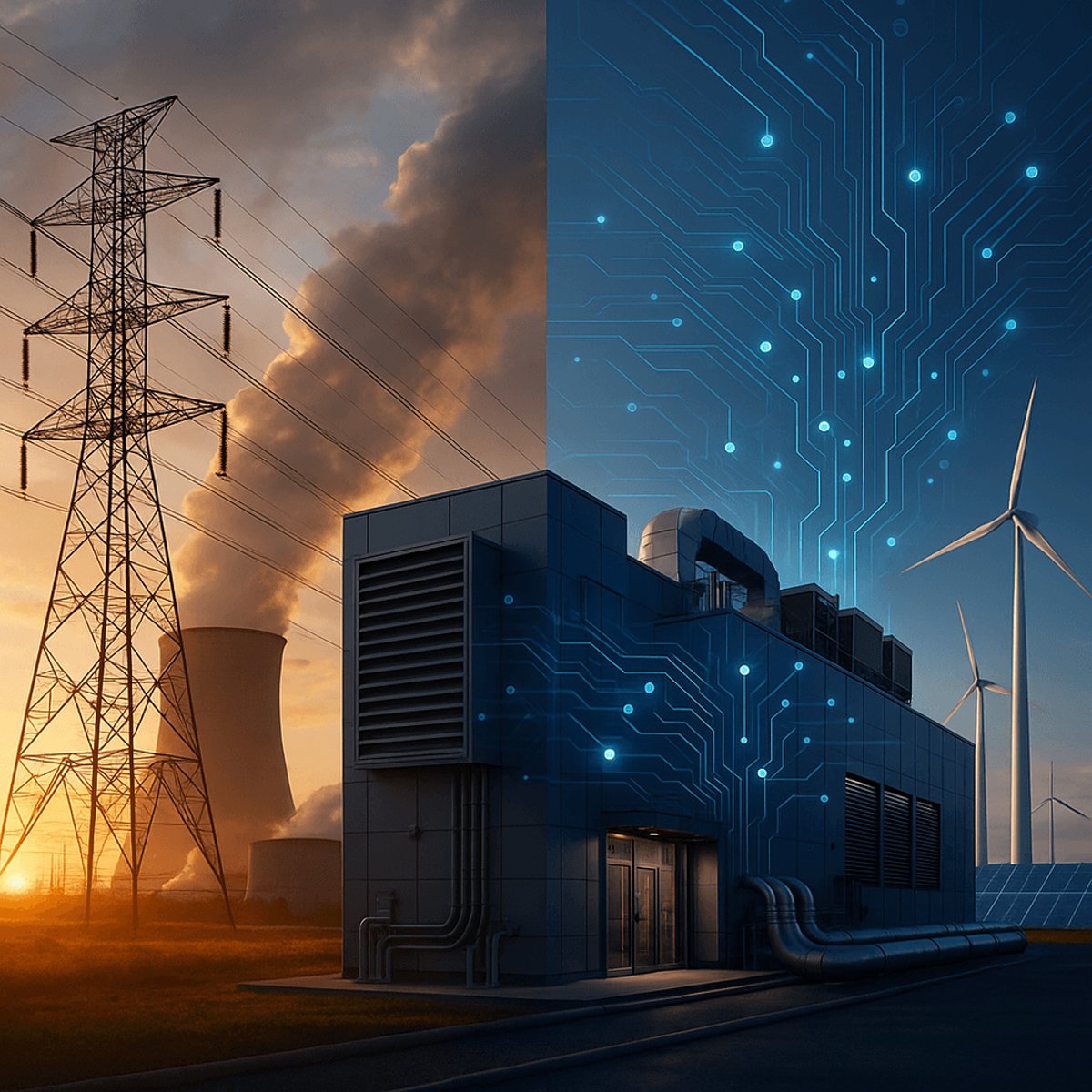
The AI arms race just took a controversial turn. Meta, Microsoft, and Google are pouring billions into new natural gas power plants to keep their energy-hungry data centers running, according to industry reports from TechCrunch. The move marks a dramatic reversal from their public climate commitments and could lock these tech giants into decades of fossil fuel dependency just as renewable energy costs continue to plummet. Wall Street is already raising red flags about stranded assets.
The math behind AI's energy crisis is brutal. Training a single large language model can consume as much electricity as hundreds of American homes use in a year. Now multiply that by the dozens of models Meta, Microsoft, and Google are racing to deploy, and you've got an energy emergency that's forcing some uncomfortable decisions.
All three companies are now investing in dedicated natural gas power infrastructure to ensure their AI data centers never go dark, even as their sustainability reports promise carbon neutrality by 2030. The contradiction isn't lost on climate advocates or investors who've watched these same companies tout renewable energy commitments for years.
The urgency comes down to AI FOMO. OpenAI's ChatGPT proved that whoever ships first captures market share, and none of the tech giants can afford to let power constraints slow their development cycles. Natural gas plants can be built in 18-24 months. Solar farms and battery storage? That's a three-to-five-year timeline, and the AI race won't wait.
Microsoft has been the most aggressive, exploring partnerships with gas suppliers to secure dedicated power for its Azure AI infrastructure. The company's data center footprint has exploded since integrating OpenAI's technology across its product suite, and traditional grid power simply can't keep pace with the demand spikes from training runs.
Meta is taking a similar approach, eyeing gas-powered facilities near its existing data center clusters. The company's push into AI-generated content and recommendation systems has created power demands that dwarf its previous infrastructure needs. CEO Mark Zuckerberg has reportedly told executives that energy availability is now a bigger constraint than chip supply.
Google finds itself in an equally tight spot despite being a renewable energy pioneer. The company has purchased more clean energy than any other corporation globally, but those contracts don't help when you need baseload power for AI training clusters that run 24/7. Gas turbines offer the reliability that current renewable infrastructure can't match without massive battery investments.
The financial risk is starting to materialize. Natural gas plants typically operate for 30-40 years to justify their capital costs, but renewable energy prices are falling 10-15% annually. Energy analysts warn these facilities could become stranded assets within a decade, stuck generating expensive electricity while cheaper alternatives proliferate.
Community opposition is mounting too. Local groups near proposed sites are questioning why tech companies that championed climate action are now building fossil fuel infrastructure in their backyards. The optics are particularly bad for companies that've spent years cultivating reputations as environmental leaders.
The situation reveals a broader tension in the AI boom. These companies are making 30-year infrastructure bets to win 3-year competitive cycles. Nvidia's latest chips are so power-hungry that data center operators are scrambling to secure electricity before they even order the hardware. It's infrastructure planning in reverse, driven by fear of falling behind.
Some industry insiders argue the gas plants are a necessary bridge. Build them now to maintain AI development pace, then retrofit them for hydrogen or retire them early once renewable infrastructure matures. But energy economics suggest that's wishful thinking - companies rarely write off billions in recent investments voluntarily.
The irony cuts deep. These same tech giants have spent years pressuring suppliers to go green, tracking Scope 3 emissions, and publishing elaborate sustainability frameworks. Now they're the ones building exactly the kind of infrastructure climate scientists say we need to phase out. The AI revolution, it turns out, runs on the same fuels as the old economy.
What makes this especially risky is the uncertainty around AI's actual economic returns. If the technology delivers the productivity gains companies promise, maybe these energy investments pay off. But if AI demand plateaus or efficiency improvements reduce power needs faster than expected, these companies will be stuck with expensive gas plants nobody needs.
The natural gas bet exposes the gap between tech companies' stated values and operational realities. When forced to choose between AI competitiveness and climate commitments, all three giants picked speed over sustainability. The long-term consequences won't be clear for years, but the immediate message is stark - in the AI arms race, environmental promises are negotiable. Investors and regulators are now watching closely to see whether these infrastructure decisions represent a temporary compromise or a fundamental shift in how Big Tech prioritizes growth over its climate pledges. Either way, the next decade of energy bills will tell the real story.