The space economy is shifting from rockets to infrastructure as TechCrunch Disrupt 2025 unveils its Space Stage lineup. True Anomaly CEO Even Rogers and Vast founder Max Haot will headline discussions on defense-commercial partnerships and orbital platforms at the October 27-29 conference in San Francisco.
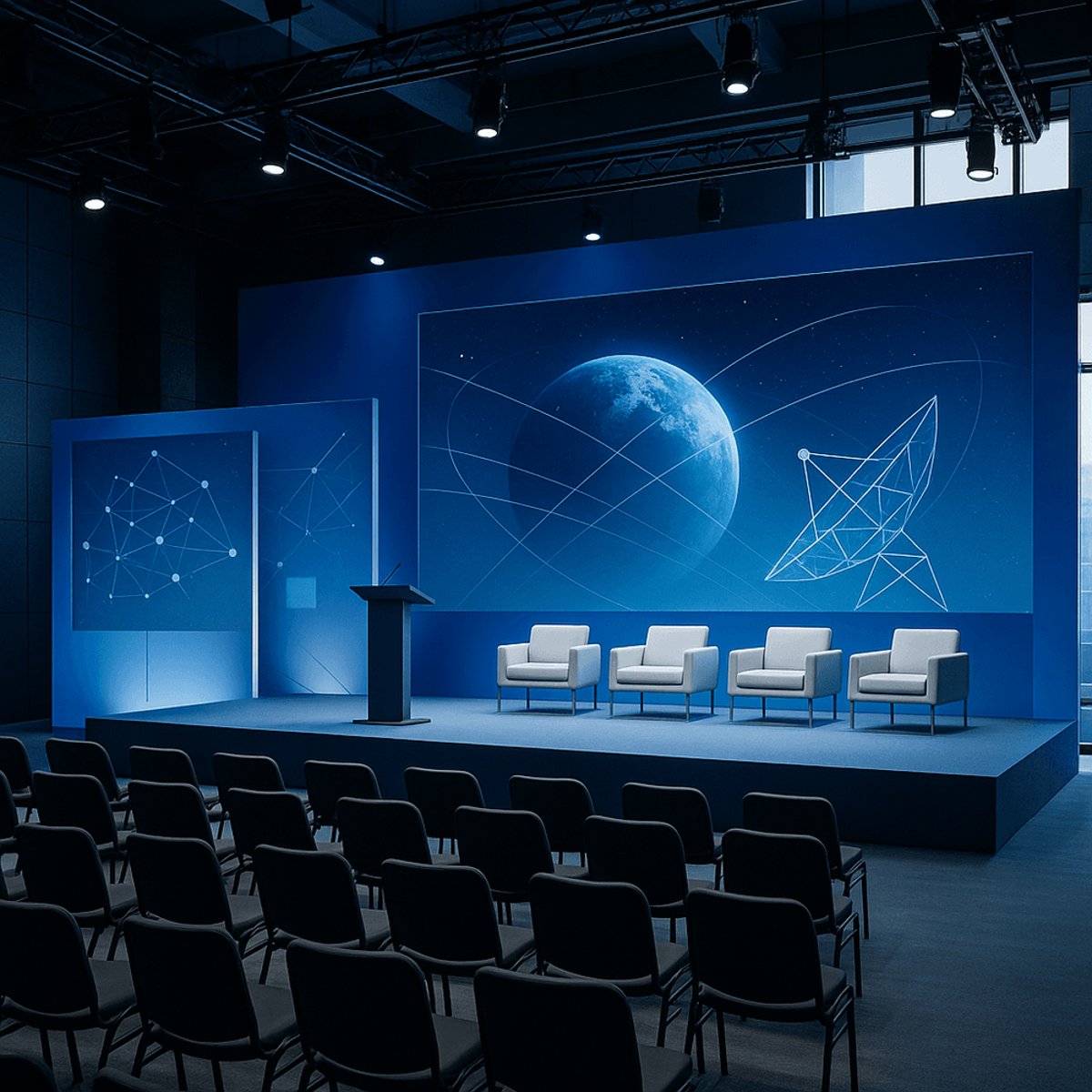
TechCrunch just dropped the lineup for its most ambitious space programming yet. The media giant's flagship Disrupt 2025 conference is betting big on the space economy's evolution beyond traditional launch providers, anchoring its Space Stage around a high-stakes conversation between defense and commercial innovators. The October 27-29 San Francisco event expects to draw over 10,000 attendees to Moscone West, with ticket prices jumping September 1.
The headliner panel features Even Rogers, co-founder and CEO of True Anomaly, alongside serial entrepreneur Max Haot, founder of Launcher (acquired by Vast). Their conversation promises to dissect what TechCrunch calls "entirely new models for building and defending off-Earth assets," signaling the industry's maturation from pure-play launch companies to integrated space infrastructure providers.
Rogers brings national security credentials that read like a Space Force origin story. The former Air Force officer served as a DARPA Service Chiefs Fellow and helped draft foundational doctrine for the U.S. Space Force before launching True Anomaly. His company focuses on orbital asset protection and space domain awareness, areas where government contracts increasingly intersect with venture capital. "We're reimagining how the U.S. ensures freedom of action in space," Rogers has said in previous interviews, positioning True Anomaly at the intersection of national security and commercial space operations.
On the commercial side, Haot represents the multi-exit entrepreneur archetype that investors chase. His track record spans aerospace, livestreaming, and connected devices, culminating in Launcher's acquisition by Vast as part of an artificial gravity space station initiative. The deal exemplifies how traditional space companies are being absorbed into larger orbital platform visions, where the real value lies in sustained operations rather than one-time launches.
The panel's timing coincides with a broader industry shift. While SpaceX dominated headlines with launch frequency, the next wave focuses on what happens after payloads reach orbit. Vast is building commercial space stations, Relativity Space pivoted to orbital manufacturing, and defense contractors like True Anomaly are creating entirely new categories around space security. According to Morgan Stanley research, the space economy could reach $1 trillion by 2040, with infrastructure services driving growth beyond traditional satellite deployment.
Government-commercial partnerships represent another inflection point the panel will likely address. The Pentagon's Space Development Agency has shifted toward commercial partnerships for satellite constellations, while NASA increasingly relies on private companies for everything from cargo delivery to crew transportation. This blended model creates opportunities for companies that can navigate both venture capital and federal contracting requirements.
TechCrunch's decision to spotlight space reflects the sector's elevated status in startup funding. Space companies raised over $8 billion in 2023, according to Space Capital, with infrastructure and application companies outpacing traditional launch providers. The Disrupt platform offers these companies direct access to the investor community driving that growth.
The conference promises additional space tech leaders for the panel, suggesting TechCrunch is assembling a comprehensive view of the industry's direction. With over 10,000 expected attendees including founders, investors, and operators, the Space Stage positioning indicates confidence that space technology has moved beyond niche interest to mainstream startup opportunity.
The space economy's infrastructure phase is arriving just as TechCrunch Disrupt 2025 positions itself as the forum for these conversations. With launch costs plummeting and orbital operations expanding, the Rogers-Haot panel represents a broader industry transition from getting to space to building sustainable businesses there. For the 10,000+ attendees expected in San Francisco, it's a front-row seat to an industry redefinition that could reshape how we think about both national security and commercial opportunity beyond Earth's atmosphere.