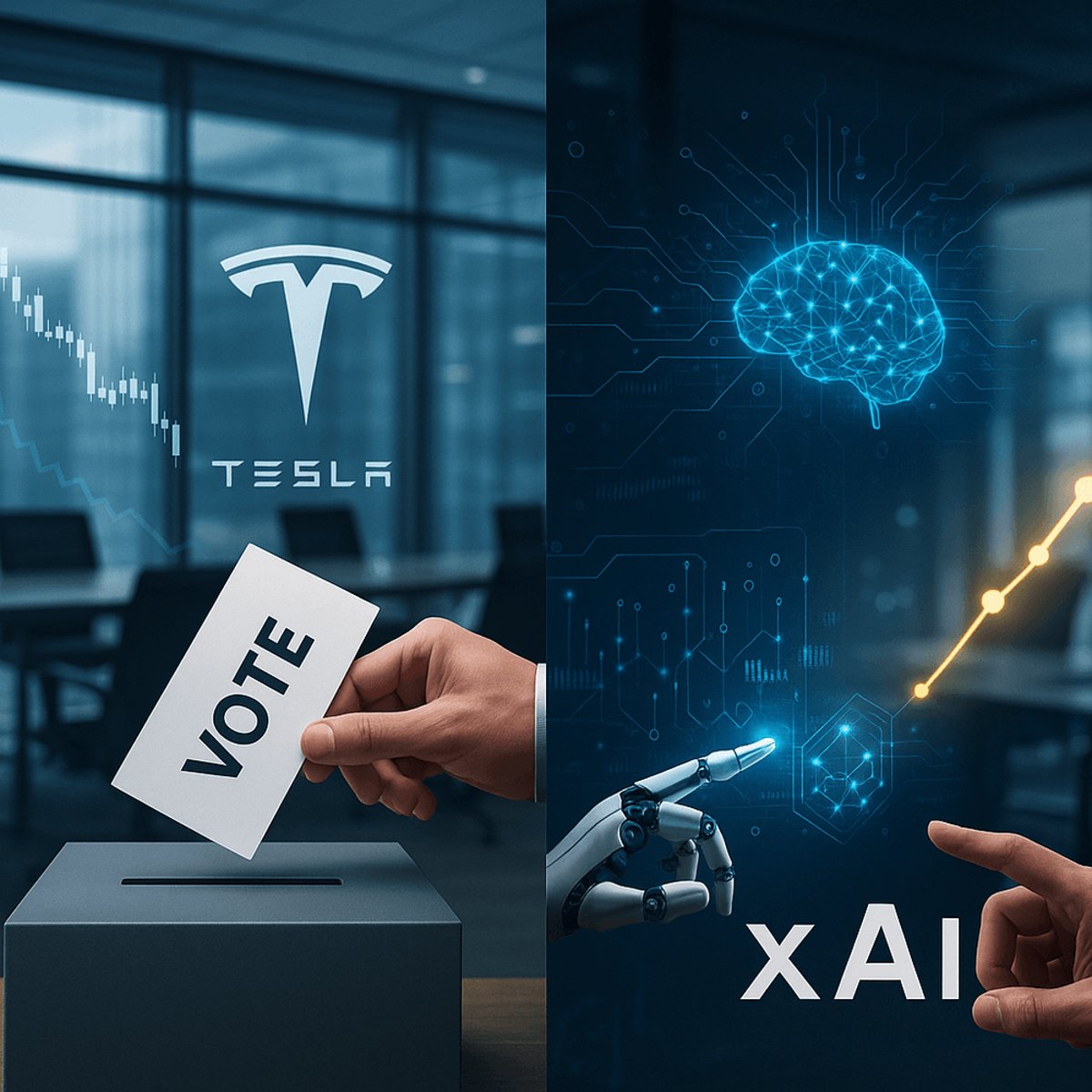
Tesla just disclosed a $2 billion investment in Elon Musk's AI startup xAI, making it a major participant in the company's massive $20 billion Series E funding round announced three weeks ago. The move comes despite shareholders explicitly voting against authorizing such an investment last November, raising fresh questions about corporate governance at the EV giant. Tesla's justification? A new "framework agreement" tying xAI's digital AI capabilities to Tesla's physical AI ambitions in robotics and autonomous vehicles.
Tesla just made one of the most controversial investment decisions in its history, and shareholders aren't happy about it. The EV maker revealed Wednesday it's putting $2 billion into Elon Musk's AI startup xAI, becoming a major investor in the company's record-breaking $20 billion Series E round that closed earlier this month. The kicker? Tesla's own shareholders explicitly rejected this exact move just two months ago.
The disclosure came buried in Tesla's Q4 shareholder letter, the same document that revealed the company's profit plunged 46% last year despite beating Wall Street estimates on revenue. Tesla is now officially alongside heavy hitters like Valor Equity Partners, Fidelity, and Qatar Investment Authority in xAI's cap table, with Nvidia and Cisco participating as strategic investors.
But the corporate governance implications are what's really turning heads. Back in November, Tesla put a non-binding measure to shareholders asking for board authorization to invest in xAI. The vote count looked positive at first glance: 1.06 billion votes in favor versus 916.3 million against, according to Bloomberg's reporting at the time. But here's where Tesla's bylaws get interesting - abstentions count as votes against. When those were tallied, the measure actually failed.
Tesla went ahead anyway. The company's defense hinges on tying xAI directly to its Master Plan Part IV, the roadmap focused on bringing AI into the physical world through robotics and autonomous systems. "Tesla is building products and services that bring AI into the physical world. Meanwhile, xAI is developing leading digital AI products and services, such as its large language model (Grok)," the shareholder letter explains.
The investment comes packaged with what Tesla calls a "framework agreement" that's supposed to facilitate AI collaboration between the two companies. It's building on an existing relationship that nobody really knew the full extent of until now. xAI is the startup behind the Grok chatbot and also owns Musk's social media platform X (formerly Twitter), creating an increasingly tangled web of Musk-controlled entities.
Tesla is pitching this as strategic synergy. The company stressed its physical AI developments in the shareholder letter, pointing to the Optimus humanoid robot, autonomous semi-trucks, and self-driving capabilities as areas where xAI's digital AI expertise could accelerate progress. "Together, the investment and the related framework agreement are intended to enhance Tesla's ability to develop and deploy AI products and services into the physical world at scale," Tesla wrote.
But the circular nature of this deal is impossible to ignore. Musk controls both companies, and now Tesla's balance sheet is funding an AI startup that could theoretically compete with Tesla's own AI efforts or prioritize other Musk ventures. The question of whether Tesla's board is truly independent when making decisions about Musk-related investments has been a recurring theme, especially after the controversial $56 billion pay package saga.
The timing is particularly eyebrow-raising given Tesla's financial performance. While the company beat earnings estimates, that 46% profit drop year-over-year shows Tesla's core business is under pressure. Margins are compressing amid price cuts and intensifying competition in both the U.S. and Chinese EV markets. Some shareholders are likely wondering whether $2 billion could be better deployed in Tesla's own operations.
xAI, for its part, is on a fundraising tear. The $20 billion Series E round values the startup at astronomical levels despite being founded just in 2023. The company is racing to compete with OpenAI, Anthropic, and Google's DeepMind in the foundation model space. Grok has been integrated into X and is positioning itself as a more politically unfiltered alternative to ChatGPT.
The deal is expected to close in Q1 2026, assuming no regulatory hiccups or shareholder lawsuits materialize. Given the contentious vote and the governance questions swirling around Musk's overlapping business interests, legal challenges aren't out of the question. Several shareholder advocacy groups have already been vocal about conflicts of interest at Tesla.
What's clear is that Musk is doubling down on creating an integrated AI ecosystem across his companies. Tesla's autonomous driving efforts, xAI's language models, X's social data, and even Neuralink's brain-computer interfaces are all pieces of a larger puzzle. Whether Tesla shareholders will ultimately benefit from this strategy or simply be subsidizing Musk's other ventures remains the billion-dollar question.
Tesla's $2 billion bet on xAI represents either visionary cross-pollination between Musk's AI ventures or a troubling example of corporate governance gone sideways, depending on who you ask. The investment defies a shareholder vote and arrives while Tesla's own profit margins are under serious pressure. If xAI's technology genuinely accelerates Tesla's robotics and autonomous ambitions, it could vindicate the controversial decision. But if it looks more like Tesla's balance sheet subsidizing Musk's other interests, expect shareholder activists and possibly regulators to take a much harder look at how decisions get made when one person controls multiple companies in the same ecosystem. The Q1 close date is approaching fast, and all eyes will be on whether this framework agreement delivers tangible benefits or just more questions.