TL;DR
- - Tesla owes $329 million over Autopilot crash.
- - Jury highlights AI accountability.
- - Prospects for self-driving tech in question.
- - Tesla's strategic position now risky, scrutinized.
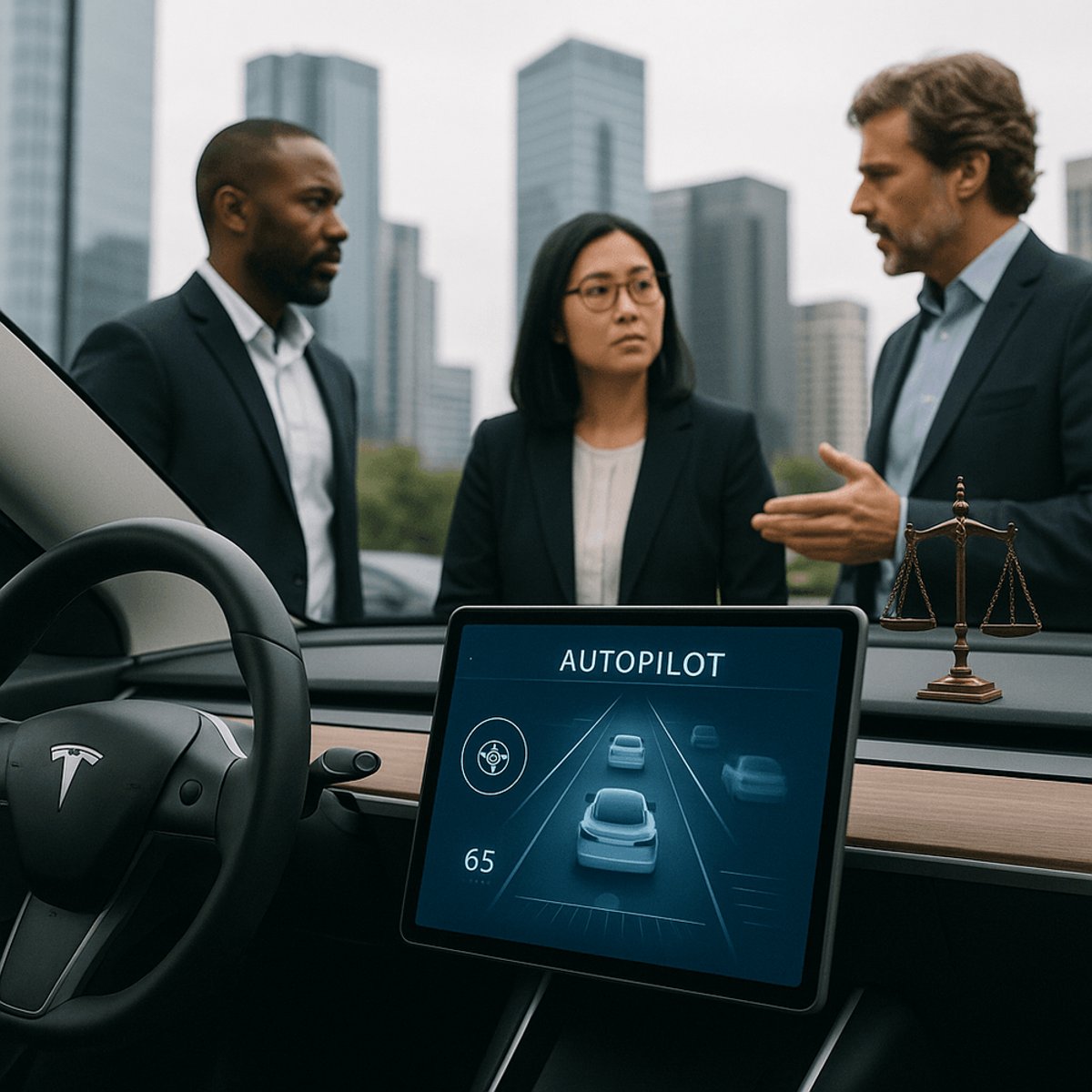
A jury in Florida has mandated Tesla to pay $329 million in damages following a tragic 2019 crash tied to its Autopilot feature. This landmark decision, highlighting accountability, raises urgent discussions about the future of AI in automotive safety. As Tesla grapples with the implications, stakeholders must ponder how this affects the pursuit of fully autonomous vehicles.
Opening Analysis
Tesla's recent $329 million court penalty from a Florida jury exacerbates the scrutiny around AI technologies in automotive safety. The verdict, stemming from a 2019 incident where a Tesla Model S crashed while on Autopilot, positions accountability at the forefront of discussions around partially autonomous vehicles. Tesla now faces amplified public and regulatory expectations to ensure enhanced safety and reliability in its automation systems.
Market Dynamics
With competitors watching closely, this decision may influence shifts in industry standards and regulations surrounding autonomous vehicle deployments. Other automakers, keen on similar technologies, will likely re-evaluate their systems' safety protocols and public disclosures to mitigate potential liabilities. The case underscores a vulnerability—shaping a cautious market where AI governance becomes pivotal.
Technical Innovation
For Tesla, the challenge lies in refining Autopilot’s technology under the microscope of skepticism. Enhanced safety features must evolve rapidly, addressing pitfalls highlighted by this case. The industry will closely monitor Tesla’s advancements, which could redefine parameters for AI integration in consumer products.
Financial Analysis
The financial impact of this judgment, combined with a 1.5% stock dip, signals potential investor unease. Tesla's shares have declined by 25% this year, a stark indicator of the market's reaction to ongoing scrutiny. Analysts will watch how future developments, including potential legal scenarios, might influence Tesla’s financial stability and shareholder trust.
Strategic Outlook
Tesla’s strategic trajectory must account for heightened oversight and increased demands for transparency in AI systems. Companies leveraging similar technology must now weigh the risk and reward balance carefully. The coming months are crucial for Tesla to pivot strategically, possibly adjusting its autonomous strategy to regain confidence and align with new safety expectations.
Looking ahead, the potential for regulatory changes remains pressing, as the automotive industry's reliance on AI and autonomous operations grows. This case may serve as a catalyst, shaping future AI standards in cars and affecting how the public and regulators perceive self-driving technology.
In the short term, Tesla needs to demonstrate decisive steps in making its systems foolproof to rebalance its standing and ensure robust legal and consumer footing. Long-term, the pivot towards next-gen safety measures could establish new benchmarks in autonomous tech.
Key Takeaways:
- Tesla must address its AI system vulnerabilities to regain public and investor trust.
- Regulatory landscape may shift, impacting broader AI tech deployment.
- Opportunities exist in enhancing safety benchmarks that redefine self-driving tech norms.