TL;DR
- - Uber focuses on being the primary app for robotaxi services.
- - Partnering with major AV firms to ensure wide network cover.
- - Anticipates reduced operational costs with autonomous vehicles.
- - Investment thesis: Uber's network could become essential as AVs scale.
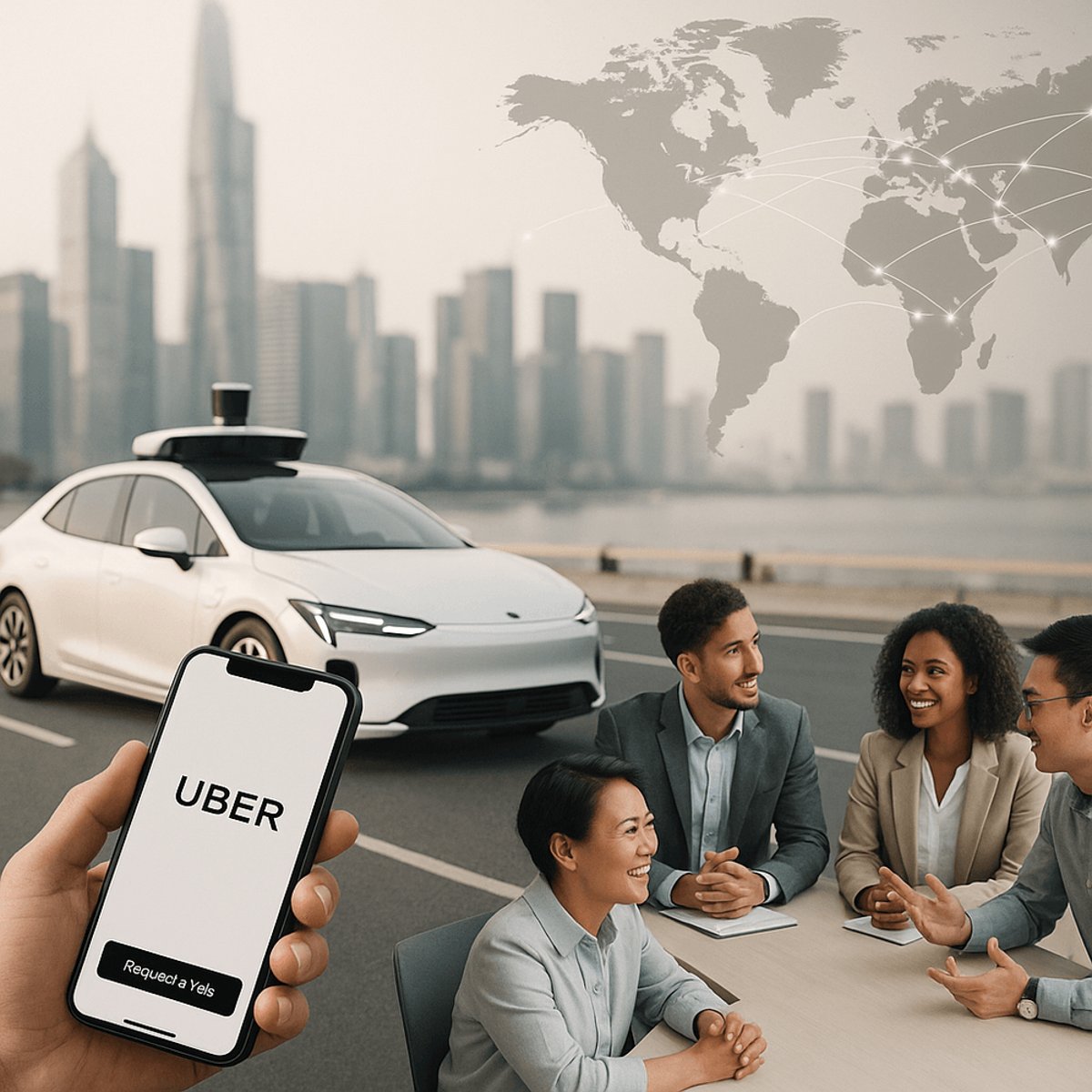
Uber is on a mission to dominate the robotaxi market, aiming to become as synonymous with the service as Kleenex is to tissues. Despite exiting direct ownership of self-driving technology, Uber is positioning itself as the essential app for hailing autonomous rides worldwide, promising significant cost reductions and user engagement. Understanding this shift is crucial as the robotaxi market evolves.
Opening Analysis
In the rapidly evolving landscape of autonomous vehicles (AVs), Uber has positioned itself not as a frontrunner in technology development but as a crucial aggregator. As self-driving cars edge closer to reality, Uber's strategy pivots on ensuring its app remains the go-to platform for rides. This shift could serve to transform Uber from a ride-hailing company with significant overhead costs into a scalable tech platform with minimal operational burdens.
Market Dynamics
Uber's recent partnerships with leading AV technology firms such as Baidu, Nuro, and Volkswagen illustrate its strategy to consolidate market presence without direct investments in vehicle development. By focusing on aggregating services, Uber aims to capitalize on the inherent flexibility and extensive reach of its platform.
Technical Innovation
While Uber has divested from direct AV development, its alliances ensure access to cutting-edge technology. This approach not only mitigates the risks associated with in-house development but also provides diverse technological strengths from each partner, enhancing service reliability and user experience.
Financial Analysis
Uber is betting on reduced operational costs through AVs. Current estimates suggest significant savings per mile, potentially transforming fare structures and profitability margins. By eliminating driver-related expenses, Uber can offer competitive pricing, attracting a larger user base.
Strategic Outlook
With over 160 million active monthly users, Uber's incumbency advantage is substantial. However, as the market is in its early stages, challenges remain, notably the limited availability of robotaxis and competition with companies like Tesla and Waymo, which might curtail Uber's market share.
Yet, the next three to six months may see Uber's strategic partnerships materialize into more operational AVs, while the one to two-year horizon could present a well-defined path towards sustained profitability and market leadership in the evolving ride-hailing ecosystem.
Key Takeaways:
- Uber's focus on being the primary robotaxi platform rather than tech owner could minimize costs.
- Partnerships ensure access to diverse, cutting-edge AV tech, enhancing service reliability.
- In 3-6 months, expect operational AVs via partners; in 1-2 years, potential market leadership due to network scale.