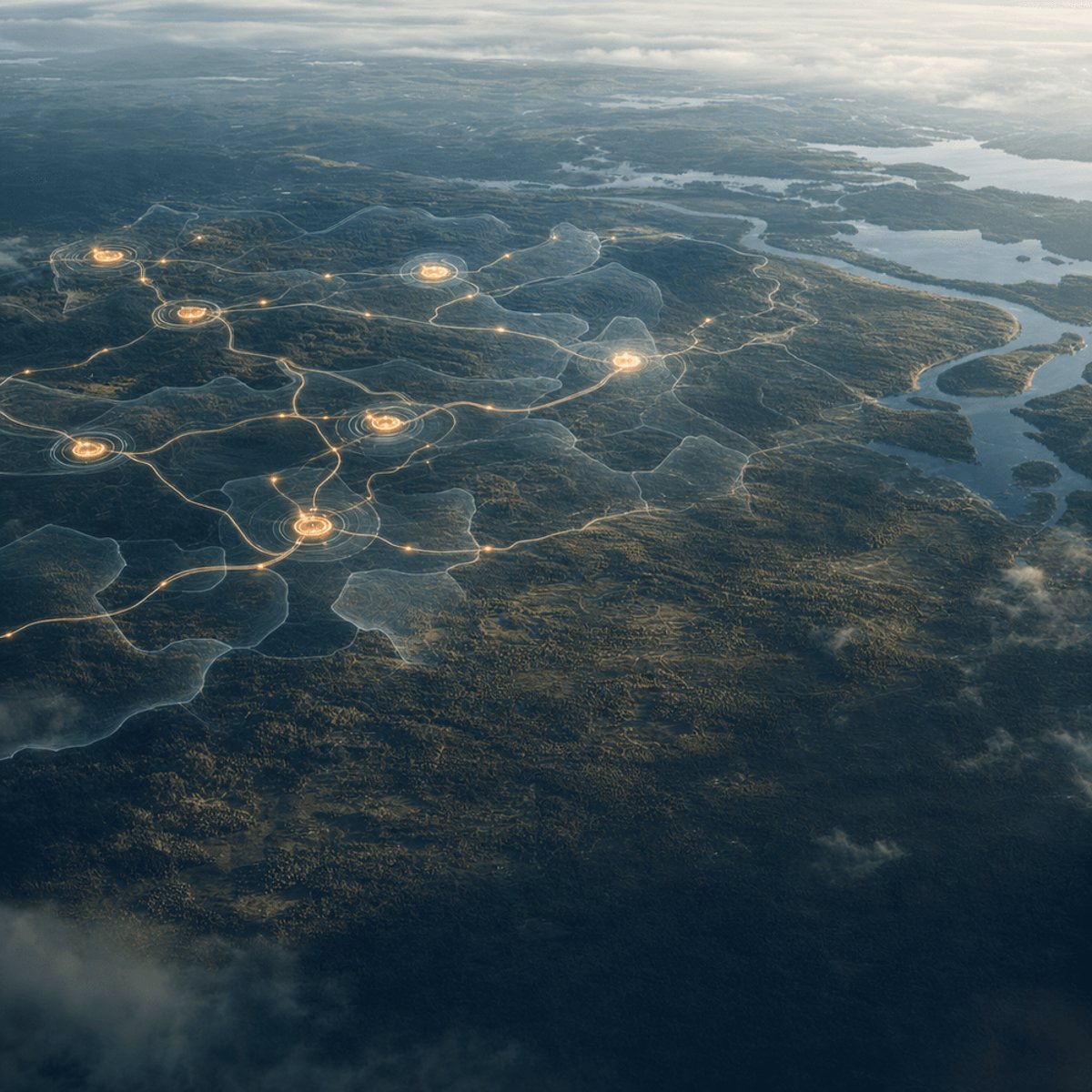
An Oregon resident just built what tech giants don't want you to see - a comprehensive interactive map revealing where data centers are sprouting across America. Isabelle Reksopuro launched the tracking tool as Google faces scrutiny over a controversial land use proposal in The Dalles, Oregon, where the city is seeking to transfer 150 acres of Mount Hood National Forest to meet the water demands of unnamed "power users" - widely believed to be Google's expanding data center operations.
When Isabelle Reksopuro heard rumors that Google was consuming public land to power its data centers in Oregon, she hit a wall of confusion. "There's a lot of misinformation about data centers," she told The Verge. "Google has denied taking that land." So she did what any frustrated citizen in 2026 would do - she built a map to cut through the noise.
Her interactive tool tracks data center construction and AI policy developments across the United States, providing the kind of transparency that tech companies and municipalities don't always volunteer. The project couldn't have come at a more critical moment. AI's explosive growth has turned data centers from invisible infrastructure into community flashpoints, with local residents increasingly questioning the environmental cost of cloud computing's physical footprint.
The Oregon situation that sparked Reksopuro's project reveals how convoluted these arrangements can get. The Dalles - a city of barely 16,000 people near the Washington border - formally requested ownership of 150 acres of Mount Hood National Forest. The official justification? Meeting municipal water needs for its growing population. The reality appears more complex. "Technically, The Dalles sought to reclaim that land, and Google is just a big, unnamed power user," Reksopuro explained.
Google operates significant data center infrastructure in The Dalles, a location prized for its access to cheap hydroelectric power from the Columbia River. But the company's water consumption has become a lightning rod for criticism as climate concerns intensify. SF Gate reported on the forest service request, highlighting the unusual nature of transferring protected public land to municipal control - ostensibly for residential needs in a city where population growth has been modest.
The issue cuts to the heart of AI infrastructure's hidden costs. Training large language models and running inference at scale requires massive computational resources, which generate heat that must be dissipated through water-intensive cooling systems. A single large-scale data center can consume millions of gallons daily. When tech companies build in rural areas with limited water resources, the impact on local ecosystems and communities can be profound.
Reksopuro's map attempts to make these invisible operations visible. By aggregating public records, news reports, and policy documents, the tool allows users to see data center locations, expansion plans, and related policy developments in their regions. It's the kind of civic infrastructure that emerges when official channels fail to provide clear answers.
The timing isn't coincidental. Data center construction has accelerated dramatically since ChatGPT's launch triggered an AI arms race among tech giants. Microsoft, Amazon, and Google are all racing to expand compute capacity to support AI workloads. That buildout is happening largely in rural communities that may lack the resources to fully evaluate environmental impact or negotiate favorable terms.
What makes the Oregon case particularly contentious is the involvement of protected federal land. Mount Hood National Forest isn't just another water source - it's public property held in trust for conservation. The precedent of transferring such land to municipal control for what amounts to industrial use could open doors that conservation advocates have fought to keep closed.
Google has maintained that it works with communities to minimize environmental impact and that its operations comply with all local regulations. But the opacity around exactly how much water goes to data centers versus residential use - and whether those uses should even compete for the same resources - fuels the kind of confusion Reksopuro encountered.
Her solution represents a growing trend of citizen-led data journalism and transparency projects. When official sources provide incomplete or contradictory information, technically skilled individuals are building their own information infrastructure. These grassroots mapping and tracking tools often fill gaps that neither government agencies nor private companies address adequately.
The broader question is whether data center expansion can continue at its current pace without more robust public oversight. AI companies tout the technology's world-changing potential, but they're less forthcoming about the physical infrastructure required to make it work. As Reksopuro's map makes clear, that infrastructure has real geographic footprints and real community impacts that deserve public scrutiny.
Reksopuro's mapping project does more than locate data centers - it represents a demand for accountability in an industry that's reshaping American infrastructure with limited public input. As AI computing needs continue to surge, communities from Oregon to Virginia are grappling with similar questions about water use, energy consumption, and who gets to decide how shared resources are allocated. Tools like this one shift power back toward citizens who want answers, not corporate reassurances. The data center boom isn't slowing down, but at least now residents can see it coming.