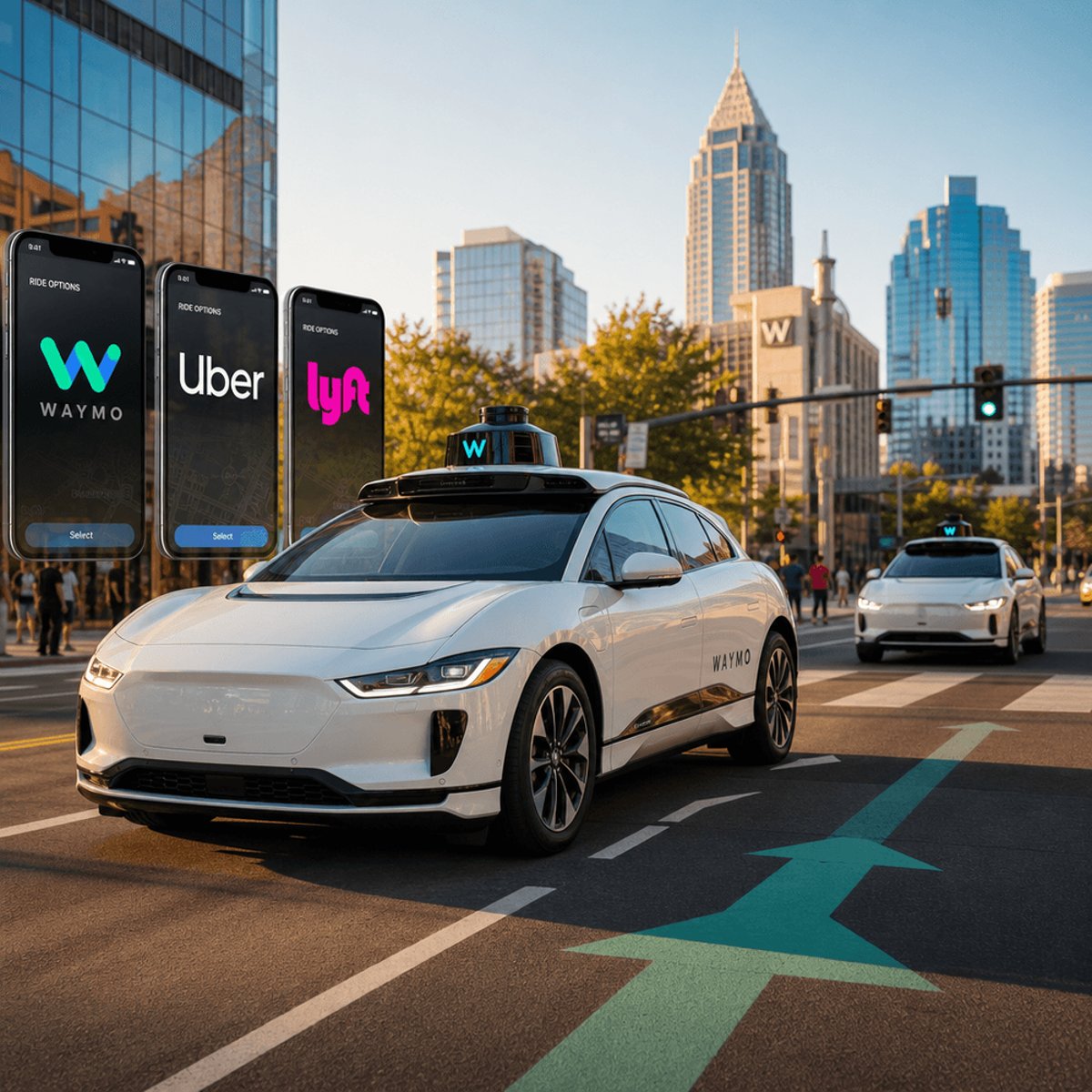
Waymo and Uber just reshaped the autonomous ride-hailing landscape. The companies announced they're ending their exclusivity arrangement in Atlanta and Austin, Texas, allowing Waymo's driverless vehicles to appear on competing platforms starting in 2028. The move signals a major strategic shift as Google's self-driving unit positions itself to expand beyond its current partnership constraints, potentially opening the door to deals with Lyft and other ride-hailing competitors.
Waymo is breaking out of its exclusive relationship with Uber, at least in two key Southern markets. The companies confirmed that starting in 2028, Waymo's driverless vehicles operating in Atlanta and Austin, Texas, will be available on ride-hailing platforms beyond Uber, fundamentally changing the competitive dynamics in the autonomous vehicle space.
The announcement marks a significant evolution in the partnership between Uber and Waymo, which initially seemed like a natural alliance. Uber had largely abandoned its own self-driving ambitions after selling its Advanced Technologies Group to Aurora in 2020, while Waymo needed distribution channels for its autonomous technology. But the robotaxi market has matured considerably since those early partnership days, and exclusivity arrangements are starting to feel like constraints rather than advantages.
For Waymo, the move represents a calculated bet on platform diversification. The Google-owned autonomous vehicle company has been methodically expanding its operations across the United States, and limiting itself to a single ride-hailing platform in major markets increasingly looks like leaving money on the table. Atlanta and Austin represent growing Sun Belt metros with tech-friendly regulatory environments and sprawling geographies that favor autonomous vehicles over traditional transit.
The 2028 timeline is particularly telling. It suggests both companies are already planning for significantly scaled autonomous operations nearly two years out. That kind of advance planning indicates Waymo expects to have substantial fleet capacity in both cities, enough that splitting availability across multiple platforms makes operational sense. It also gives Uber time to adjust its strategy and potentially secure autonomous vehicle partnerships with other providers.
Uber has been walking a delicate tightrope in the autonomous vehicle transition. The company positions itself as platform-agnostic, willing to integrate any self-driving provider that meets its standards. But losing exclusivity with Waymo, even in just two markets, means potentially watching robotaxi rides flow to competitors like Lyft. The companies will likely continue their partnership in other markets, including Waymo's core operating areas in Phoenix and San Francisco.
The competitive landscape is shifting rapidly. Tesla continues promising its own robotaxi network, though timelines remain uncertain. Cruise, backed by General Motors, has struggled with regulatory setbacks but remains a player. Chinese autonomous vehicle companies are advancing quickly in their home market. And traditional automakers are forming their own autonomous partnerships, creating a complex web of alliances and competition.
For riders in Atlanta and Austin, the change could mean more options and potentially better pricing as autonomous providers compete for passengers across multiple platforms. The robotaxi experience might become more like summoning any ride-share today, where users comparison shop between apps based on price and wait times. That commodification of autonomous rides is probably inevitable, but it arrives faster when exclusivity deals end.
The announcement also raises questions about Waymo's broader partnership strategy. If exclusivity is ending in Atlanta and Austin, what about other markets where Waymo operates or plans to launch? The company has been expanding methodically, recently adding service in Los Angeles and planning additional cities. Each new market represents a fresh negotiation over exclusivity, pricing, and strategic alignment.
Industry observers note that 2028 remains far enough away that circumstances could change dramatically. Regulatory frameworks for autonomous vehicles continue evolving at the federal and state levels. Public acceptance remains a work in progress, especially after high-profile incidents involving autonomous vehicles. And the economics of robotaxis are still being proven at scale, with questions about profitability persisting across the sector.
But the direction of travel seems clear: autonomous vehicle companies want maximum distribution, and ride-hailing platforms want access to the lowest-cost transportation providers. Exclusive partnerships made sense when both sides needed each other desperately. As the market matures, flexibility increasingly trumps exclusivity. Atlanta and Austin are just the beginning of that unbundling.
The end of Waymo and Uber's exclusivity in Atlanta and Austin signals a maturing autonomous vehicle market where strategic flexibility matters more than locked-in partnerships. While 2028 might seem distant, the announcement reveals how both companies are planning for a future where robotaxis operate at scale across multiple platforms. For the industry, it's a clear sign that the autonomous revolution won't be controlled by a single partnership or walled garden. Instead, riders will likely choose between competing services just like they do today, except without human drivers behind the wheel. The question now is whether other markets follow Atlanta and Austin's lead, or if Waymo maintains exclusivity elsewhere as part of a more nuanced, market-by-market strategy.