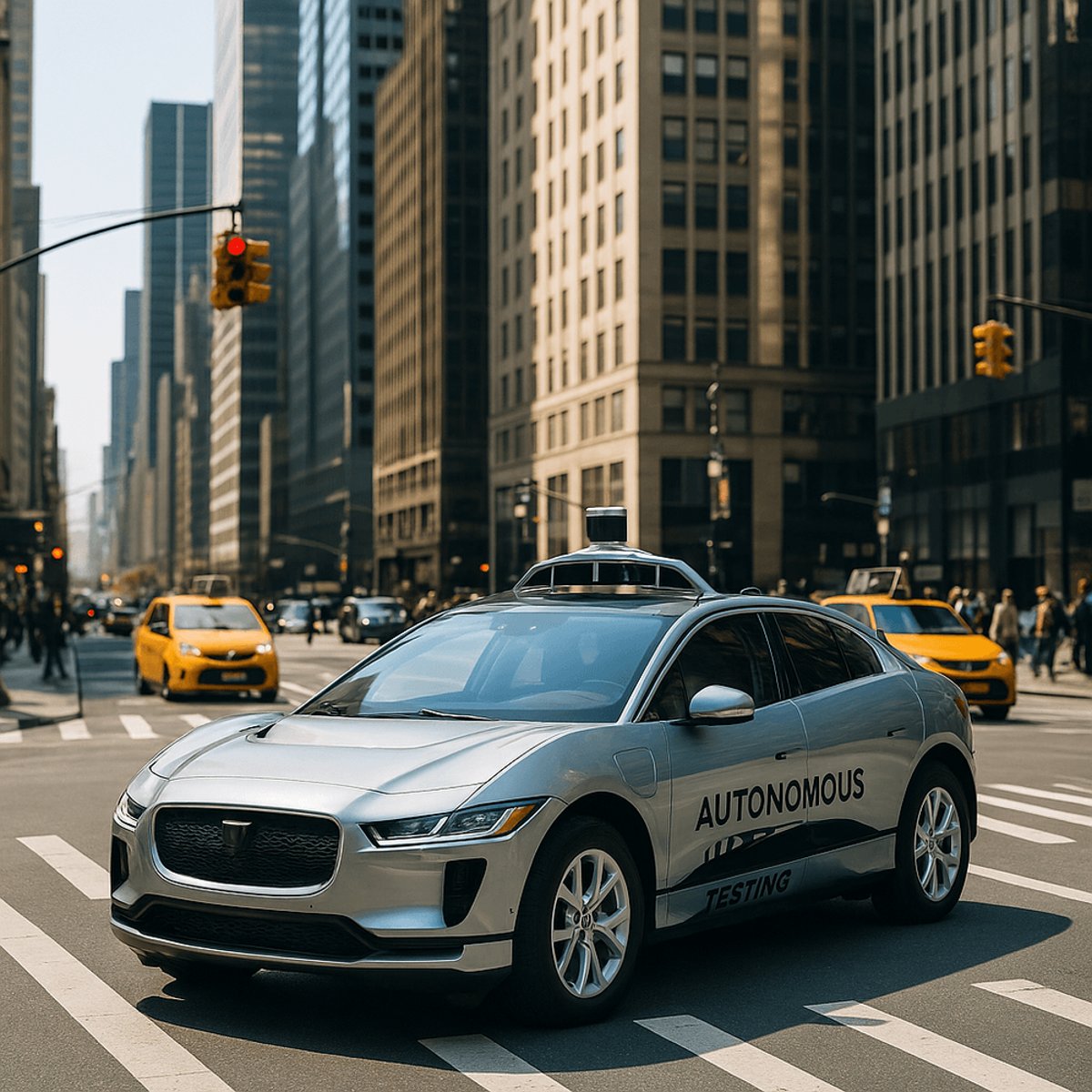
Waymo just bought itself more time in the Big Apple. New York City regulators extended the Google-owned company's autonomous vehicle testing permit through the end of 2025, giving it crucial additional months to prove robotaxis can handle Manhattan's chaotic streets before launching commercial service.
Waymo just secured a critical lifeline for its New York ambitions. City regulators extended the company's autonomous vehicle testing permit through December 2025, according to TechCrunch. The original permit, granted in August, was set to expire at the end of September.
The extension keeps the same testing parameters - Waymo can deploy up to eight Jaguar I-Pace vehicles across Manhattan and Downtown Brooklyn, but only with human safety operators behind the wheel. The permit does give Waymo's drivers one key advantage: they're exempt from New York's strict rule requiring one hand on the steering wheel at all times.
This marks a significant step toward Waymo potentially becoming the first autonomous vehicle company to crack New York City's notoriously difficult market. The Google subsidiary already runs commercial robotaxi services in San Francisco, Austin, Atlanta, Phoenix, and Los Angeles, with expansion planned for Miami, Washington D.C., Dallas, Denver, and Nashville within the next year.
"I'm encouraged to see New York City moving forward with testing that will show us how this technology can improve safety, reduce congestion, and expand mobility," said Assemblymember Brian Cunningham, who sponsors autonomous vehicle legislation at the state level, according to the TechCrunch report. "This is the type of measured innovation that allows us to prepare for the future while making sure progress works for New Yorkers."
But Waymo still faces major regulatory hurdles before launching commercial service. The company needs separate licenses from New York's Taxi and Limousine Commission to actually carry paying passengers - a process that remains murky. When asked about TLC license applications, a Waymo spokesperson declined to comment, and the commission hasn't clarified its requirements for AV companies.
The bigger challenge? New York currently has no legal framework allowing any company to test or deploy robotaxis without human safety drivers. While legislation has been introduced to create driverless operation rules, nothing's become law yet.
Waymo has been working toward NYC operations since 2021, making this one of its longest regulatory battles. The city's dense traffic, aggressive drivers, and complex street grid represent perhaps the ultimate test for autonomous vehicle technology. Success here could validate the technology's readiness for any urban environment.
The timing matters for Google's broader AI strategy. As the company faces intense competition in artificial intelligence from OpenAI and others, proving its self-driving technology can handle New York's streets would demonstrate real-world AI capabilities beyond chatbots and search.
For now, those eight test vehicles will continue gathering crucial data on how autonomous systems handle everything from double-parked delivery trucks to jaywalking pedestrians. The extended timeline gives Waymo more runway to prove its technology works in America's most challenging driving environment.
Waymo's permit extension represents measured progress toward autonomous vehicles in America's most complex urban environment. While regulatory hurdles remain significant - particularly around commercial licensing and driverless operation - the additional testing time could prove crucial for validating the technology's readiness. Success in New York would signal that robotaxis are ready for mass deployment anywhere.