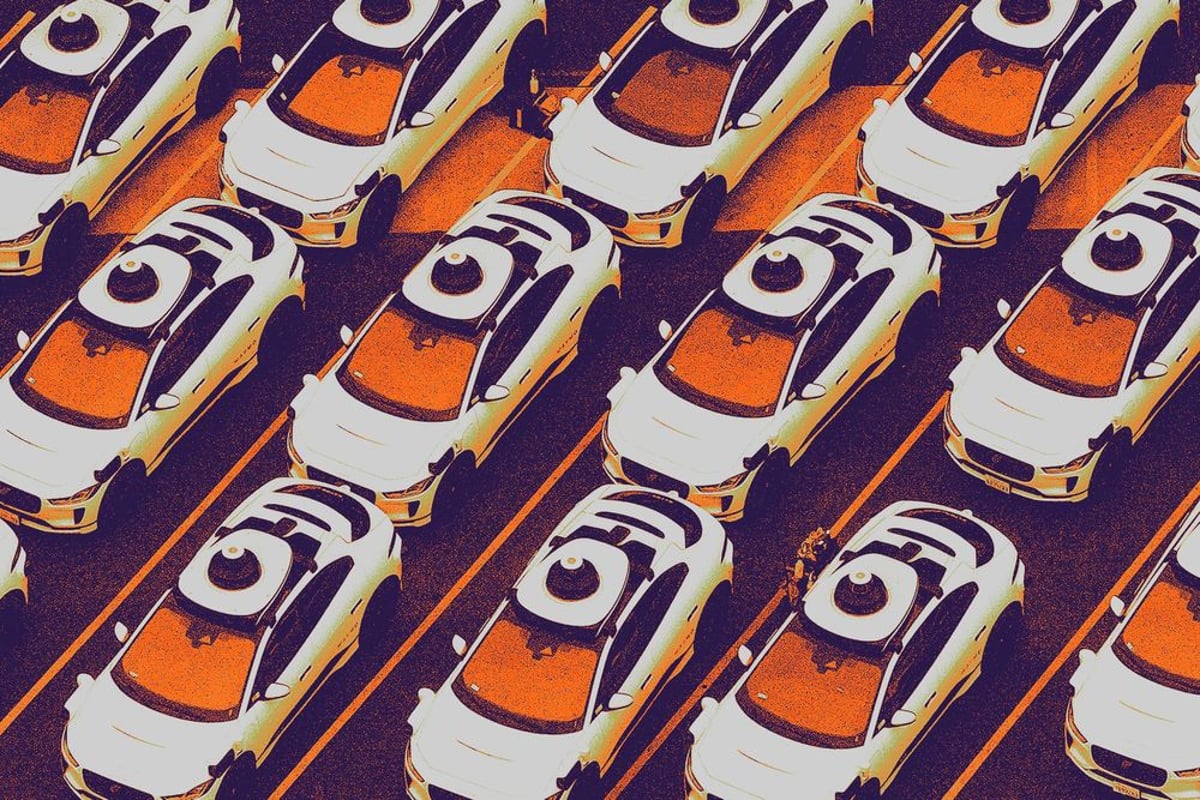
Waymo just closed one of the largest autonomous vehicle funding rounds in history - a $16 billion raise that values Google's self-driving subsidiary at $126 billion. The money will fuel an aggressive expansion to at least 20 new cities this year, including New York, London, and Tokyo, while the company scales its fleet of 2,500 robotaxis operating across six US markets. Led by Dragoneer Investment Group with backing from Sequoia and DST Global, the raise signals Wall Street's growing confidence that driverless taxis are ready to go mainstream.
Waymo just rewrote the playbook for autonomous vehicle funding. The Alphabet-owned robotaxi company closed a staggering $16 billion investment round that values it at $126 billion - nearly triple its $45 billion valuation from just 15 months ago. The raise, announced in a company blog post, represents one of the largest single funding events in self-driving tech history and signals that institutional investors are betting big on driverless transportation going mainstream.
The funding round attracted heavyweight backers, led by Dragoneer Investment Group, a crossover firm that specializes in late-stage tech companies preparing for public markets. New investors Sequoia Capital and DST Global joined the round alongside returning players Andreessen Horowitz, Abu Dhabi's Mubadala sovereign fund, Fidelity, Silver Lake, Tiger Global, and T. Rowe Price. That roster reads like a who's who of tech investing, and their collective $16 billion bet suggests the robotaxi market is approaching an inflection point.
Waymo's co-CEOs outlined an ambitious expansion strategy in their announcement. The company plans to deploy robotaxis in at least 20 new cities throughout 2026, a massive leap from its current six-market footprint. High-profile destinations include New York City, London, and Tokyo - dense urban environments that will test the technology's capabilities far beyond the sunny, grid-like streets of Phoenix and Los Angeles where Waymo first proved itself.
Much of the capital will go toward vehicle purchases and sensor installations, the unglamorous but essential work of scaling a robotaxi fleet. Despite promises that autonomous vehicles will eventually slash costs by eliminating human drivers, the current economics remain brutal. Each robotaxi requires expensive lidar sensors, onboard computers, and constant maintenance. Fleet managers must handle EV charging rotations, sensor calibration, and vehicle cleaning between rides. Remote operators monitor trips in real-time, ready to intervene if the AI encounters an edge case it can't handle.
But Waymo has a crucial advantage: it's actually running a profitable service at scale. The company currently operates more than 2,500 robotaxis providing paid rides in six US cities, making it the only player to achieve true driverless commercial operations. Amazon's Zoox is still offering free rides in limited areas, while Tesla's robotaxi ambitions remain stuck in the testing phase with safety drivers behind the wheel. That operational lead is exactly what investors are paying a premium for.
The valuation jump from $45 billion to $126 billion in just over a year reflects both Waymo's execution and the broader AI boom transforming investor sentiment. Autonomous driving is fundamentally an AI problem - teaching neural networks to navigate unpredictable real-world scenarios with superhuman reliability. As large language models demonstrated AI's commercial potential, investor appetite for applied AI companies like Waymo surged.
Timing matters here. According to Waymo's 2024 funding announcement, the company raised $5.6 billion at that $45 billion valuation. The latest round's massive step-up validates the progress Waymo has made expanding service areas and proving unit economics can work. But it also reflects competition heating up - Tesla continues promising its own robotaxi network, while Chinese companies like Baidu are aggressively deploying autonomous fleets.
Not everything is smooth sailing. Last week, the National Highway Traffic Safety Administration opened a probe into an incident where a Waymo vehicle struck a child in Santa Monica, causing minor injuries. Safety scrutiny will only intensify as the company expands into more cities with different traffic patterns, weather conditions, and regulatory frameworks. Winning over skeptical city councils and navigating international regulations will test Waymo's operational playbook.
The global expansion strategy is particularly ambitious. London and Tokyo present radically different challenges than US sunbelt cities - narrower streets, different driving cultures, left-side traffic in the UK, and complex regulatory environments. Success in these markets would prove Waymo's technology can truly scale globally, not just in AI-friendly jurisdictions.
For Google parent Alphabet, Waymo's soaring valuation offers validation for years of patient capital invested in moonshot technology. The company has poured billions into Waymo since acquiring the team from Google's self-driving car project in 2016. With this funding round, Waymo inches closer to standing as an independent, potentially public company that could unlock massive value for Alphabet shareholders.
The competitive landscape is watching closely. Tesla's Elon Musk has repeatedly promised a robotaxi network using the company's Full Self-Driving software, but progress has been slow. Amazon's Zoox is taking a different approach with custom-built vehicles, but hasn't yet launched paid service. Chinese competitors like Baidu's Apollo Go are scaling fast in domestic markets but face geopolitical barriers to Western expansion. Waymo's funding war chest gives it runway to consolidate its lead while competitors scramble to catch up.
Waymo's $16 billion raise isn't just about expansion - it's a statement that autonomous transportation has moved from science experiment to investable infrastructure play. The company's ability to attract blue-chip investors at a $126 billion valuation, while competitors remain stuck in testing phases, cements its position as the category leader. But the hard work starts now. Scaling to 20+ cities in a single year, navigating international regulations, and maintaining safety standards under intense public scrutiny will determine whether this valuation was visionary or inflated. For riders in New York, London, and Tokyo, the robotaxi future just got a lot closer. For Waymo's competitors, the funding gap just became a chasm.