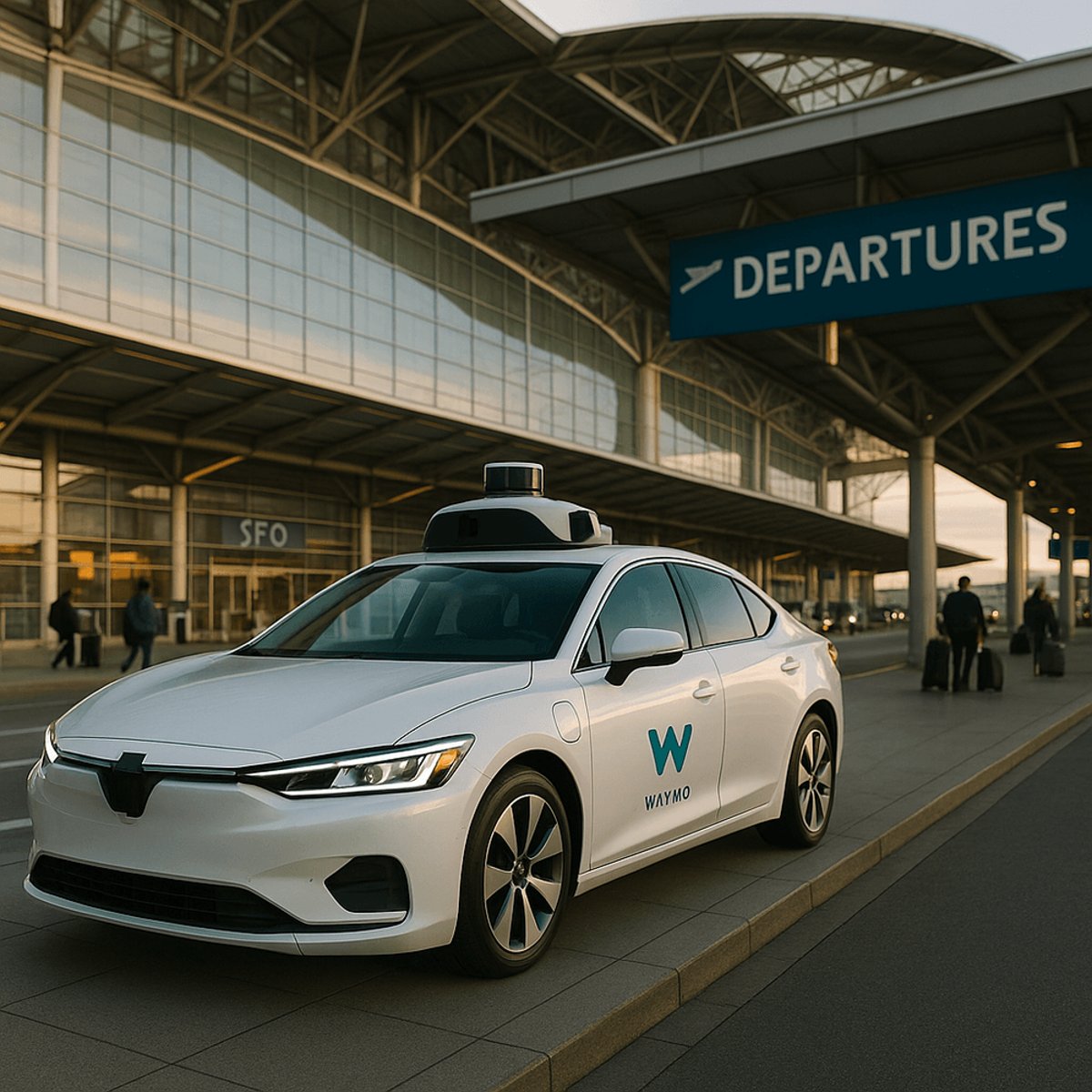
Waymo is rolling out its most requested feature yet. The Google-owned robotaxi service just opened San Francisco International Airport access to select riders, with a full rollout coming over the next few months. It's a strategic play that puts autonomous vehicles directly in competition with Uber and Lyft on one of their most profitable routes - airport runs. The move comes after Waymo quietly began freeway driving last November, setting the stage for this inevitable expansion.
Waymo just made its boldest move yet into mainstream transportation. The Alphabet-owned autonomous vehicle company announced Thursday it's opening San Francisco International Airport to robotaxi pickups and drop-offs, starting with a limited group of riders before scaling to its full customer base in the coming months.
The timing isn't accidental. Airport rides represent some of the most lucrative trips for ride-hailing services, and Waymo is now stepping directly into territory that Uber and Lyft have dominated for years. "Serving rides to and from San Francisco International Airport delivers one of the most requested features for our riders," Waymo co-CEO Tekedra Mawakana said in a company blog post. The emphasis on customer demand signals this isn't just expansion for expansion's sake - it's response to real market pressure.
Initially, passengers will meet their driverless vehicles at SFO's rental car center, a strategic starting point that keeps the robotaxis away from the chaotic terminal curbs where human drivers jostle for position. But that's temporary. Waymo plans to eventually expand to terminal pickups, the holy grail of airport transportation where convenience meets maximum demand.
The move was only possible after Waymo began offering freeway rides in November 2025, according to previous CNBC reporting. Highway driving proved to be the technical prerequisite for airport service, since most routes to SFO require high-speed merging and lane changes. That freeway capability wasn't just a feature add - it was infrastructure building for exactly this kind of expansion.
SFO marks Waymo's third major airport integration, following launches at San Jose Mineta International Airport and Phoenix Sky Harbor International Airport. The company is methodically building a network that mirrors traditional ride-hailing coverage, but with a crucial difference: no human drivers to recruit, retain, or pay per trip. It's a unit economics story that has Uber and Lyft watching closely, even as both companies hedge their bets with their own autonomous vehicle partnerships.
Mawakana's statement hints at Waymo's near-term strategy: "With millions traveling in for major events this year, we look forward to meeting the growing demand for reliable, fully autonomous rides." San Francisco hosts everything from tech conferences to sporting events, and Waymo is positioning itself as the surge-pricing alternative - a service that doesn't charge more when demand spikes because it doesn't rely on driver supply.
The phased rollout approach shows Waymo learned from earlier expansions. Rather than opening to all riders immediately and risking operational bottlenecks, the company is testing systems with a controlled group first. It's the kind of measured scaling that autonomous vehicle companies have adopted after years of overpromising and underdelivering on deployment timelines.
For San Francisco, this deepens an already significant relationship with Waymo. The company has been operating in the city for years, building both technical capability and regulatory trust. Airport access represents a new level of integration into the city's transportation infrastructure, one that required coordination with airport authorities and likely months of behind-the-scenes negotiation.
The competitive implications are immediate. Uber and Lyft have spent years building airport queue systems, driver incentives, and premium services around these high-value trips. Now they face a competitor with no labor costs and the backing of one of the world's wealthiest companies. Waymo doesn't need to be profitable on every trip - it needs to prove the technology works at scale.
What this really signals is autonomous vehicles moving from novelty to utility. Airport trips aren't joyrides or tech demos - they're time-sensitive, luggage-laden necessities. If Waymo can nail this use case reliably, it validates the entire robotaxi model for mainstream adoption.
Waymo's airport push isn't just about adding another pickup location - it's about proving autonomous vehicles can handle the transportation moments that matter most to everyday travelers. By tackling airport runs where reliability and timing are non-negotiable, the company is stress-testing its technology against real-world stakes. If the phased rollout succeeds and expands to terminal pickups as planned, it establishes a template for how robotaxis integrate into existing transportation infrastructure. The real question isn't whether Waymo can get passengers to SFO - it's whether this marks the beginning of autonomous vehicles systematically replacing human-driven ride-hailing on high-value routes. For Uber and Lyft, the competitive threat just got tangible.