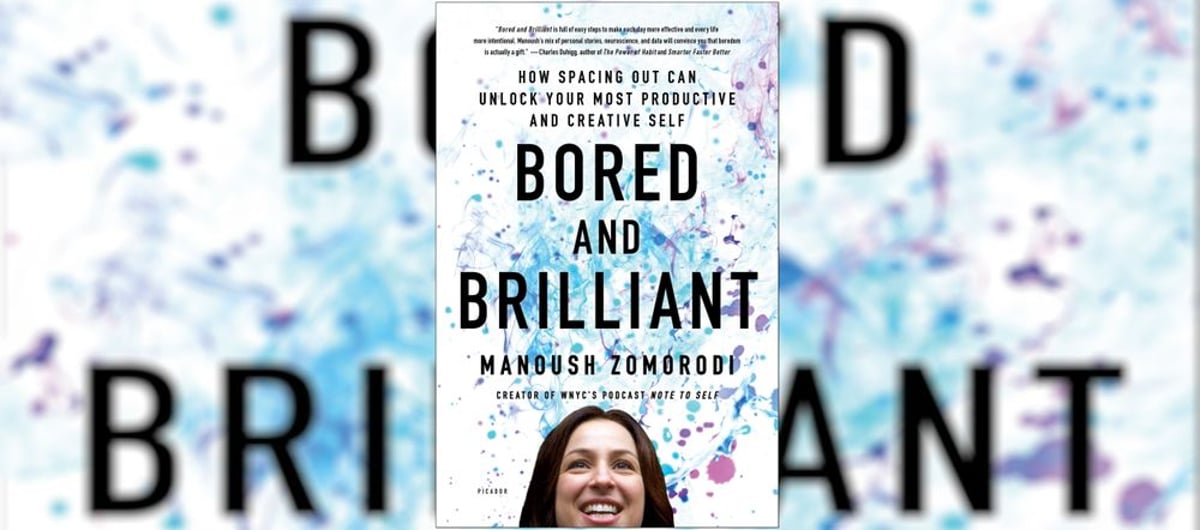
Tech professionals drowning in notifications and endless scroll sessions have found an unlikely ally in NPR's Manoush Zomorodi. Her book 'Bored and Brilliant' isn't just another digital wellness guide - it's a scientifically-backed manifesto for why letting your mind wander might be the competitive advantage you're missing in our hyper-connected age.
The irony isn't lost on anyone reading a book about digital detox on their phone. But NPR's Manoush Zomorodi, host of the TED Radio Hour, has crafted something different with 'Bored and Brilliant' - a book that doesn't just preach unplugging but shows you exactly why your brain craves the mental downtime you've been avoiding.
Zomorodi's journey started in 2015 with a series on WNYC's Note to Self that challenged listeners to remove digital distractions. The response was overwhelming. Thousands of people documented their phone habits, deleted apps, and reported back with surprising results. By 2017, those experiments had evolved into a full book that reads less like self-help and more like investigative journalism into our collective addiction.
"My brain was always occupied, but my mind wasn't doing anything with all the information coming in," Zomorodi writes, capturing the exact feeling that plagues knowledge workers everywhere. It's the difference between consuming and creating - between being busy and being productive.
The book's strength lies in its research-backed approach to what many of us already suspect. Studies cited throughout show that simply having your phone present, even face-down and silent, measurably reduces cognitive performance. Taking photos with your phone actually diminishes your ability to remember experiences. Choice paralysis from endless streaming options leaves us scrolling instead of watching.
But Zomorodi doesn't position herself as above these struggles. "At one point, she muses that her headstone will read, 'she clicked links and saved lots of articles to read another time and never actually read them,'" The Verge notes in its review. That vulnerability makes her practical challenges feel achievable rather than preachy.
Each chapter concludes with concrete experiments from the original podcast series. Document exactly when and how you use your phone. Don't take a single photo for 24 hours. Delete the app that consumes the most of your time. These aren't permanent lifestyle changes but temporary disruptions designed to reveal patterns you might not notice otherwise.
The timing feels particularly relevant as tech companies double down on engagement strategies. Meta, TikTok, and others have refined their algorithms to capture and hold attention with unprecedented sophistication. Zomorodi's book arrives as a counterweight to that intentional distraction, arguing that boredom isn't something to be eliminated but cultivated.
Her personal anecdote about walking endlessly with a newborn who wouldn't sleep captures this perfectly. Initially frustrated by the purposeless walking, she eventually "started appreciating the fact that [she] had no destination." That liminal space - the in-between moments we typically fill with scrolling - becomes fertile ground for creativity and problem-solving.
The book avoids the typical digital wellness trap of demanding complete disconnection. Instead, it offers what Zomorodi calls "spacing out" as a deliberate practice. For tech workers constantly context-switching between Slack, email, and actual work, this approach feels more sustainable than going completely offline.
Zomorodi's background in public radio gives the book a different texture than typical productivity guides. She's comfortable with silence, with letting ideas develop slowly, with the kind of deep thinking that requires uninterrupted time. Those skills translate directly to knowledge work, where breakthrough solutions often emerge during mental downtime rather than active problem-solving.
The book won't magically cure phone addiction or instantly boost creativity. But it provides something more valuable: permission to be bored and practical steps to reclaim those mental spaces. In an industry that prizes constant learning and staying current, Zomorodi makes a compelling case that sometimes the most productive thing you can do is absolutely nothing.
Zomorodi's 'Bored and Brilliant' arrives at the perfect moment for an industry grappling with both AI productivity promises and human creativity demands. Her research-backed case for strategic boredom offers tech professionals a different kind of competitive advantage - one that doesn't require another app or productivity hack, just the discipline to occasionally do nothing at all. The book's practical challenges provide a roadmap for reclaiming mental space without demanding digital martyrdom.